When a Property Portfolio Needs a Fast Turnover
Property managers deal with mixed pressure every month. A block of flats may need better cleaning kit, an office park may be consolidating storage, and a retail centre may be clearing old plant after a tenant fit-out. At the same time, there is usually little room in the budget for full retail pricing on every item.
That is where auctioning surplus assets makes sense. Instead of leaving old pumps, trolleys, fridges or office appliances in a store room, the items can be listed for sale and moved on to a buyer who will use them. For the buying side, auctions give property teams access to workable equipment at lower cost, which helps when load-shedding, maintenance backlogs and short turnaround times put pressure on operations.
Many of our property clients are based in Germiston, Johannesburg East, Pretoria, Durban, Cape Town and Bloemfontein. Some manage one site, others run a whole portfolio, but the need is the same: dispose of what is no longer useful and source dependable equipment without wasting weeks on private selling.
Typical Equipment Found in Building Service Clear-outs
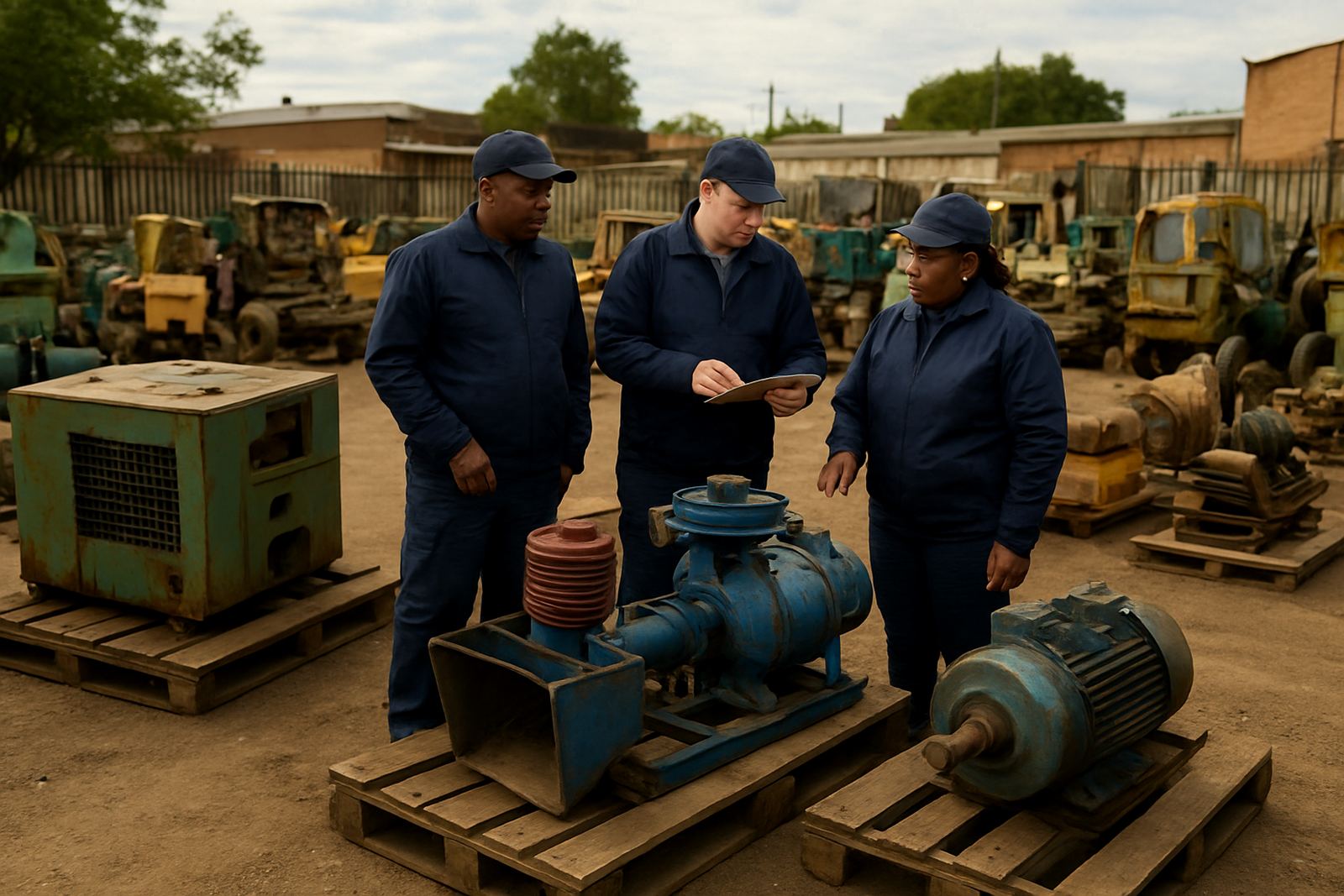
Building service assets vary a lot from one site to the next. Some are old but still serviceable, others are damaged and only useful for parts. We see this mix regularly on auction, especially where a landlord has upgraded a site or a managing agent has taken over an older property.
- Floor scrubbers, sweepers and wet-and-dry vacuum units
- Pressure washers, hoses and spare nozzles
- Portable generators, inverters and battery back-up units
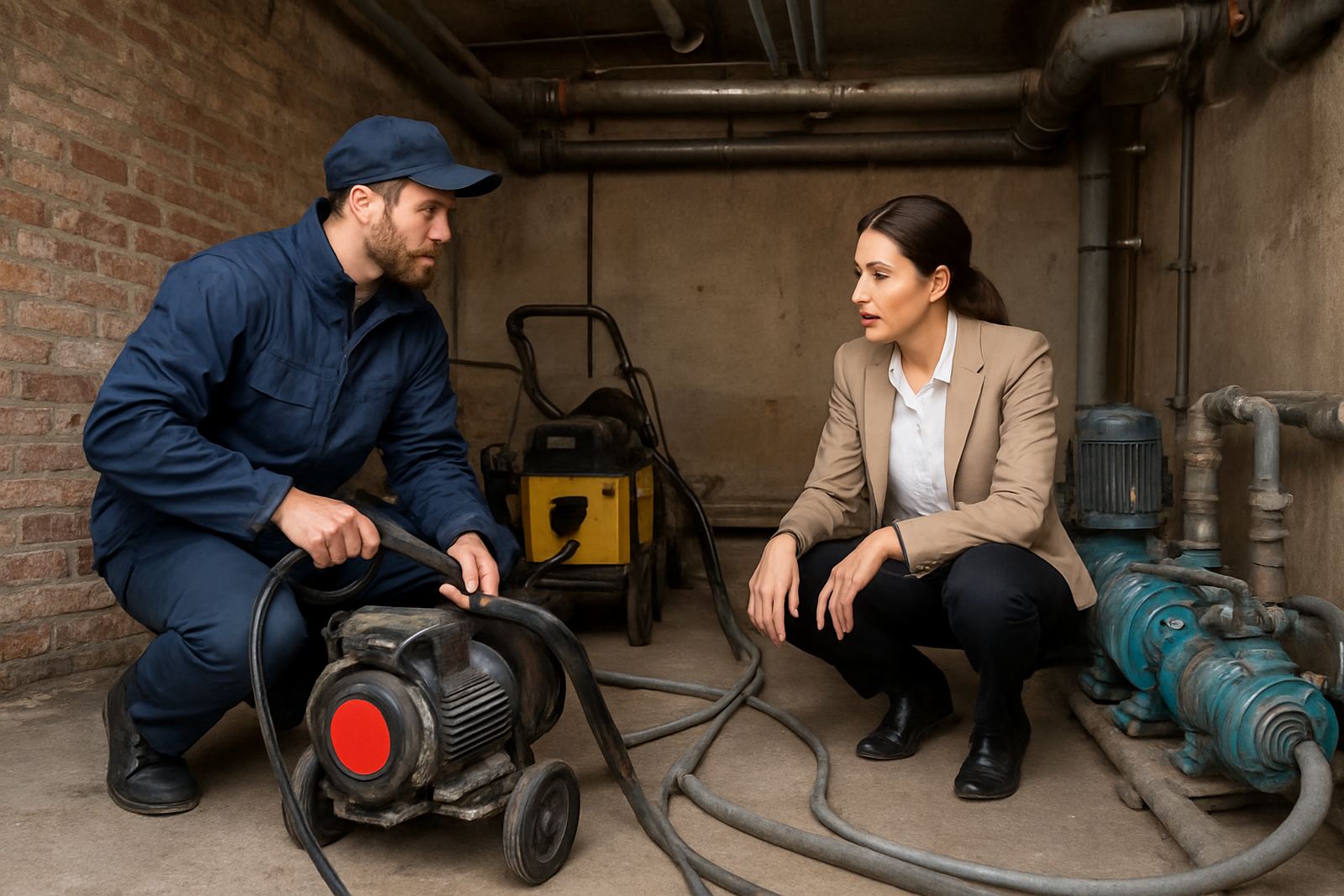
- Air-conditioning compressors, pumps and circulation equipment
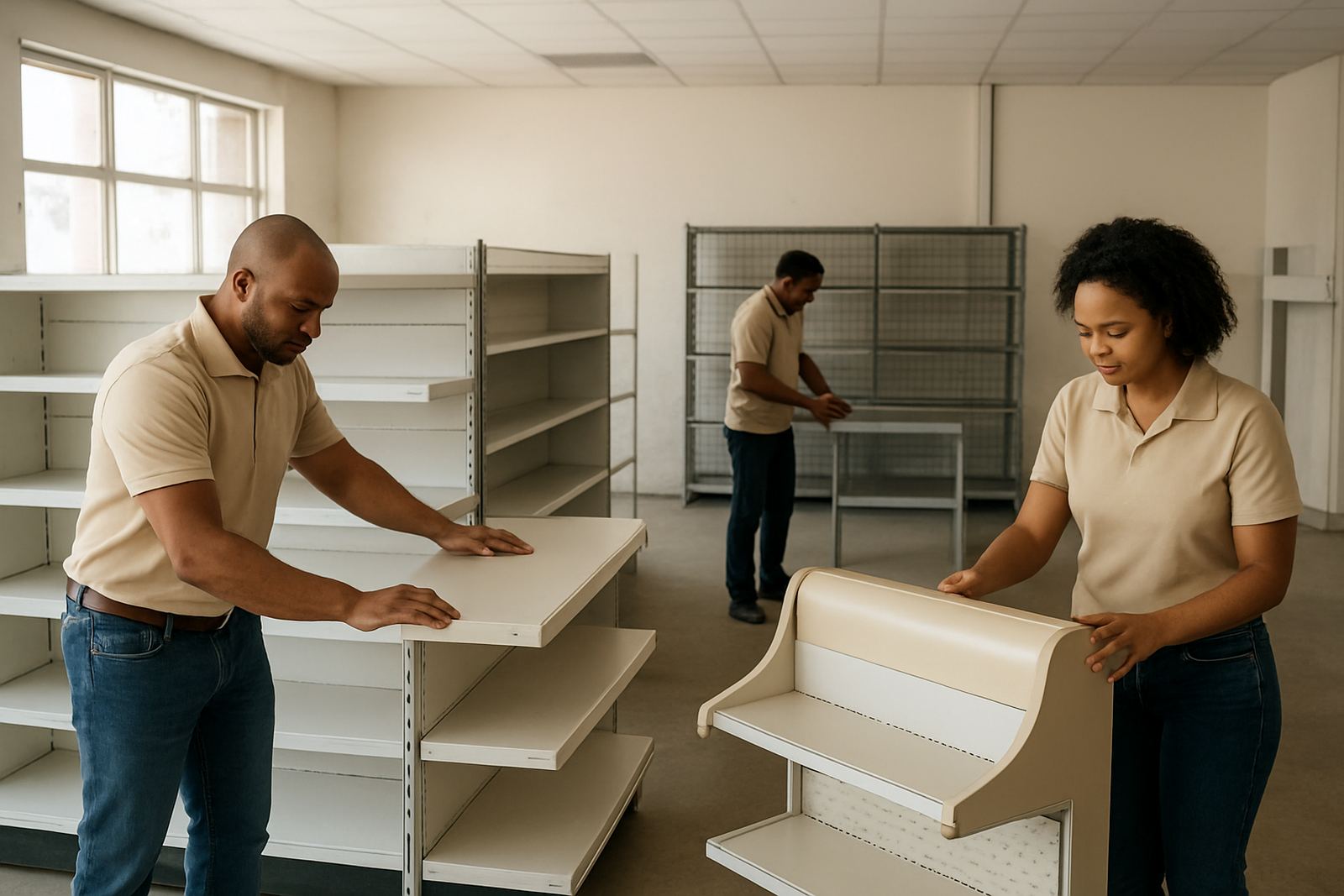
- Steel shelving, mobile trolleys and storage cabinets
- Fridges, microwaves and other staff-room appliances
- Fire safety cabinets, ladders and basic site tools
- Office furniture and reception items from vacated spaces
For buyers, it helps to know exactly what is needed before bidding starts. A good property team does not buy just because an item looks cheap. They check voltage, dimensions, service history, age and whether the item will fit into the site workflow. Coastal humidity in Durban and Cape Town can also affect metal items and electrical gear, so condition matters more than people expect.
Planning the Layout Before the Auction
Good planning starts with a site walk-through. Before items are grouped for cataloguing, it helps to separate assets by type and by location. This is especially useful when equipment comes from multiple buildings, basements, rooftop plant rooms or tenant spaces. Clear grouping saves time during viewing and collection and it also helps buyers understand what they are bidding on.
For property managers, a practical layout plan usually includes aisle space for photographs, safe access for visitors and a clear path for removal. If equipment is stored in a basement or upper level, make sure there is enough access for trolleys, pallet jacks or loading from a service lift. In some complexes, collection must be scheduled around security rules, body corporate requirements or municipal by-laws. That small detail can prevent a lot of delays.
Clear item labelling matters from the start. A pump that is only good for spares should not be described as ready to install, and a generator without a battery should not be treated like a complete unit. Buyers are far more likely to stay engaged when the lot details are accurate and the condition is clear.
Common Mistakes Property Teams Make
One of the biggest mistakes is waiting too long. Surplus assets often get pushed to the back of a storeroom until they are dusty, moved twice and partly damaged. That reduces value and makes the disposal process harder. Another common issue is selling everything as one mixed lot when the items would perform better split into smaller groups.
It is also easy to underestimate the paperwork. Property teams need to know who owns the asset, whether it belongs to the landlord or tenant, and whether any approval is needed before sale. If the records are weak, the clearance process can stall. We see this often with older office parks and mixed-use buildings where records have moved between managing agents over the years.
- Do not list items without checking ownership or approval
- Do not ignore missing parts like batteries, chargers or remote controls
- Do not mix scrap and working items in one lot if they can be separated
- Do not leave collection access to chance, especially in busy urban sites
- Do not skip reserve price guidance when the asset still has real value
Another mistake is underestimating the cost of replacement. If a property team finds a cheap vacuum or pressure washer at auction, it still needs to suit the site and the service schedule. Buying the wrong machine often costs more in the long run.
Budget Ranges for Buying and Selling Used Assets
Budget planning for property managers usually works best in bands. Small maintenance purchases might sit between R2,500 and R12,000 per item, depending on condition and age. Mid-range equipment such as scrubbers, pumps or backup power units often lands between R15,000 and R60,000. Larger plant and multi-item dispersals can move much higher, especially where several assets are being sold from one site.
On the selling side, even modest items can add up. A handful of retired appliances, a few trolleys and some storage equipment can bring in useful income that goes back into the maintenance budget. That money can help with lighting upgrades, security repairs or replacement of worn cleaning equipment. For larger portfolios, this becomes a practical way to recover value from surplus stock instead of carrying it on the books for years.
It is worth remembering that price is not the only factor. Collection costs, downtime, condition and access all affect the final outcome. A buyer in Pretoria may pay more for a ready-to-use item than a buyer who still needs to organise transport from Durban. That is why clear listings and sensible reserve prices matter.
How BidThis Supports Property Managers from Listing to Collection
Our process is built for sites that need order and clear communication. We help with asset appraisals, seller onboarding, lot cataloguing, auction photography, reserve price guidance, timed online auctions, viewing management, buyer support, payment clearance and collection coordination. For property teams, that means fewer loose ends and less time spent chasing different people for each step.
We also handle multi-site dispersals, which is useful when one managing agent is clearing assets from several buildings at once. A site in Germiston can be dealt with alongside viewings in Johannesburg East, Pretoria, Durban, Cape Town or Bloemfontein without the process becoming messy. For larger portfolios, this saves a lot of admin and keeps the disposal trail easier to follow.
If your team needs to buy maintenance equipment or clear out unused building service assets, the best first step is usually a proper asset list. Once the items are sorted and photographed, the auction can be structured around real condition, practical collection and realistic pricing. That is the point where the value starts to show.