1. Confirm the lot details before you send a truck
Start by checking the lot description, photos, collection window and any notes about condition. On used machinery, the small things matter: loose panels, missing parts, oil residue, or a unit that needs a forklift rather than a flatbed. If you are collecting from Germiston, Isando or Alberton, plan for busy industrial traffic and allow extra time for security checks at the gate.
Match the asset to the right vehicle and lifting method. A light workbench, palletised stock or office furniture can usually go on a bakkie with a trailer, but presses, compressors and generators may need a truck with a crane or a forklift on site. If you send the wrong vehicle, you can lose time and add extra labour costs.
2. Build your collection team and loading plan
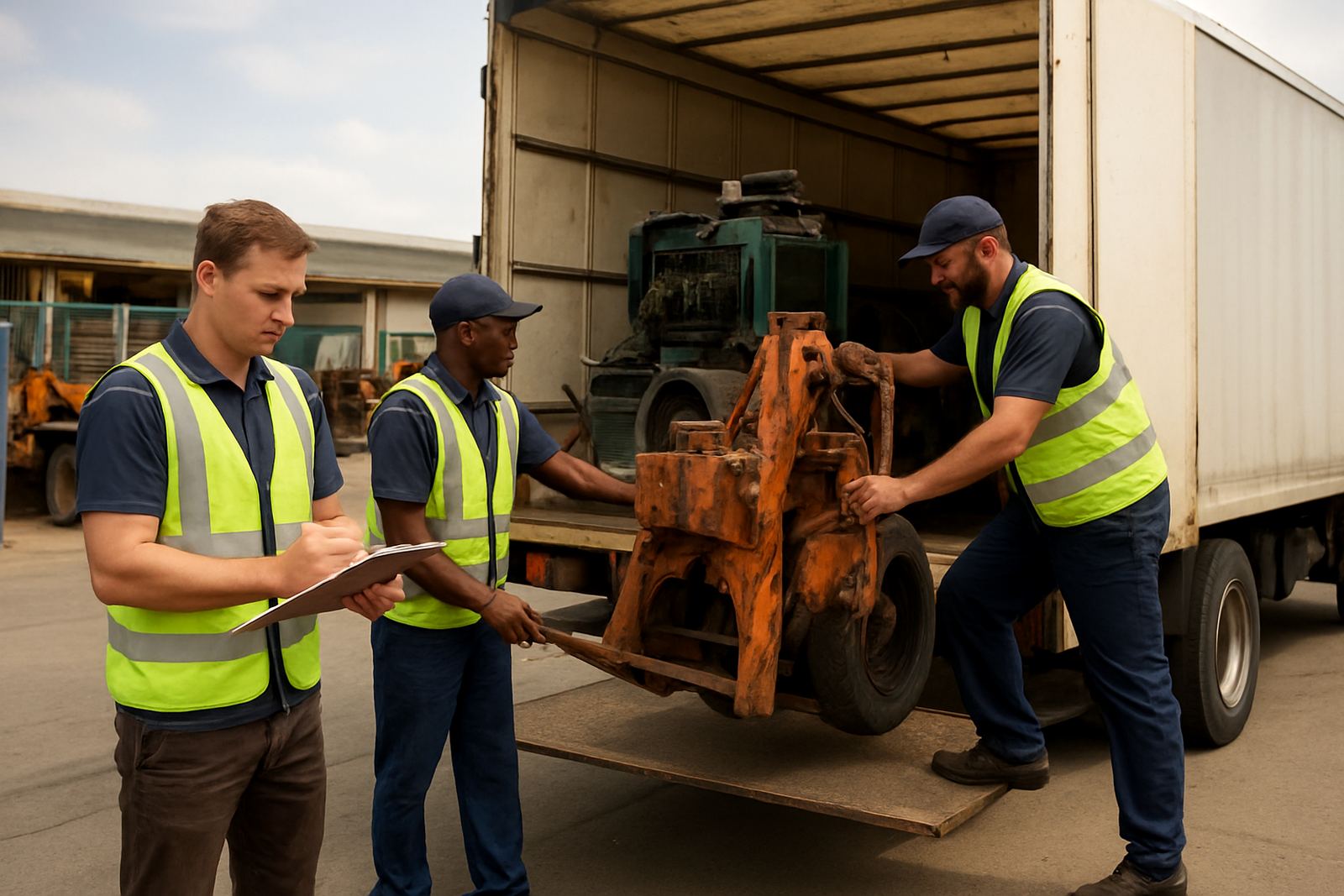
Before collection day, decide who is doing what. You may need a driver, rigger, forklift operator, supervisor and a person to check paperwork at release. For heavy equipment, a clear loading plan helps avoid damage and delays. In some yards a machine can be rolled out by hand, but others need pallets, skates, chains and lifting straps.
- Check the weight and dimensions of each lot
- Confirm whether a forklift or crane is needed
- Bring straps, chains, blankets and shrink wrap
- Assign one person to sign release documents
- Leave room for delays if the site has limited access or load shedding affects operations
If you are collecting multiple lots, number them in the order they will be loaded. That saves time and keeps smaller parts from getting mixed up with larger items. A simple loading list also helps your driver and labour team stay organised, even if the site is busy.
3. Sort paperwork, payment clearance and site entry
Do not send a vehicle until payment is cleared and you have the right release documents. Industrial sites in Johannesburg, Pretoria, Durban and Cape Town often have strict gate rules, and some require ID, company details or a vehicle registration number before access is allowed. If the yard has a security office, your driver should know which gate to use and who to ask for on arrival.
Keep your paperwork in one file and make both paper and digital copies. That file should include the invoice, proof of payment where needed, the collection authorisation and any site instructions. If there are special rules about PPE, delivery hours or public holidays, write them down. It sounds basic, but missed paperwork can delay a collection by hours or even a full day.
4. Plan for safe removal and transport
Used machinery can be awkward, dirty and sometimes still linked to power or air lines. Make sure the asset is isolated before anyone starts unbolting or lifting it. If the machine has residual oil, sharp edges or loose fittings, take the right precautions. In coastal areas like Durban and Cape Town, humidity can also affect handling and corrosion, so pack items properly before they leave the yard.
- Disconnect power, air and water lines where applicable
- Drain fluids if the site rules require it
- Protect panels, gauges and moving parts
- Use corner protectors and blankets on painted surfaces
- Secure the load evenly to stop shifting on the road
For long trips to Bloemfontein or other inland towns, think about road vibration, weather and roadside stops. A load that is well strapped at the yard can still move on a rough route if it is not packed correctly. Take the time to check everything twice before the truck leaves.
5. Handle multi-site collections with one clear schedule
If you bought from more than one location, map out the whole route before collection day. Multi-site dispersals need proper timing because one delay at an earlier point can affect the rest of the day. This is common when a buyer collects in Germiston, then heads to Pretoria, or combines viewings and collections across Gauteng.
Use a simple schedule with arrival times, loading times and driving time between sites. Leave enough margin for security delays, traffic, and lunch breaks. If your team is only collecting part of a larger order, confirm which lots are released first so you do not waste time standing around waiting for another pallet or machine. A good route plan can save a fair bit of Rand on labour and fuel.
6. Finish with a final check before the truck leaves
Before the vehicle pulls out, do one last walk-around. Count the items, check for loose bolts or missing accessories, and make sure the release note is signed. If there are manuals, keys, remote controls or loose parts, put them in a sealed bag and mark it clearly. Small items are easily lost when people are rushing, especially on a busy yard.
Keep photos of the load as it leaves. That gives you a record of condition and makes it easier to resolve any query later. If you are receiving the goods at your own premises, make sure the receiving area is clear and that labour is ready to offload. A smooth collection is usually the result of good prep, not luck.
- Count all parts and accessories
- Confirm signatures on release paperwork
- Check the load is balanced and secured
- Keep copies of all documents on hand
- Notify your receiving team of the ETA