Start With The Line Layout, Not The Price
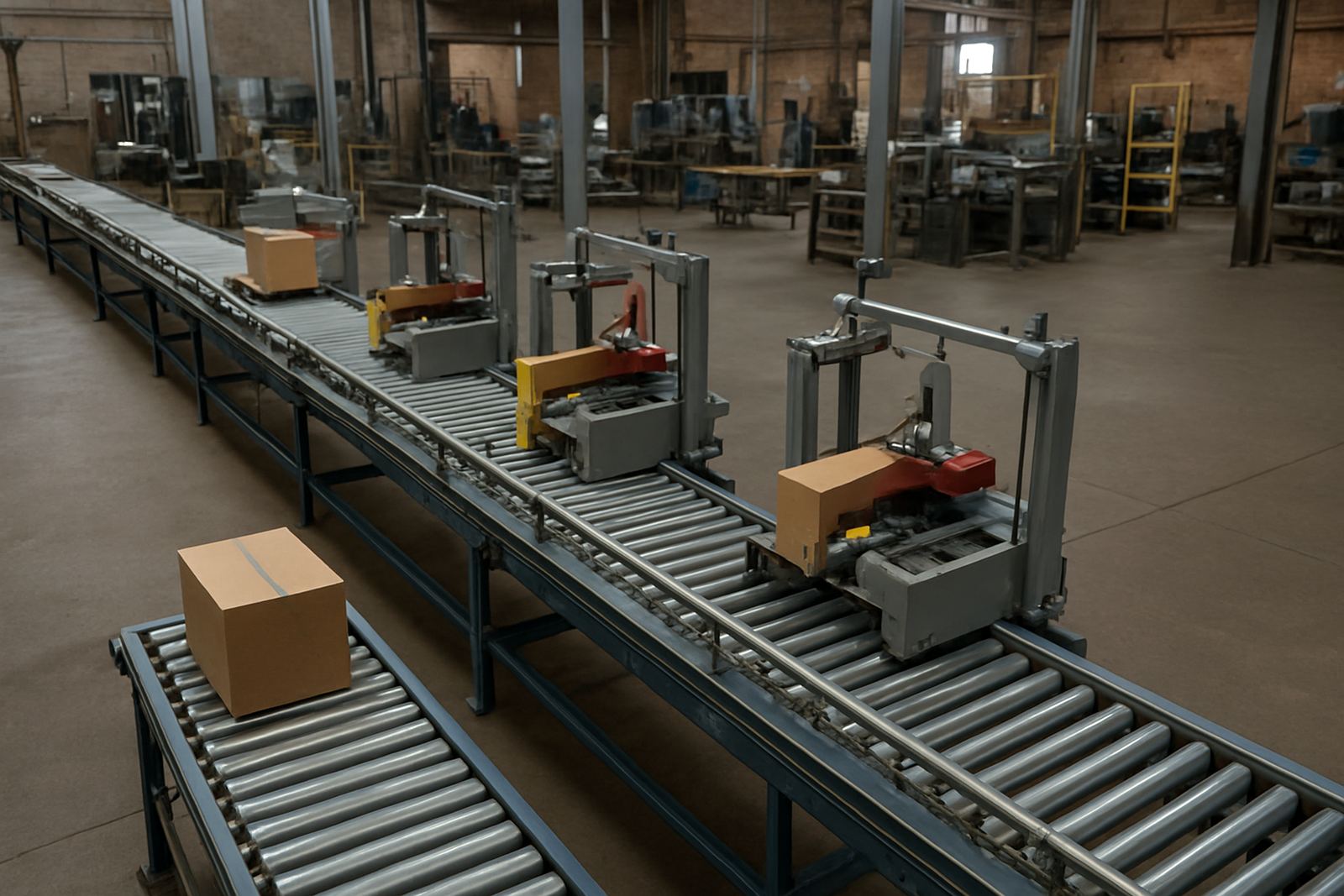
Before you look at Rand figures, map the line from infeed to discharge. A packing line is only as useful as its flow, and a cheap machine can become expensive if it does not fit the rest of your operation. Ask for the full lot list and compare it to what a working line needs: product feeding, filling, sealing, labelling, conveying, inspection and pallet movement. If one link is missing, you may still buy value but you need to know where the gap is.
For buyers in Johannesburg, Pretoria or Durban, this is especially important if your site has limited space, old floors or uneven power supply. A line that looks tidy in a Germiston viewing yard can behave very differently in a busy plant with load-shedding interruptions and tighter access for forklifts.
Check Which Modules Are Present And Which Are Missing
Used packing lines are often broken up into lots, so your first task is to work out whether you are buying a full system or just parts. Some sellers will list the main machine only, while the extras that make it run are sold separately or left in storage. Missing small items can stop the whole line from running, even when the main frame looks solid.
- Infeed conveyors and transfer sections
- Control panel, motor drives and cabling
- Hoppers, feeders, guides and product chutes
- Safety guards, sensors and interlocks
- Labelling heads, date coding units and print devices
- Outfeed conveyors, accumulation tables and reject bins
If the auction lot includes only one section of the line, plan on matching it with other used modules or new parts. That is often where the best resale opportunities sit, but only if the dimensions and control logic can be matched cleanly.
Inspect Wear Points That Affect Re-Use
Packing lines take a lot of small punishment. Chains stretch, belts glaze over, rollers wobble and bearings pick up noise long before a machine gives up completely. Look closely at the points where product moves, turns or gets compressed. On stainless sections, watch for dents, cracked welds and corrosion around fasteners, especially if the equipment came from a coastal site in Durban or Cape Town where humidity can be hard on panels and fixings.
Open guards where possible and check the condition of shafts, sprockets, pneumatic fittings and electrical enclosures. Burn marks, loose terminals and oil leaks are warning signs. If the machine was stored outside, check for water entry in motors and junction boxes. A line that has been standing for months may still be worth buying, but only if the moving parts and controls were protected properly. one loose sensor can affect the whole sequence.
Judge Control Systems For Compatibility And Safety
Modern packing lines may have a mix of old and newer control gear, so do not assume you can just plug it in and start. Check whether the line uses a simple relay setup or a programmable controller, and whether the screen, drives and sensors are still readable and available for replacement. If the system is split across several cabinets, label quality matters because missing tags slow down reassembly and testing.
Safety is not optional. Look for emergency stops, gate switches, light curtains and clear lockout points. If guards are missing or bypassed, budget for repairs before commissioning. Municipal and workplace inspections can become a problem if the line is installed without proper guarding or if cables are routed badly across walkways. For resale, a cleaner control layout usually brings stronger bids because buyers can see the system is easier to commission.
Measure Resale Potential Beyond The Current Plant
A packing line has the best resale value when it can be split into useful modules. Buyers often want the filler, capper, conveyor run or labelling section on its own, so think like a reseller and ask which parts would move fastest in the South African market. Standard widths, common motor sizes and flexible frame lengths help a lot because they are easier to fit into different factories in Bloemfontein, Isando or Alberton.
Good resale potential usually comes from equipment that can be adapted without major fabrication. That includes adjustable guides, modular conveyor stands and control panels with space for changes. If a line is tied to one product size or one container shape, its value drops unless the rest of the package is strong. Keep an eye on whether the machine can be dismantled in sections and lifted with normal site equipment rather than special rigging.
Use A Simple Buyer Checklist Before You Bid
Before you commit, work through a final checklist and make notes on each item. This keeps emotion out of the bid and helps you compare one line against another. If possible, compare the seller photos with the actual viewing and ask for a current run history, even if the machine has not been used recently.
- Is the line complete enough to run, or only good for parts?
- Are the main modules straight, clean and free of visible cracks?
- Do belts, chains and rollers move freely by hand?
- Are panels, sensors and cables present and identifiable?
- Can the equipment fit your site, power supply and product range?
- Will the line hold value if you resell one module at a time?
If the answer to more than two of these points is unclear, assume extra cost. Add dismantling, transport, electrical work and recommissioning before you bid. That is the practical way to judge a packing line and avoid surprises after collection.