Start With The Forklift Class And The Job It Must Do
Before you look at paint, hours or auction photos, match the forklift to the work. A 1.5 ton machine for light warehouse pallets is a very different buy from a 3 ton or 5 ton unit handling steel, timber, fruit bins or containers. If the forklift will work in a Germiston yard, a Durban port environment or a Cape Town site with coastal humidity, think about floor condition, weather exposure and how often it will be used each day.
Ask what fuel type the unit uses, whether it is electric, diesel or LPG, and whether the battery or tank system is included. For indoor use, ventilation matters. For outdoor use, tyre condition and ground clearance matter more. Also confirm the lift height, mast type and whether the load chart suits your racking or stacking height. A machine can look tidy and still be wrong for your site.
- Check the rated capacity at the stated load centre.
- Confirm the lift height and mast stage.
- Match fuel type to indoor or outdoor use.
- Ask whether attachments are included or excluded.
Read The Photos And Video Like A Buyer, Not A Spectator
Online bidding starts with the listing, so use the images properly. Look for uneven wear, fresh paint over repairs, oil stains under the carriage and bent forks. On older forklifts, a quick cosmetic respray can hide more serious issues. If the photos show the machine from only one side, ask for the missing angles before you bid.
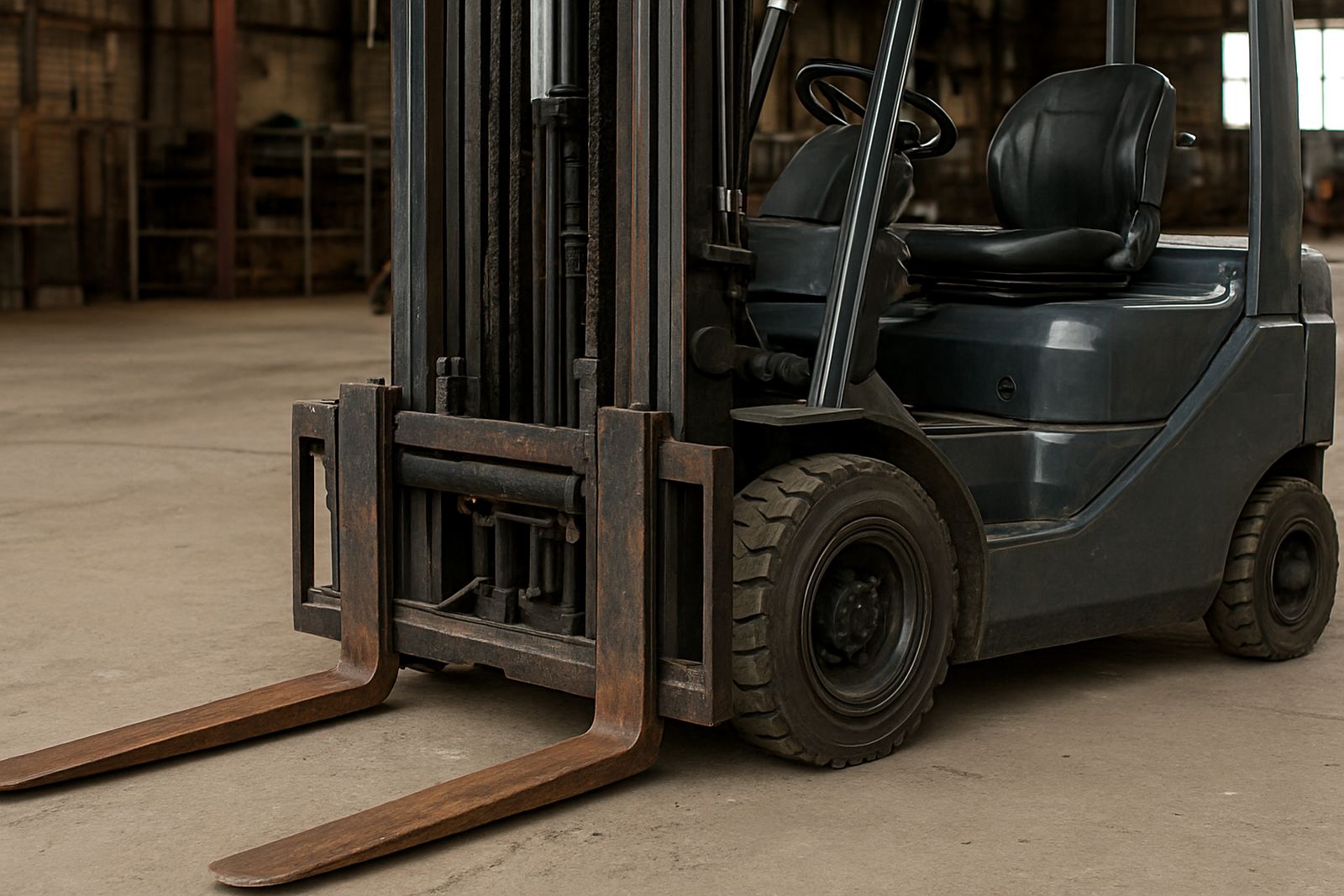
Study the mast rails, chains, hydraulic hoses, overhead guard, counterweight and forks. Scrapes are normal on a working forklift, but cracks, welded repairs and bent steel need close attention. If there is a video, listen for rough engine noise, slipping drive action, slow mast movement or jerky steering. In load-shedding affected areas, ask how the battery has been stored and charged if the unit is electric.
- Look for oil leaks around the mast and pump area.
- Check fork tips for wear, bends or cracks.
- Inspect tyres for flat spots, splits and sidewall damage.
- Watch for missing guards, lights or warning labels.
Inspect The Mast, Hydraulics And Forks First
The mast does the heavy work, so inspect it before anything else. Raise and lower the mast if possible and watch for smooth movement. Uneven lift, sudden drops or noisy rollers can point to worn parts or poor maintenance. Check the chains for corrosion, stretched links and slack. On a forklift that has been used in dusty yards or near the coast, dirt and rust often show up in the same places first.
Hydraulic hoses must be free of bulges, cracks and wet patches. Look underneath after the machine has been standing for a while because leaks often show there first. Forks should be straight, even and within safe wear limits. If the tines are thin at the heel or differ in length, budget for replacement. That cost can change your bid very quickly.
- Move the mast through its full range if the viewing allows it.
- Check chain tension and roller wear.
- Inspect every hose and fitting for seepage.
- Measure fork wear at the heel and tip if you can.
Check Tyres, Steering And Brakes On The Ground
Many buyers focus on lift capacity and forget the running gear. Tyres tell you a lot about how the forklift was used. Solid tyres with deep cuts, chunking or uneven wear may mean the machine ran on rough concrete or rubble. Pneumatic tyres should not show severe cracking or exposed cords. If the forklift will work around dock levels or uneven yard surfaces, tyre condition is not a small issue.
Turn the steering wheel lock to lock if the viewing team allows it. There should not be excessive play, knocking or stiffness. Test the brakes and handbrake if possible. A forklift that rolls badly, pulls to one side or has a weak brake pedal may need more work than the auction listing suggests. That repair bill can be higher than the winning bid.
- Check whether all tyres match in size and type.
- Look for steering play or leaking steering components.
- Test brake response, parking brake and travel control.
- Inspect wheel hubs for damage or grease leakage.
Ask For Hours, Service History And Ownership Paperwork
Hours matter, but they must be read with the condition of the machine. A low hour forklift with neglected servicing can be a worse buy than a higher hour unit that was maintained properly. Ask for the service record, recent repairs and any known faults. If the machine came from a busy warehouse in Johannesburg, a cold storage site in Pretoria or a depot in Durban, find out what kind of work it did and how often it was serviced.
Paperwork should match the asset. Confirm serial numbers, model details and any registration or ownership documents needed for handover. If there are attachments, batteries, chargers or spare forks listed, check that they are included in the lot and not just shown in the photos. Missing paperwork can delay collection and payment clearance, which is frustrating when you need the machine on site quickly.
- Request the hour metre reading and service history.
- Check serial numbers against the listing.
- Confirm what is included in the lot.
- Ask about any outstanding faults or missing parts.
Use The Viewing Checklist Before You Place A Bid
A forklift auction is not the place to guess. Use a written checklist and compare the unit against your site needs, transport budget and repair tolerance. Remember to factor in loading, collection coordination and any downtime while the machine is being serviced after purchase. A machine bought cheaply in Bloemfontein may still cost more than expected once transport and repairs are added.
If you are unsure, set a maximum bid that includes the likely fix-up cost. That way you do not chase the price beyond what the machine is worth to your operation. For used machinery, a calm check beats an emotional bid every time. The best purchase is the one that works on day one, not the one that only looked good in the listing.
- Set a total budget, including repairs and transport.
- Confirm the forklift suits your floor, load and lift height.
- Walk away if the mast, brakes or steering are not sound.
- Keep a copy of your notes for each lot you consider.