Start With the Job the Machine Must Do
Before you look at condition, match the set to the work. A light stick welder that suits gate repairs will not suit daily plate work on 10 mm steel, and a compact MIG unit may be too limited for heavy fabrication. Check the duty cycle, input power needs, output range and whether the machine can run from the supply you actually have on site. In South Africa that matters, especially where load-shedding and weak supply can trip a set that is already working hard.
For your own shortlist, decide if you need stick, MIG, TIG or plasma cutting. Then note the thickness of material, indoor or outdoor use, and whether the job needs portability. A yard crew in Germiston will judge a machine differently to a farm maintenance team near Bloemfontein, so be clear on the real use case before the auction clock starts.
- Type of welding or cutting required
- Material thickness and duty cycle needed
- Single-phase or three-phase supply
- Portability and site conditions
Check the Power Source, Leads and Internal Wear
On inspection, begin with the basics. Look for cracked insulation, burnt plugs, loose terminals and damaged earth clamps. A machine with neat paint can still have tired cables, and cables are expensive to replace. For inverter units, ask whether the cooling fan starts cleanly and runs without rattling. For transformer sets, listen for humming that is normal, but not buzzing that suggests a loose internal part or overheating.
Check the output knobs, switches and digital displays. If the controls are stiff or jumpy, that may point to wear inside the machine. Also look at the torch or electrode holder. Burn marks near the connection points usually mean the set has been run hard and maybe not serviced properly.
- Power cable length and condition
- Earth clamp strength and contact
- Torch body, trigger and nozzle wear
- Switches, dials and display function
Inspect the Welding Accessories That Add Real Value
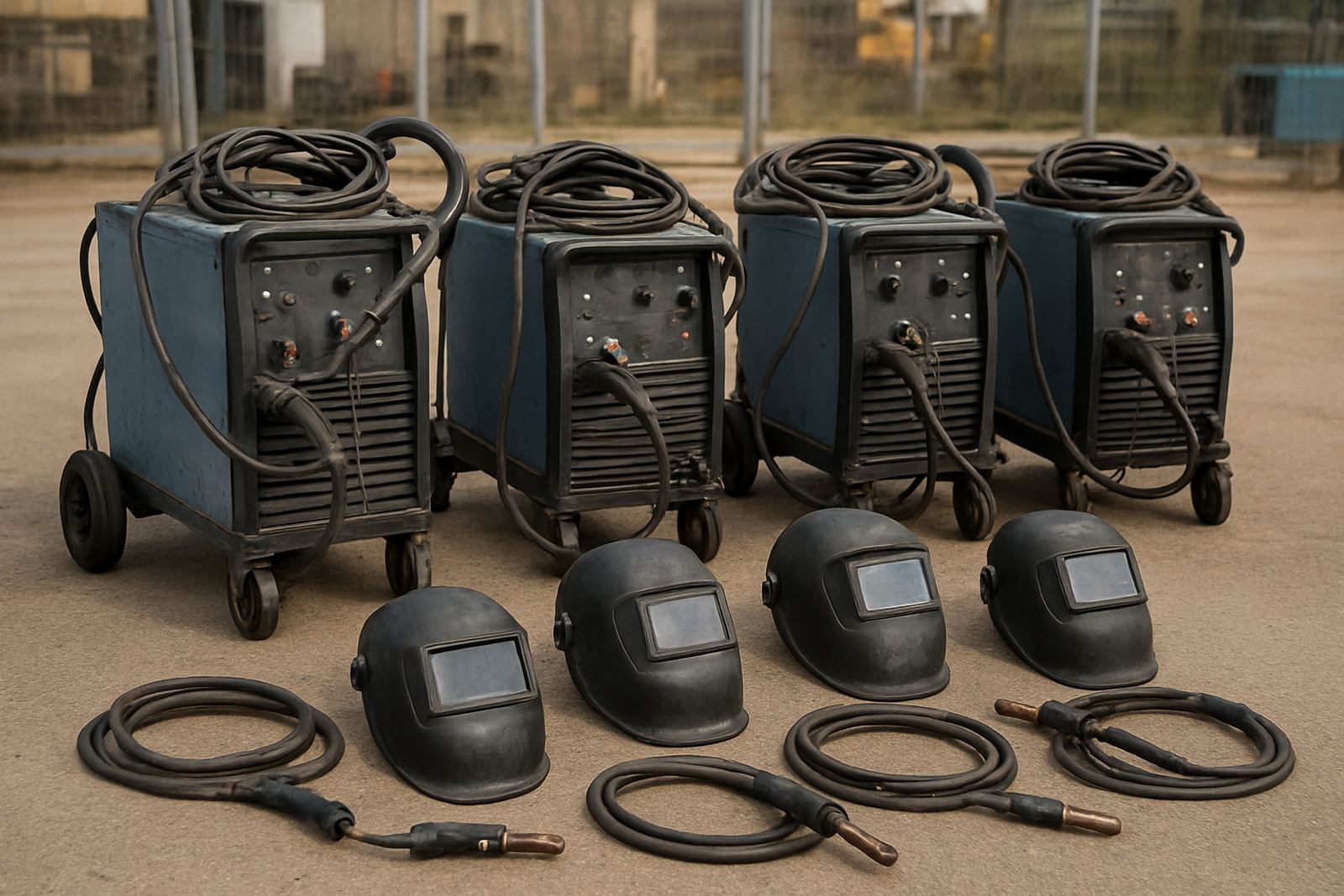
A used welding set is only part of the package. Useful extras can save money straight away, while missing parts can add cost. Check whether the lot includes a regulator, gas hose, mask, helmet, spare nozzles, wire feed rollers, electrode holders, gloves or a cutting torch. If the set is bundled with a trolley or cylinder cage, that can help with workshop use and collection.
Do not pay extra for accessories that are badly worn just because they are included. A cracked helmet lens, brittle hose or rusted trolley may have little value. Still, a complete set is often easier to put into service quickly, especially if you need to get back into production after a breakdown.
- Regulator and hoses for gas equipment
- Wire feed parts for MIG sets
- Helmet, mask and hand tools
- Trolley, cylinder chains or storage brackets
Look for Signs of Overheating, Moisture and Poor Storage
Used welding gear often tells the story of where it lived. Equipment stored in a damp yard or near the coast can show rust on terminals, pitting on covers and oxidised connectors. Inland units can still suffer if they were kept in a dusty fabrication bay with poor cleaning. Moisture is a serious issue because it affects insulation and can make a machine unsafe to run.
Open what you are allowed to inspect and look for scorched dust, discoloured wiring and any smell of burnt varnish. These are warning signs that the unit was pushed too hard. If the machine has been standing for a long time, ask whether it was tested recently. A set that has not run in months may need a proper service before it is ready for daily work.
Judge the Lot for Completeness and Spare Parts Support
When bidding on workshop assets, it is easy to focus on the main machine and miss the rest. A lot with matching spares, extra tips, a second torch, extension leads or a full set of connectors can be worth more than a standalone unit. On the other hand, a machine with uncommon fittings can be difficult to keep going if those parts are no longer close at hand.
Ask yourself whether you can source common wear items locally. Consumables should be easy to replace in Johannesburg, Pretoria, Durban, Cape Town or Bloemfontein without waiting weeks. If the set needs special parts, price that risk into your bid. A cheaper machine is not cheaper if it sits idle for lack of a simple fitting.
- Are the consumables standard and available locally?
- Are the fittings complete and matching?
- Is the machine easy to service?
- Will replacement parts be affordable after collection?
Use a Simple Bidding Checklist Before Auction Close
Once you have inspected the lot, set your limit with transport, repairs and consumables included. Add collection costs, lifting gear if needed, and any cleaning or testing before first use. For heavier sets, think about access on site and whether your team has the right pallet jack or loading help. Collection delays can happen too, so plan for it in advance.
Before you bid, work through this quick list. It keeps emotion out of the process and helps you compare one welding set against another on real value, not just the hammer price.
- Confirm the machine type and output range
- Check cables, torch, clamps and hoses
- Review rust, moisture and heat damage
- Price in parts, transport and commissioning
- Set a firm maximum bid and stick to it
Used welding equipment can be a good buy when the right checks are done. A careful inspection gives you a much clearer picture of what the set will cost to run, and what it might still deliver on site.