
Start With the Frame, Floor and Roof Line
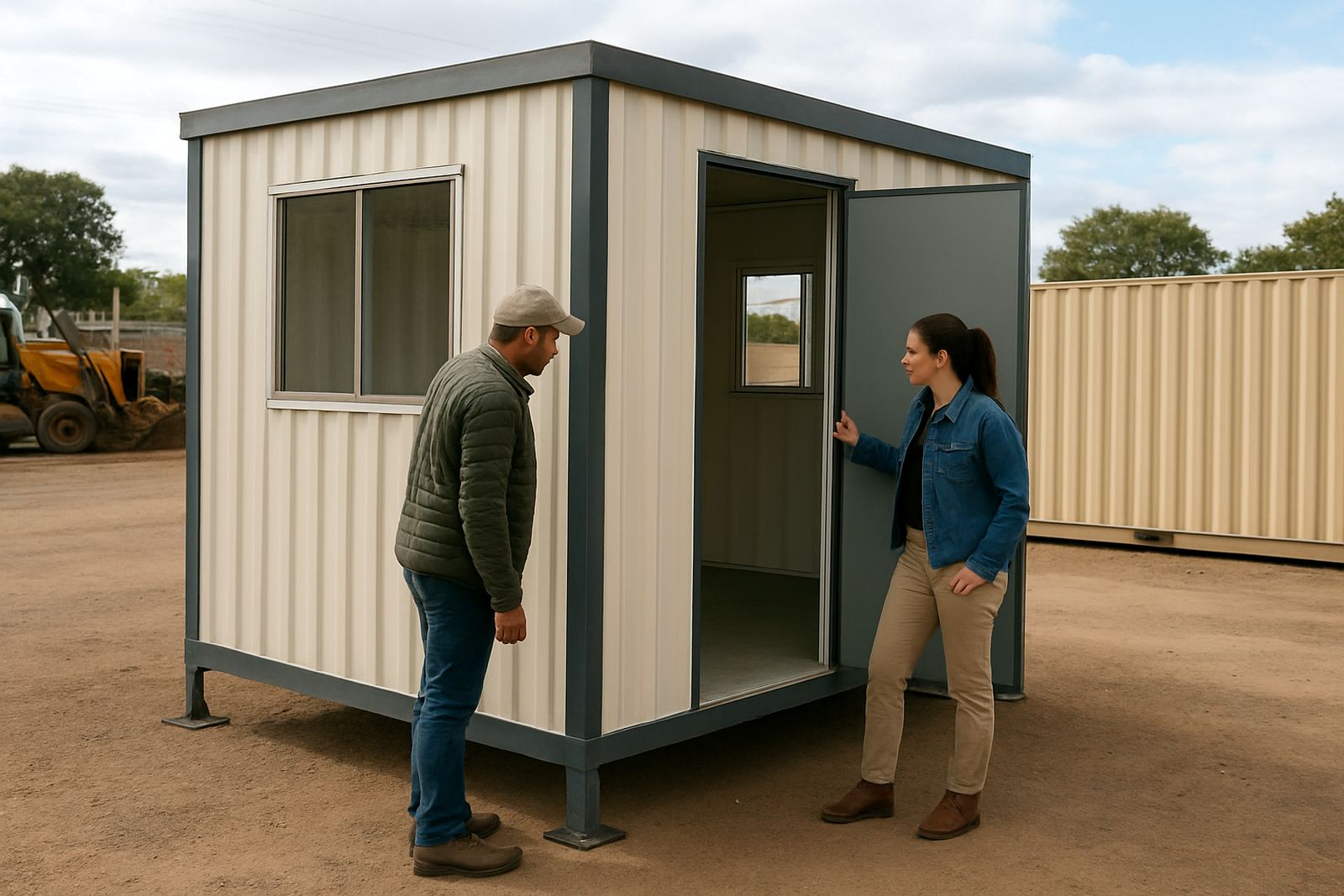
When you view a cabin, begin with the parts you cannot replace quickly or cheaply. Look under the unit for chassis members, corner posts and lifting points. Rust around the base is common, but deep pitting, bent supports or cracked welds can mean the cabin has been moved badly or stood in wet ground for too long. In coastal areas, the salt air can make corrosion worse, so pay extra attention to the underside and any steel steps or skids.
Inside, walk the full floor and listen for soft patches, movement or creaking. Water damage often shows near the door, in corners and around any old plumbing penetrations. Check the roof line from outside for dips or uneven sections. A slight lean can point to settling, while obvious distortion may affect door closing and window alignment. If the cabin has been stacked or craned often, ask whether the lifting points are still sound and whether the frame is straight enough for transport.
- Check for rust around the base, corners and lifting points.
- Look for soft floorboards, stains and repaired patches.
- Stand back and inspect the roof for sagging or twist.
- Open and close the door to test alignment and framing.
Test Doors, Windows and All the Fittings That Get Used Daily
Portable cabins are often bought for site offices, guard rooms, change rooms or storage, so day to day fittings matter. Open every window and door. If they stick, drag or rattle badly, the frame may be warped or the hinges worn. Check locks, catches, handles and security bars. A cabin with broken hardware may still be usable but factor in repair costs and time on site.
Inspect the interior lining, ceiling boards and any partition walls. Loose panels can be a sign of moisture or age. If there are cupboards, shelves or work surfaces, confirm they are fixed properly and not rotten at the mounting points. Cabins used in hot inland areas often show heat stress, while units near the coast may have swollen boards and surface mould. Small defects are fine if priced right, but missing fittings can add up quickly once the unit is on your own site.
- Test each door and window for smooth movement.
- Check locks, hinges, catches and security bars.
- Look for loose wall lining, ceiling boards and trim.
- Note any missing internal fittings that must be replaced.
Confirm Electrical and Plumbing Readiness Before You Bid
Many site cabins are sold with existing electrical and plumbing fittings, but that does not mean they are ready to use. Look for a distribution board, plugs, lights and visible cable runs. Ask whether the unit was disconnected professionally and whether any wiring has been removed. If the cabin will be used on a site with load-shedding or a generator, make sure the electrical setup is suitable for your needs and that there are no unsafe alterations. Loose wires and makeshift joins are a red flag.
If there is a sink, toilet or kitchenette, inspect the water lines, waste outlets and taps. Smell for damp and check for leaks under sinks or around access panels. On some sites the cabin will only need basic power, but on others you may need to reconnect water, sewerage or a holding tank. The cost of that work can be higher than expected, so include it in your bid. It is better to know early than to find out after collection that the unit still needs major work.
- Check that wiring, lights and plug points are present and tidy.
- Ask about disconnection and whether fittings were tested.
- Inspect sinks, taps, drains and any waste outlets.
- Allow for reconnection costs if plumbing is incomplete.
Measure Access, Transport and Crane Needs at Both Ends
Buying the cabin is only part of the job. You also need to move it. Measure the unit length, width and height, then compare that with road access, gates, driveways and any low trees, cables or overhead structures. In Germiston, Johannesburg East or Isando, tight industrial yards can make collection tricky, while some rural or mining sites have rough access roads that add to transport cost. A cabin may be affordable at auction but expensive to remove if the truck cannot get close enough.
Check whether the unit needs a crane, hiab or side-loader, and whether the ground at collection and delivery is level enough for safe lifting. If the cabin is still on blocks, confirm how it will be loaded. Ask about transport permits if the load is over width or height limits. Also think about where the unit will be placed once it arrives. A level base, compacted ground or concrete pads are often needed to stop the cabin from settling unevenly. This step gets overlooked often and causes delays.
- Measure all external dimensions before bidding.
- Check gate width, turning space and overhead clearance.
- Confirm whether crane or truck-mounted lifting is needed.
- Plan for a level base at the destination site.
Use the Viewing Checklist to Compare Units Fairly
When several cabins are listed at once, it helps to score each one the same way. Compare condition, size, layout and likely repair costs rather than getting caught by a clean paint finish. A unit with better structure but worn fittings may be a smarter buy than a neat-looking cabin with hidden rot. Ask for clear photos of the underside, roof, interior corners and any serial or asset markings where available. If you are bidding from Pretoria, Durban, Cape Town or Bloemfontein, having consistent details makes it easier to compare units across different yards and regions.
Use a simple decision list before the auction closes. If a cabin needs only cleaning and a few minor repairs, it may be ready quickly. If it needs floor work, electrical repairs and transport support, the total cost can climb fast. Keep the numbers in Rand and do not guess. A proper view of the unit protects your margin and saves time later.
- Compare structure, fittings and transport cost together.
- Ask for underside and roof photos where possible.
- Estimate repairs before setting your top bid.
- Choose the unit with the lowest total ready-to-use cost.
Final Checks Before You Place a Bid
Before you bid, make sure you know exactly what is included. Some cabins are sold as complete units, while others may be missing steps, air-conditioning, furniture or external ramps. Confirm whether the unit is sold as seen, whether there are any site access rules and when collection must happen. If the cabin is in a multi-site dispersal, collection timing can be strict, so plan your crew and transport early. Missing a deadline can lead to storage fees or extra handling charges.
Finally, think about the end use. A security office, canteen or temporary admin room each has different needs. The right cabin is not just the cheapest one, it is the one that fits your space, budget and timeline. A careful inspection takes a bit of time, but it is worth it when the cabin arrives ready for use, not as a surprise project.