
Start With the Job You Need the Generator To Do
Before you look at a lot, work out exactly what you need the generator to carry. A unit for a small workshop, office block, cold room or welding setup will not all need the same kVA, fuel type or control setup. In South Africa, many buyers want backup power for load-shedding, but some also need a primary supply for sites without a municipal connection.
Check the load in kW or kVA, the starting surge for motors and compressors, and whether the machine will run single phase or three phase equipment. If you are powering pumps, refrigeration, lifts or production lines, allow room for starting current. A generator that is too small may trip often or run hard all the time, which shortens its life.
- List every item the generator must power.
- Separate essential loads from non-essential loads.
- Confirm voltage, phase and frequency requirements.
- Allow extra capacity for motor starting and future growth.
- Decide if standby use or continuous use is needed.
Read the Hours, Service History and Usage Clues
Hours matter, but they do not tell the full story. A low-hour generator that stood outside in coastal humidity or was poorly stored can give more trouble than a higher-hour unit that was serviced regularly. Look for the service records if they are available, and compare the hours with the age and type of duty the machine likely saw.
Ask how the set was used. A standby generator that exercised once a week may wear differently from a prime unit that ran for long shifts. Also check whether the hour metre looks original and whether the readings make sense with the visible condition. If the numbers seem too neat or too low for the wear on the machine, ask more questions before you place a bid.
- Compare hour metre readings with the overall condition.
- Ask if the unit was standby, prime or continuous duty.
- Check for service stickers, oil change notes or filter records.
- Look for signs of long idle periods, rust or stale fuel.
- Confirm whether the engine started regularly and under load.
Inspect the Enclosure, Cooling and Noise Control
The enclosure is more than a cover. It protects the alternator, engine and control gear from dust, rain and accidental damage. On sites near the coast, corrosion can creep in quickly. In industrial areas like Germiston, Isando and Alberton, dust and vibration can also take a toll. Look closely at panels, locks, hinges, seals and vents.
Check the radiator area, fan guards and ducting for blockage or damage. A damaged enclosure can affect cooling and make the machine louder than expected. If the unit is meant for a residential, retail or office site, noise level matters too. A missing or damaged canopy panel may create extra noise and reduce weather protection.
- Inspect for rust, dents, missing fasteners and broken seals.
- Check vents, louvers and radiator airflow paths.
- Look at the base frame for bending, oil stains or weld repairs.
- Confirm the canopy doors open and lock properly.
- Ask whether the set was kept indoors or outside.
Check the Control Panel, Switchgear and Safety Features
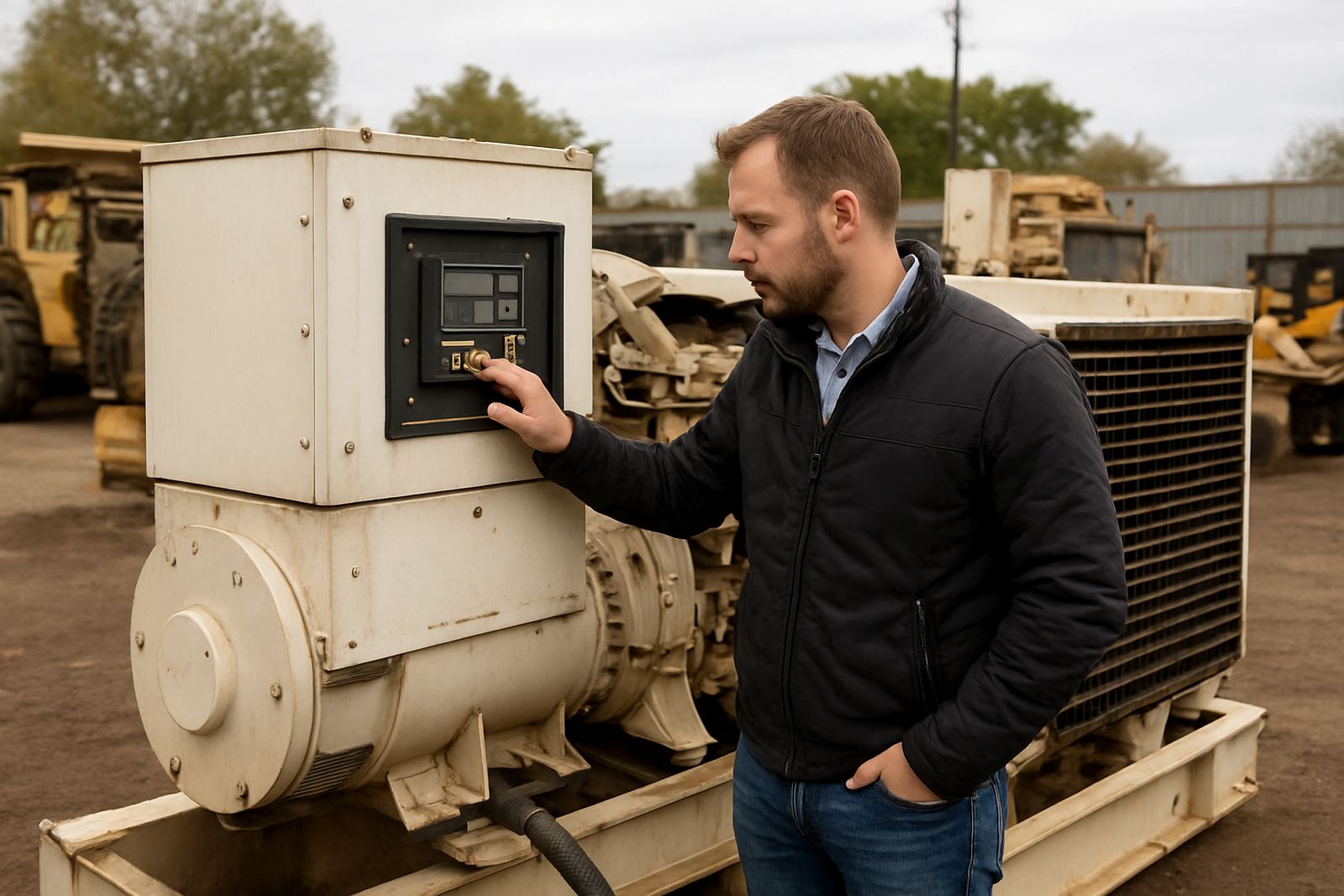
The control panel tells you a lot about how useful the generator will be on your site. Make sure the display is complete, readable and free from fault warnings where possible. You want to see basic operating data such as voltage, frequency, oil pressure, coolant temperature and running hours. If the panel is damaged or incomplete, repairs can become costly.
Also look at the stop/start controls, battery charger, breakers and changeover interface if it comes with one. For buyers in commercial and municipal environments, safe connection and isolation matter. A generator with missing safety covers or unclear wiring should be treated carefully and priced accordingly.
- Check that gauges, buttons and indicator lights are present.
- Confirm the emergency stop works properly.
- Inspect cables, terminals and connection points for heat damage.
- Ask if the battery, charger and starter system are included.
- Make sure the breaker size suits your expected load.
Bid on the Right Details, Not Just the Brand or Size
Two generators with the same kVA rating can be very different in value. One may have a clean engine, usable enclosure and clear controls, while another may need battery work, filter changes and panel repairs before it can go into service. When you are bidding, cost in the likely transport, installation and commissioning work as well.
If you are buying for a business in Johannesburg, Pretoria, Durban, Cape Town or Bloemfontein, think about where the unit will be collected from and what access you have on site. Some machines need a crane truck, lowbed or forklift loading. If the generator is being sold as part of a multi-site dispersal, make sure you understand which accessories are included and which are not. It helps to compare the likely repair bill against a new or alternative used option before the auction closes.
- Estimate transport and offloading costs before bidding.
- Allow for fuel system flushing, filters and fresh batteries.
- Check if silencers, tanks, cables or trailers are included.
- Use the photos and notes to judge missing parts.
- Set a maximum bid that still leaves room for setup costs.
Use a Simple Pre-Bid Checklist and a Clear Collection Plan
A good checklist keeps emotion out of the bidding process. Decide your top bid early and stick to it. If you win the lot, move quickly on payment clearance, collection booking and any site access requirements. Delays can be costly, especially when a business needs backup power in a hurry.
For collection, bring the right lifting gear, straps and transport permits where needed. Confirm the access route, loading height and whether the yard or site has restrictions. If the generator is large, heavy or attached to skids, plan for professional handling. A rushed collection can turn a bargain into a problem.
- Confirm the lot number, description and included extras.
- Read all notes on condition, missing parts and viewing access.
- Check power rating, phase, fuel type and enclosure type.
- Arrange the right transport and lifting equipment.
- Keep proof of payment and collection instructions ready.
When a Viewing Helps Before You Commit
If possible, view the generator before bidding. A short inspection can reveal leaks, corrosion, worn mounts or panel damage that photos do not always show. In person you can also check the size, access points and overall condition more confidently. That matters when the machine will support critical operations and you need it running without drama.
At a viewing, take notes on the hours, controls, enclosure, tyres if the unit is mobile, and any signs of repair. Ask about the last time it ran and whether it was tested under load. If something does not add up, rather ask again before the auction ends. Careful buying usually costs less than buying in a hurry.