Start with the compressor type and duty cycle
The first step is to identify what sort of air compressor you are looking at, because not every unit suits the same job. A small workshop unit used for tyres and spray guns is very different from a larger industrial machine that runs plant air all day. Check whether it is a piston compressor, screw compressor or portable unit, then note the tank size, motor rating and whether it is single phase or three phase.
For buyers in Johannesburg, Germiston or Pretoria, that detail matters when the compressor needs to match the electrical supply on site. A machine that looks strong on paper may not be practical if the power supply is limited or if the unit was used only for short bursts and now needs continuous duty. Ask how long it ran per shift, what tools it powered and whether it was part of a duty cycle with regular cooling breaks.
- Confirm the compressor type and model family
- Check motor rating, voltage and phase
- Note tank size in litres and expected air delivery
- Ask if it was used for light workshop work or full production
Inspect the frame, tank and basic condition
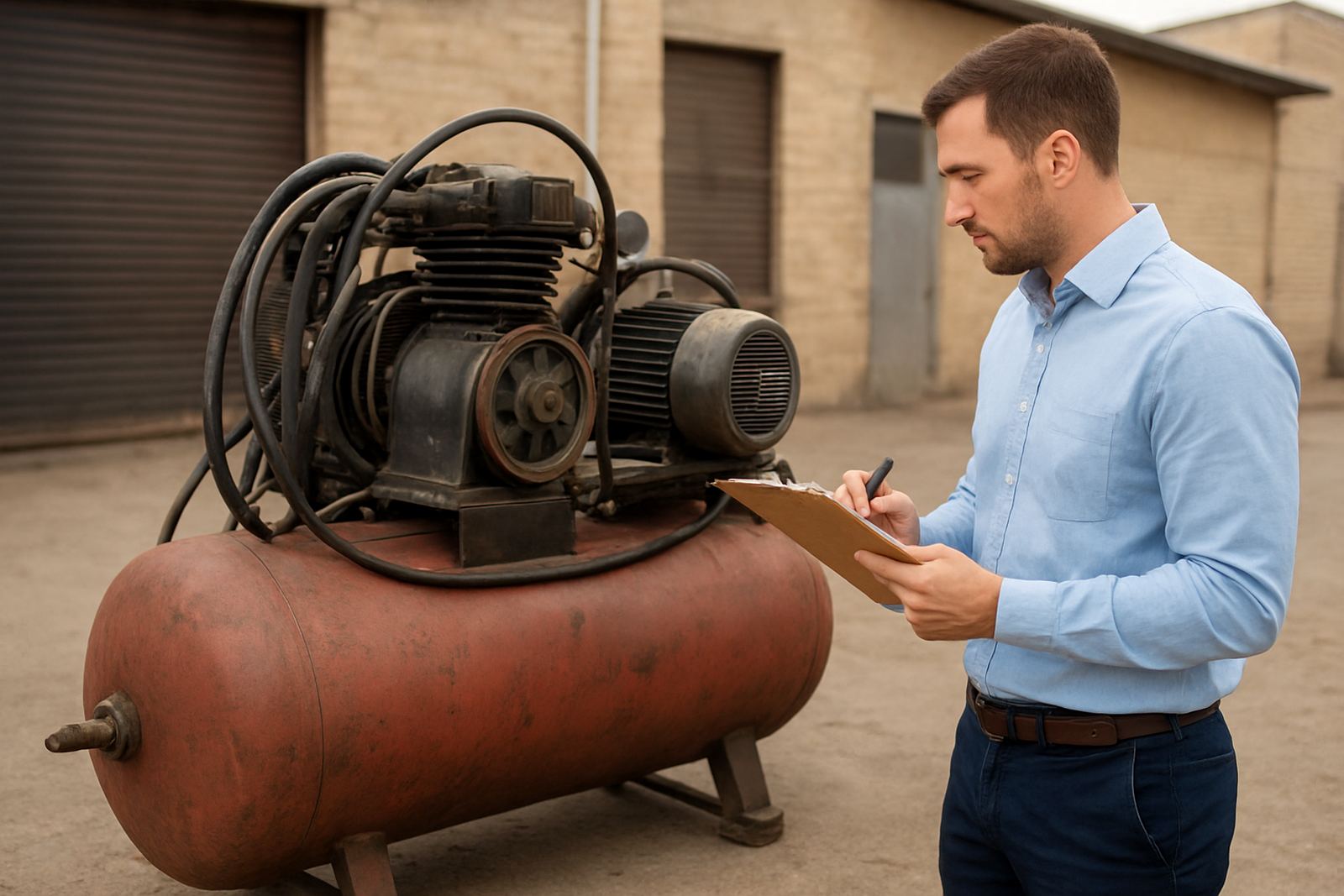
Do a full walkaround and look for dents, leaks, corrosion and poor repairs. In coastal areas like Durban and Cape Town, rust can form fast on tanks, pipework and fittings, especially if the unit stood in a yard or an open shed. A compressor that lived near dust, grinding work or chemical fumes may also show wear around filters, vents and control panels.
Check the tank carefully for bulging, fresh welds, pitting and drain valve damage. Water inside the tank is a warning sign, because poor draining shortens the life of the vessel and can create safety issues. Make sure mounting feet are solid and that the machine has not been moved roughly by forklift or crane. If it is a mobile unit, inspect the wheels, tow bar and guards too.
- Look for rust around seams, drains and fittings
- Check guards, wheels, feet and panels for damage
- Inspect the tank for dents, bulges and repair marks
- Ask when the tank was last drained and serviced
Check the motor, belts and noise on start-up
Once the compressor is powered, listen before you judge anything else. A healthy unit should start cleanly and build pressure without harsh knocking, screaming belts or repeated tripping. If the machine struggles to start, runs hot or shakes badly, there may be motor, switchgear or head problems. In areas where load-shedding has affected operations, some compressors suffer from repeated hard starts after outages, so that history is worth asking about.
For belt-driven compressors, examine belt condition and tension, pulley alignment and any guard damage. For direct-drive units, watch for vibration and abnormal bearing noise. Check gauges while the compressor is building pressure and again once it reaches cut-out. Slow pressure build or unstable cycling can point to worn rings, valves or leaks in the line. A unit that sounds tired often costs more to put right than buyers expect.
- Listen for knocking, rattling or air leaks during start-up
- Check belts, pulleys and guards on belt-driven units
- Watch pressure rise and compare it with normal working behaviour
- Look for overheating, smoke or repeated tripping
Review service records and wear parts
Service history tells you a lot about how a compressor has been treated. Ask for dates of oil changes, filter replacements, belt changes and any major repairs. If the unit is oil-lubricated, check oil colour and level, and look for signs of contamination. If it has been standing unused for months, seals may dry out and the first run may reveal leaks that were not visible at rest.
Inspect wear parts closely. Filters, hoses, non-return valves, pressure switches and separators can all add costs after purchase. A machine with complete records and spare parts on hand is usually a safer buy than one with no paper trail at all. If the compressor came from a factory in Germiston, Isando or Alberton, ask whether it was kept under planned maintenance or fixed only when it failed. That answer usually tells you plenty.
- Request service logs and repair invoices where available
- Check filters, hoses, valves and seals for age and wear
- Confirm the last oil change and oil type used
- Ask whether parts are still easy to source locally
Confirm the accessories and controls included
Do not value the compressor as if it comes complete if key items are missing. Many buyers overlook accessories and then spend extra on regulators, hoses, couplings, moisture traps, starter equipment or replacement gauges. A set that looks ready for use may still need brackets, wiring, connectors or control parts before it can go into service. That can turn a fair auction price into a poor purchase if not counted upfront.
When you inspect the lot, list everything that is physically present and note what is missing. Check whether the compressor includes the receiver tank, pressure relief valve, drain fittings, air line connections and any starter box or control panel. If there are loose parts in a crate or on a pallet, make sure those are tied to the correct machine. Clear cataloguing helps both buyers and sellers avoid disputes later on.
- List all hoses, fittings, gauges and regulators included
- Check for moisture traps, starter gear and control panels
- Confirm the safety valve and drain fittings are present
- Match loose parts to the correct lot before bidding
Calculate likely repair and transport costs before you bid
After inspection, work out the full landed cost of the compressor, not only the hammer price. Add collection, loading, transport, any stripping and reassembly, plus electrical work if the supply on site needs upgrading. For larger machines moving between Pretoria, Durban, Cape Town or Bloemfontein, collection planning matters because access, loading gear and timing can change the final cost quite a bit.
Think too about the machine’s expected running cost. A unit that is cheap to buy but inefficient, noisy or overdue for service may cost more over a year than a better-kept compressor at a higher bid. If the compressor will run in a dusty or humid area, factor in extra filter changes and maintenance. The best bid is the one that fits your job, your power supply and your budget, not just the lowest number on screen.
- Add collection, transport and installation to your bid limit
- Allow for repairs, parts and electrical setup
- Check if the site needs a forklift, crane or special loading plan
- Buy for actual use, not only for the opening price
Use a simple checklist at viewing or collection
Before the lot closes, run through a short checklist and keep your notes clear. That makes it easier to compare one compressor against another and to explain your bid to management or finance. If you are selling, the same checklist helps you present the machine honestly and reduce questions from buyers.
A practical inspection should cover type, condition, power requirements, service history, accessories and transport needs. If anything is uncertain, mark it down and price accordingly. Transparent information leads to better auction outcomes and fewer surprises at payment clearance or collection.
- Type identified and suitable for the job
- Motor, tank and frame checked
- Running noise, pressure build and heat tested
- Service records reviewed
- Accessories counted and matched
- Transport and installation costs added in