
Start with the job the forklift must do
Before you look at paint, hours or auction notes, match the machine to the work. A forklift that suits a flat warehouse floor in Johannesburg may be wrong for a yard in Durban with ramps, damp concrete and frequent rain. Ask what load you need to lift, how high it must go, and whether the work is indoors, outdoors or both.
Capacity is where many buyers slip up. A 2,500 kg forklift may sound generous, but the real lifting ability drops as the mast rises and the load moves forward. If you are handling pallets of bricks, steel or packed stock, confirm the rated load at the lift height you actually need, not the number on the side panel.
- Check the maximum lift height against your racking or truck loading bay.
- Confirm the floor surface and whether the machine needs solid tyres or pneumatic tyres.
- Ask about turning space if the site is tight, especially in older Germiston or Isando yards.
- Make sure the fuel type suits the site, whether diesel, petrol, LP gas or electric.
Inspect the mast, forks and carriage closely
The mast does the heavy work, so look for bends, cracks and uneven wear. Raise and lower the forks slowly if the viewing yard allows it. Watch for jerky movement, noisy chains or mast sections that do not travel evenly. A forklift that looks tidy from 5 metres away can still have a tired mast that will cost a lot to sort out.
Forks should be straight, with even thickness and no deep grooves on the top surface. The heel of each fork is a common weak point. If it is worn thin or cracked, factor replacement into your bid. Check the carriage for play, damaged rollers and loose backrests, because these parts affect both safety and control.
- Look for visible weld repairs on the mast or fork carriage.
- Measure fork length if you plan to handle longer pallets or drums.
- Check chain condition and signs of rust from outdoor storage.
- Watch for oil leaks around mast cylinders and hoses.
Assess tyres, steering and brakes before you bid
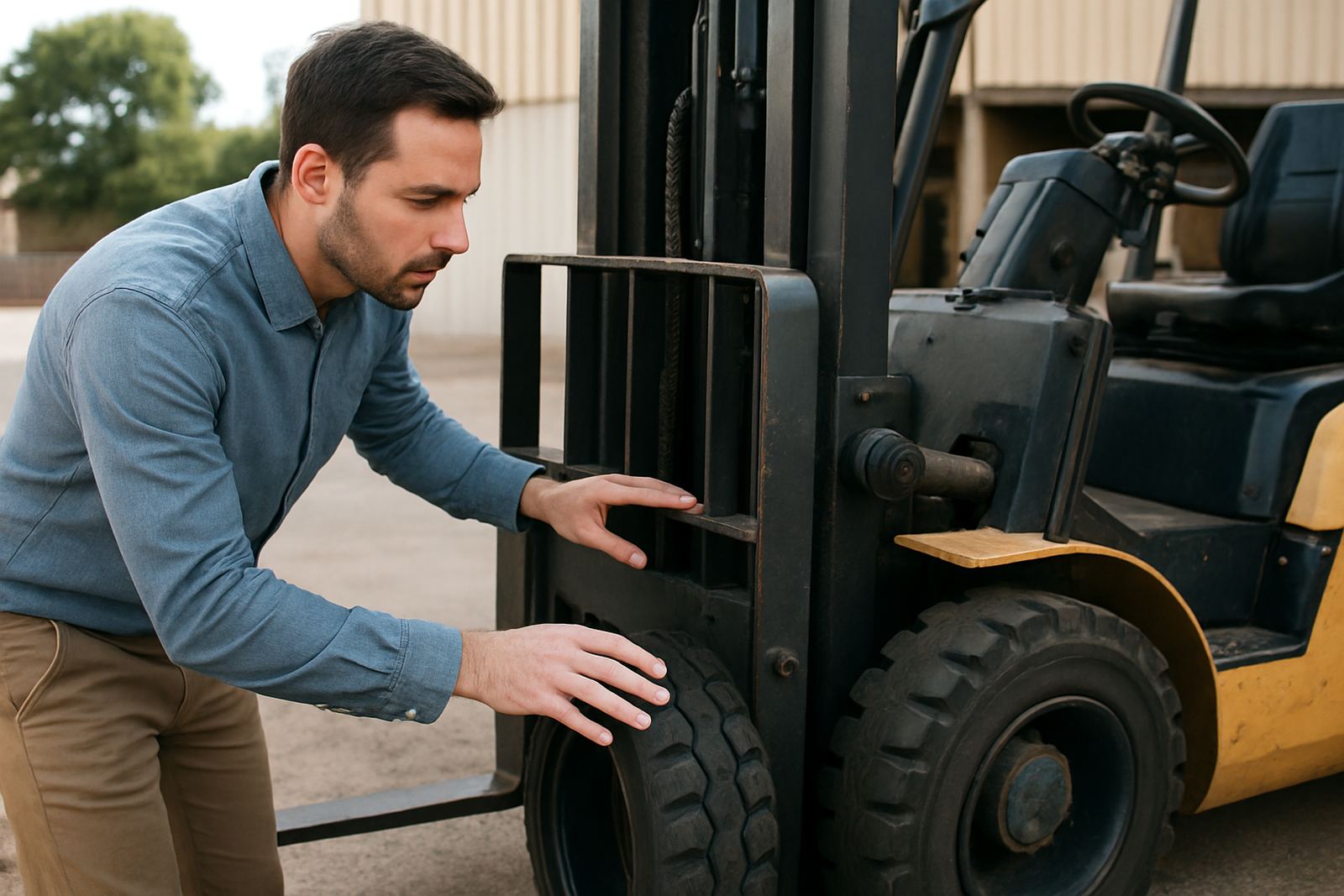
Tyres tell you a lot about how a forklift has been used. Uneven wear can point to poor steering alignment, heavy side loading or rough yard surfaces. On many auction machines the tyres are the first thing that needs money spent, and they are not cheap. In wet coastal areas like Durban, worn tyres can be a real issue on slick concrete and loading bays.
Turn the steering wheel from lock to lock and listen for knocking or stiff movement. A forklift should respond cleanly, not wander or pull to one side. Test the brakes on a level surface and if possible on a slight incline. Brakes that feel soft, spongy or delayed need attention before the machine goes back into daily use. That is not something to leave for later when the crew is already waiting on stock.
- Check whether the tyres are solid, pneumatic or cushion type, and if they match the site.
- Inspect tread, sidewall damage and any flat spots from standing idle.
- Look for oil on brake components or around the wheel hubs.
- Ask if the steering axle has been repaired or bushed before.
Read the engine, battery or gas system for clues
The power source should be as practical as the rest of the machine. Diesel forklifts often suit outdoor yards and rougher sites, while electric units can work well indoors where exhaust fumes are a problem. In Gauteng, with load-shedding and battery charging costs to think about, an electric unit needs careful checking of battery condition and charger compatibility.
For diesel and petrol forklifts, listen for cold starting issues, smoky exhaust and rough idle. Excessive smoke can point to injector, compression or fuel system problems. On gas units, inspect the regulator, hoses and mounting points for wear. With electric forklifts, ask how old the battery is, whether cells have been tested and if the charger is included. Battery replacement can easily change the whole deal.
- Check for oil leaks, coolant stains or fuel smells under the machine.
- Ask whether the hour metre is believed to be accurate.
- Confirm what charger, gas bottle fittings or accessories come with the lot.
- For electric models, ask about battery hold time under a normal shift.
Look at the paperwork and service history, not only the machine
A forklift may appear to run well but still be a poor buy if the records are thin. Ask for whatever service history is available, plus the serial number, model details and any notes on major repairs. If the seller can show recent maintenance, that gives you more confidence than a quick clean and a fresh coat of paint.
Also check whether the machine matches the auction lot description. Sometimes attachments, tyres or mast height differ from what a buyer expected. If the forklift will be used in an industrial area or on a regulated site, it is worth confirming that any safety plates and warning labels are still legible. Missing plates can create headaches later when your team needs to put the machine into operatonal use.
- Confirm the serial number against the listed lot details.
- Ask when the last service was completed and what was replaced.
- Check for missing safety decals, load charts and data plates.
- Find out whether the machine comes with attachments such as side shift or fork positioners.
Use the viewing yard to estimate real ownership costs
One of the best ways to judge value is to think beyond the hammer price. A cheaper forklift with worn tyres, tired hydraulics and no service trail can cost more than a slightly dearer one that is ready for work. Add transport, collection timing, possible repairs and any compliance checks you need after purchase.
At BidThis viewings across Germiston, Isando, Alberton and other South African locations, buyers do best when they take notes, photos and measurements. That way they can compare a few machines on equal terms before bidding online. If you are buying for a site in Pretoria, Cape Town or Bloemfontein, factor in how far the forklift will travel and whether you have the right truck, ramp access and unloading plan. A solid buy is one that arrives, starts and goes straight to work, not one that sits in the yard while parts are chased.
- Budget for transport from the collection point to your site.
- Allow for tyres, service items and hydraulic hoses after purchase.
- Check collection timing so the forklift does not sit longer than needed.
- Match the machine to your real daily workload, not just the auction estimate.
A Germiston example: what a careful buyer notices
A local fabricator in Germiston once viewed two used forklifts for the same task. One looked cleaner, but the mast had a slight rattle, one tyre was badly worn and the battery age was unclear. The second machine had more cosmetic marks, yet the forks were straight, the braking felt firm and the service notes were complete. The buyer chose the second unit and spent less overall, even after transport and minor repairs.
That is the value of a proper viewing. Small signs often tell the real story. A forklift is a working asset, not a showroom piece, so the goal is to find one that suits your site and your budget without surprises. If you check the right details before you bid, you stand a much better chance of getting proper value for your Rand.