
Start With The Real Weight And Dimensions
Before any machine is moved, confirm the actual weight, width, height and centre of gravity. A plate on the frame is useful, but older equipment often has faded markings or missing data, so a proper check matters. If the item is wider than standard road limits or sits high on a trailer, the route and the loading method must be decided before the first chain is lifted.
In Gauteng, a machine that looks manageable on a yard floor can become a problem at a bridge, a low gate or a tight turning circle near an industrial park. That is why buyers and sellers should treat the measurements as part of the sale, not as an afterthought. The more accurate the figures, the easier it is to book the right collection vehicle and avoid costly delays.
- Measure height from the highest fixed point, not the cab roof alone
- Check if any loose parts need to be removed first
- Confirm whether the item can roll, fold or be lifted as one unit
- Record the exact collection point and offloading point
Choose The Right Lifting Method For The Yard
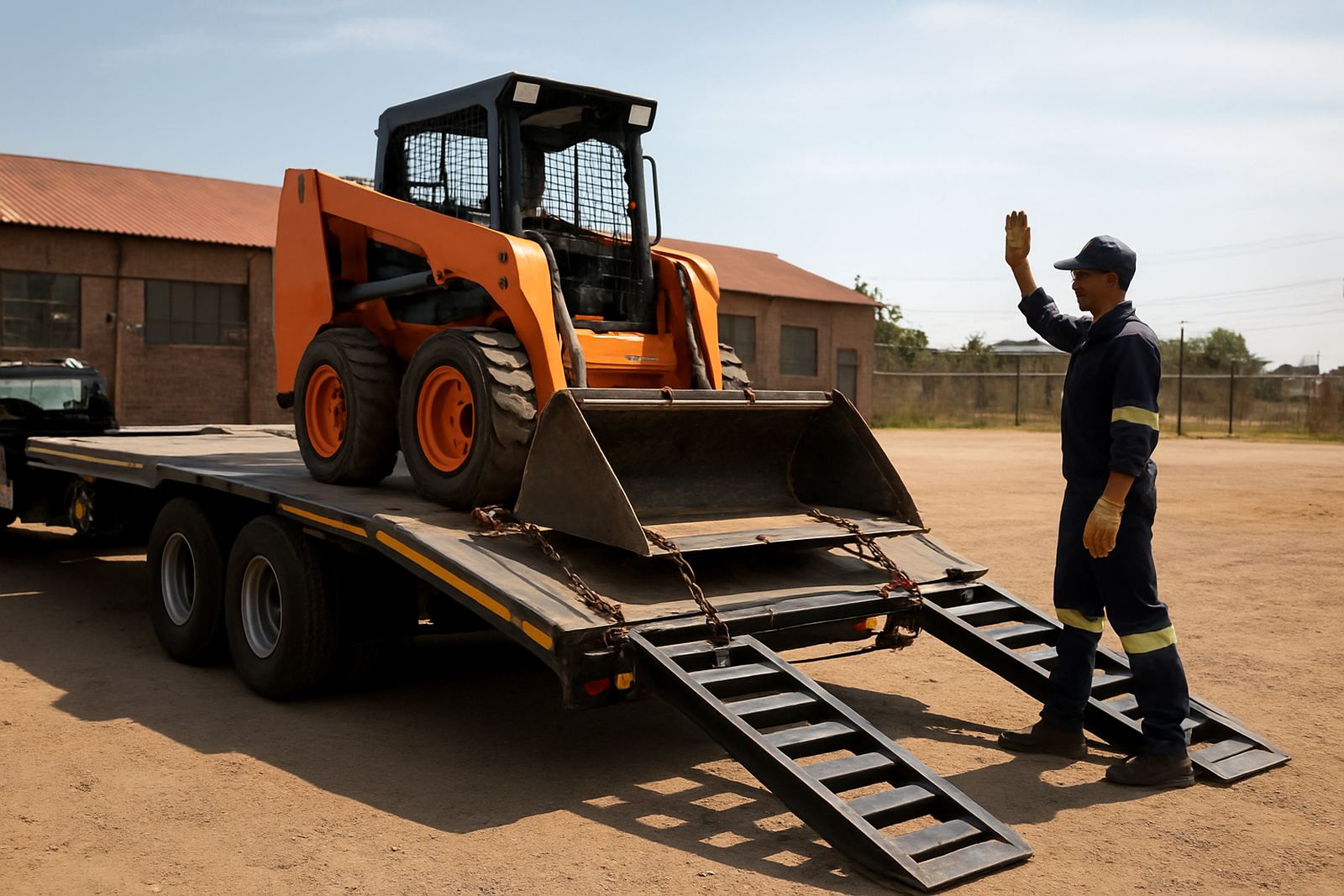
Heavy equipment removal starts with how the machine will leave the ground. Forklifts, cranes, telehandlers and low-bed trailers all serve different jobs. A compact generator on a pallet may only need a forklift, while a press, excavator or large compressor may need lifting points, spreader bars and a clear overhead area.
The yard itself must also be checked. Uneven paving, potholes, soft soil and narrow driveways can make a simple lift risky. In summer, wet ground around Durban can sink under a loaded machine, while in older industrial areas around Germiston some yards have tight corners that need a spotter. Good planning prevents damage to the equipment and the property.
- Use certified lifting gear with current inspection records
- Keep workers clear of the swing radius and drop zone
- Protect fragile floors, paving and drainage covers
- Use timber blocks or mats where ground pressure is a concern
Plan The Route Before The Vehicle Arrives
Route planning is often the part people skip, then regret later. A low-bed or heavy haulage vehicle may need wider access than a normal delivery truck, and some roads are simply not suitable for oversized loads at peak times. Municipal roadworks, traffic circles, overhead cables and access-controlled estates can all change the plan on the day.
For cross-country moves, check fuel stops, rest points and overnight security as well. A load from Pretoria to Bloemfontein may need a different timing plan than a short haul from Alberton to Isando. If the equipment is sensitive to vibration or moisture, it should also be covered properly and secured against dust, rain and road spray.
- Identify all gates, boom barriers and tight turns on the route
- Check bridge heights and weight limits where needed
- Plan collection for off-peak traffic where possible
- Allow for load-shedding delays at sites that use powered access gear
Timing Matters More Than Most Buyers Think
Collection day should fit the site, the crew and the vehicle. If the yard only allows access during office hours, or if a factory must keep production running until a certain time, that must be built into the schedule early. The same applies when multiple machines are being removed from one site, because one delayed lift can hold up the whole day.
For sellers, timing also affects safety and order. If scrap metal, pallets and loose stock are still around the machine, the crew may waste time clearing access before the lift even starts. In wet weather, especially along the coast, a later start can mean muddy ground and slower loading. It is better to give the transport team a clear window than a vague instruction to arrive anytime.
A practical timeline usually includes a site check, loading, paperwork, transit and offloading. That timeline should also allow for a final count of all loose items, guards, covers and attachments before the vehicle leaves.
Paperwork, Access And Who Signs What
Heavy equipment removals often fail because the paperwork is not ready. The buyer may have paid, but the site manager has not released the asset, or the seller expected the driver to sign something that was never prepared. Clear handover notes avoid those arguments. They also help when a machine is being moved from one branch to another or from a closed site to a storage yard.
At the minimum, everyone involved should know who authorises release, who checks the load and who accepts delivery. If the item is coming from a regulated site, there may also be access rules, visitor controls or safety gear requirements. Having that sorted before the truck arrives saves time and keeps the yard calm.
- Confirm the release authority before collection day
- List any attachments, keys, manuals or loose parts separately
- Keep identity and delivery paperwork ready at handover
- Make sure the contact person will be onsite during loading
A Germiston Example Shows Why Coordination Pays Off
Take a used compressor collected from a Germiston industrial yard and sent to a buyer in Cape Town. The machine may be available, but the route, lifting method and timing all have to line up. If the yard has limited crane access, the crew may need a forklift and timber packers. If the compressor has a high frame, it may need to travel on a low-bed to stay within road height limits.
Now add a seller in another province wanting to clear surplus stock on the same week. The best outcome comes from sorting the viewings, confirming the dimensions, scheduling the lift and checking the offload site before transport starts. That way the machine arrives where it should, without last-minute arguments, damage or wasted fuel. It sounds simple, but this is where many transfers go off track.
For businesses clearing yards in Johannesburg, Durban, Pretoria or Bloemfontein, good coordination means less downtime and fewer surprises. It also helps buyers who are trying to get equipment operational quickly after the sale.
Make Heavy Equipment Removal Part Of The Sale Plan
Transport should never be treated as an afterthought. When a business knows in advance how an asset will be lifted, loaded and moved, the sale process becomes much easier to manage. That is especially important for large plant, workshop machines and items that have not moved in years. Rusted wheels, seized brakes and cracked surfaces all change the handling plan.
At BidThis, heavy equipment sales work best when the seller gives full details early and the buyer plans collection properly. Clear measurements, practical access and a realistic timetable make the difference between a smooth handover and a costly delay. If a machine has to move across town or across the country, the safest route is the one planned before the engine starts.
The same rule applies whether the collection is from Isando, Alberton, Pretoria, Durban or Cape Town. Good preparation keeps the load steady and the day on track.