Why Office Asset Disposal Needs a Proper Plan
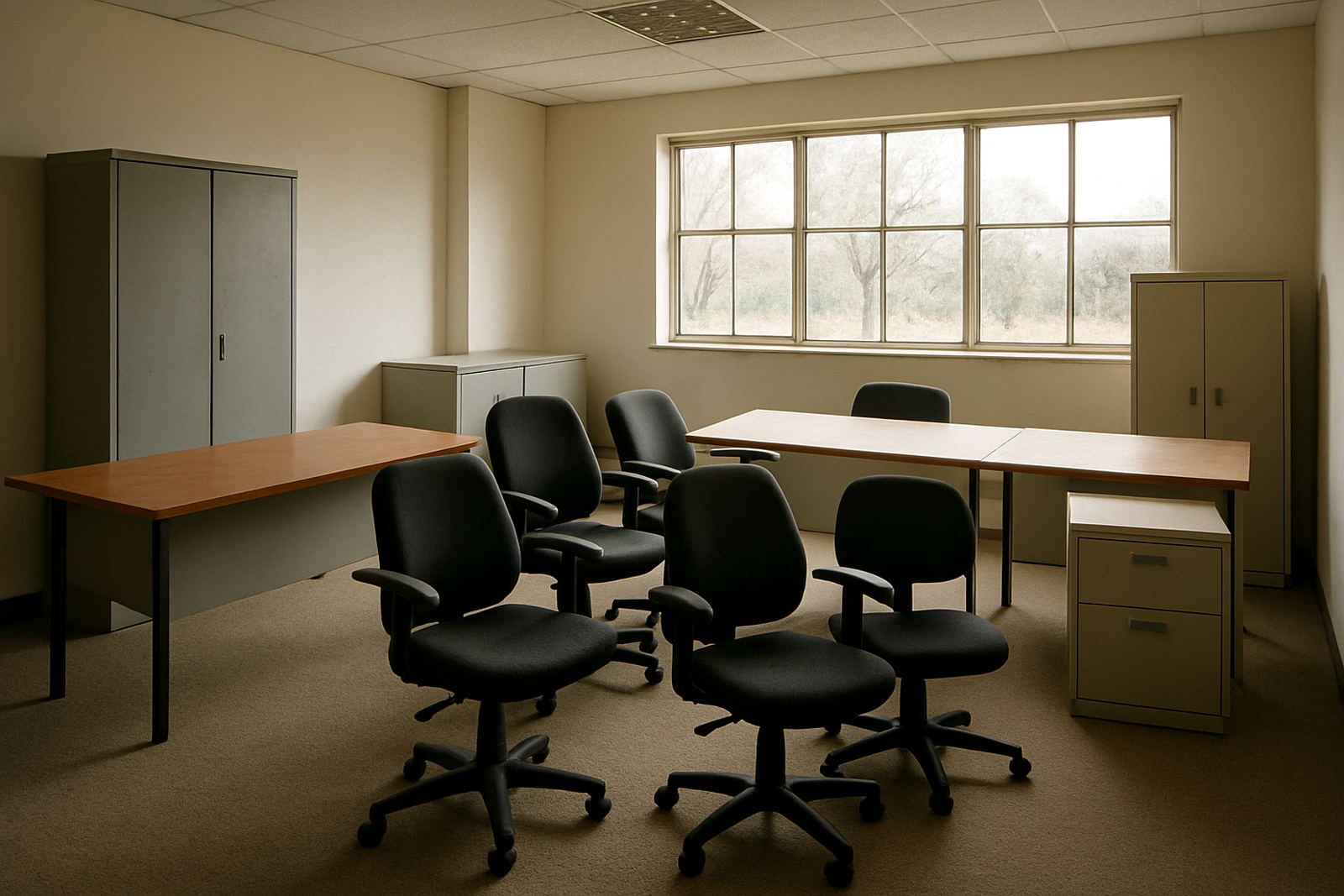
When a business changes address, downsizes or closes a division, the hard part is often not the move itself but the leftovers. Chairs, workstations, filing cabinets, printers, meeting tables, fridges, partitioning and server racks all have to be removed, counted and allocated properly. If that is done in a rush, items get mixed up, staff waste time and the sale value drops fast.
A structured disposal plan starts with sorting the assets by condition, age and likely demand. Office furniture in good order can still fetch fair value, while older pieces may be better sold in bulk or as mixed lots. Electrical items need to be checked for working condition, and anything with data storage should be cleared before collection. That is especially important where companies have branches in different towns and want one clean handover date.
For businesses in Gauteng, coastal towns and inland centres alike, the timing matters. A sale held too late can block a tenancy handover, but a sale held too early can leave staff without enough working furniture during the final week. The right approach gives you a schedule, clear lot descriptions and a buyer pool that knows what it is bidding on.
What Sells Well in an Office Auction
Some office assets move quickly because there is always demand from smaller firms, startups, contractors and satellite branches looking to save on setup costs. Good quality items with proper photos and measurements usually attract the strongest interest. The key is to be practical about how the lots are grouped and priced.
- Ergonomic chairs, visitor chairs and boardroom seating
- Reception counters, storage cabinets and steel shelving
- Desks, workstations and meeting tables
- Printers, scanners, monitors and UPS units
- Office fridges, microwaves and small kitchen items
- Partitioning, whiteboards and conference room fittings
Items with mixed condition can still be useful if they are sold in sensible lots. For example, a batch of 20 visitor chairs from a Germiston office park may suit a call centre or training venue, even if a few need minor repairs. The same applies to surplus computers or surplus stock from a sales office, where one buyer may want the lot for parts and another may want it for immediate use.
How Auction Lotting Protects Value
Lotting is where many office disposals either succeed or fall flat. If everything is lumped together, buyers struggle to price the risk and they bid lower. If every single item is split out, the process becomes slow and expensive. The best result usually sits somewhere in the middle.
A valuation lead should look at market demand, condition and practicality. Strong items can be grouped into clean lots, while unique or high value pieces may be better sold on their own. For a company clearing three floors in Sandton, that may mean separate lots for boardroom furniture, office chairs, IT equipment and filing systems. For a smaller business in Bloemfontein, one mixed lot of general office furniture may make more sense.
- Use clear descriptions with dimensions and condition notes
- Keep similar items together so buyers can plan transport
- Mark any faults, missing parts or cosmetic wear
- Separate sensitive equipment from general furniture
That kind of structure helps buyers bid with confidence and gives the seller a cleaner closeout. It also reduces arguments later about what was included, which saves time for everyone involved.
A Practical Clearance Timeline for South African Offices
Office asset disposal works best when the team sticks to a timetable. A business in Cape Town, for instance, might need to hand back a lease at month end while staff continue working from a smaller site for two more weeks. In that case, the auction schedule has to fit around access, lift bookings and final cleaning.
A sensible timeline usually starts with an asset appraisal and site inspection. From there, the team records the lots, photographs the items and sets viewing dates. Once the auction is live, buyers can review what is available and ask practical questions about collection. After the auction closes, payment clearance and collection coordination must happen quickly so the site can be emptied on time.
For offices affected by load-shedding, it helps to test equipment early and photograph items when there is still enough light. Generator use and battery backup units should be listed clearly, because buyers need to know whether they are getting working equipment or units sold as is. If a building has municipal access rules or parking limits, those should be planned before collection day, not after.
Local Example: Clearing a Gauteng Office Park After a Downsizing
A mid-sized services firm in Germiston recently had to reduce floor space after shifting to a hybrid working model. The business had over 80 office chairs, 30 workstations, several steel cupboards, a boardroom table, kitchen equipment and a mix of older printers. The lease required a clean handover within a short window, so the team needed a disposal plan that would not disrupt staff still working on site.
The assets were sorted into practical lots, with the better furniture grouped separately from older mixed stock. Viewing was arranged for buyers from Johannesburg East, Isando and Pretoria, since those areas often attract firms looking for used office furniture at better prices than new purchases. The result was a quicker clearance and fewer items left behind at the end of the move.
That kind of approach suits many South African businesses because it keeps the process simple. Sellers do not need to manage dozens of individual buyers, and buyers get a proper chance to inspect items before bidding. It is a cleaner way to deal with office surplus, especially when time is tight and the building manager wants the premises empty on schedule.
What Sellers Should Prepare Before Listing Assets
Good preparation makes a real difference to the final result. Before the auction starts, it helps to gather serial numbers, purchase records if available, dimensions and notes on condition. Staff should remove personal documents from drawers, wipe data from devices and check that keys, remotes and power cables are included where needed.
- Confirm which items stay and which items are for disposal
- Separate personal effects from business assets
- Label items that need special handling or lifting gear
- Make sure access routes are clear for viewings and collection
- Set aside any assets that may need tax or compliance attention
Companies often underestimate how much time is saved by doing this early. A neat, documented disposal also helps finance teams, landlords and auditors see exactly what left the site. For sellers in Durban or Cape Town, where humidity can affect stored furniture and electronics, it is especially useful to note any rust, swelling or corrosion before the auction goes live.
Why Structured Disposal Often Beats Ad Hoc Selling
Trying to sell office items one by one through random channels can drag on for weeks. Staff end up fielding calls, setting up viewings and negotiating prices while trying to run the business. A structured auction keeps the process in one place and gives the seller a defined closing date.
It also creates more interest because buyers can see a complete catalogue, compare lots and plan transport. That matters when you are moving mixed assets across South Africa, from Johannesburg to Bloemfontein or from Pretoria to Durban. Buyers are more likely to bid when they know the assets are well described, the collection terms are clear and the sale will close on time.
For office asset disposal, the goal is not just to get items out the door. It is to do it in a way that protects value, supports the move and leaves the site ready for the next step. That is what turns surplus furniture and equipment into a workable exit plan instead of a last-minute scramble.