Why lot grouping changes bidder behaviour
People do not bid on a spreadsheet, they bid on what they can see themselves using. If a lot feels too broad, buyers struggle to judge value and may skip it. If it is too narrow, the auction can lose momentum and the seller ends up with more small lots to manage. The best grouping strikes a balance between interest, clarity and collection practicality.
In South Africa, where many businesses buy used machinery to stretch capital, that balance matters even more. A workshop in Germiston may want a single machine line with its guards, spares and control panel together, while a contractor in Durban may prefer a small set of portable tools grouped by function. Thoughtful grouping helps bidders compare apples with apples, and it can turn a slow lot into a contested one.
Start with the real use case, not the storage shelf
When assets are catalogued for auction, the first question should be simple: who is most likely to use this equipment and how would they buy it? Grouping by location in the workshop is rarely the best answer. Grouping by use, condition and compatibility usually works better.
For example, three compressors can be sold as one lot only if they serve the same type of buyer and share a practical purpose. A buyer looking for parts may want them together, while another may only need one unit. In that case, splitting them can widen bidder interest. The seller gets a better chance of reaching the right market and avoiding lots that sit with low activity. It takes a bit more planning, but the result is usually more practical.
- Group items that work together, such as a machine with its tooling, manuals and control gear.
- Separate items that can stand alone and attract different buyers.
- Keep serviceable spares with the main asset if they add value, but not if they clutter the lot.
- Think about transport: a buyer with a bakkie will not bid the same way as a buyer arranging a flatbed.
Use lot size to encourage bidding without creating waste
There is a common mistake where sellers make every lot too big because they want to clear the yard quickly. That can push smaller buyers out of the auction. At the other end, lots that are too small create high admin and more collection trips. The practical middle ground is usually a mixed sale structure with anchor lots, support lots and smaller clearance lots.
Anchor lots are the main value items. Support lots are bundles of related items that add convenience, like shelving with brackets or a generator with cables and an extra fuel tank. Clearance lots are the odds and ends that are still worth selling, just not on their own. This structure helps bidders follow the sale and gives your auction a better rhythm. It also makes the collection schedule easier to manage when the vehicles start arriving.
- Use larger lots for higher value assets with obvious buyer demand.
- Bundle low-value items only when they save time and transport cost.
- Avoid mixing working and faulty items unless the condition is clearly stated.
- Keep the listing honest, because buyers remember a lot that looked bigger than it was.
Match the lot structure to collection and load-shedding realities
A smart lot is not just good for bidding, it is also easier to collect. That matters across South Africa where access, labour and timing can vary from one site to another. A plant in Alberton may be easy to load with a forklift, while a site in Bloemfontein may have limited yard space and fewer offloading options. If the lot is too awkward, collection costs rise and buyers factor that into their bids.
Load-shedding also has a practical impact. If testing is needed, group items in a way that allows inspection and power checks to happen efficiently during the viewing window. Buyers do not want to see a lot where half the items need power and the other half are scattered across three bays. Clear grouping supports quicker viewing, fewer questions and less back-and-forth after the sale. That saves time for everyone, not just the auction team.
What to keep together and what to split apart
There is no fixed formula, but some patterns work well in used machinery auctions. The key is to keep a lot understandable at a glance. If a buyer needs a long explanation before they know what they are bidding on, the lot is probably too mixed.
In practial terms, keep related items together when they form a complete working set. Split items when they can attract different buyer types or when one part is likely to reduce the value of the rest. A lathe with its chuck set, steady rest and tool cabinet may sell neatly as one. A mixed pallet of bearings, broken fittings and old workshop furniture usually works better as separate clearance lots or a general bundle.
- Keep machines with their critical accessories when those accessories are needed for use.
- Split consumables from fixed assets where buyers may value them differently.
- Separate high-value items from general stock if you want to draw specialist buyers.
- Use clear titles so the lot name tells the truth before the images do.
A Germiston example that shows the difference
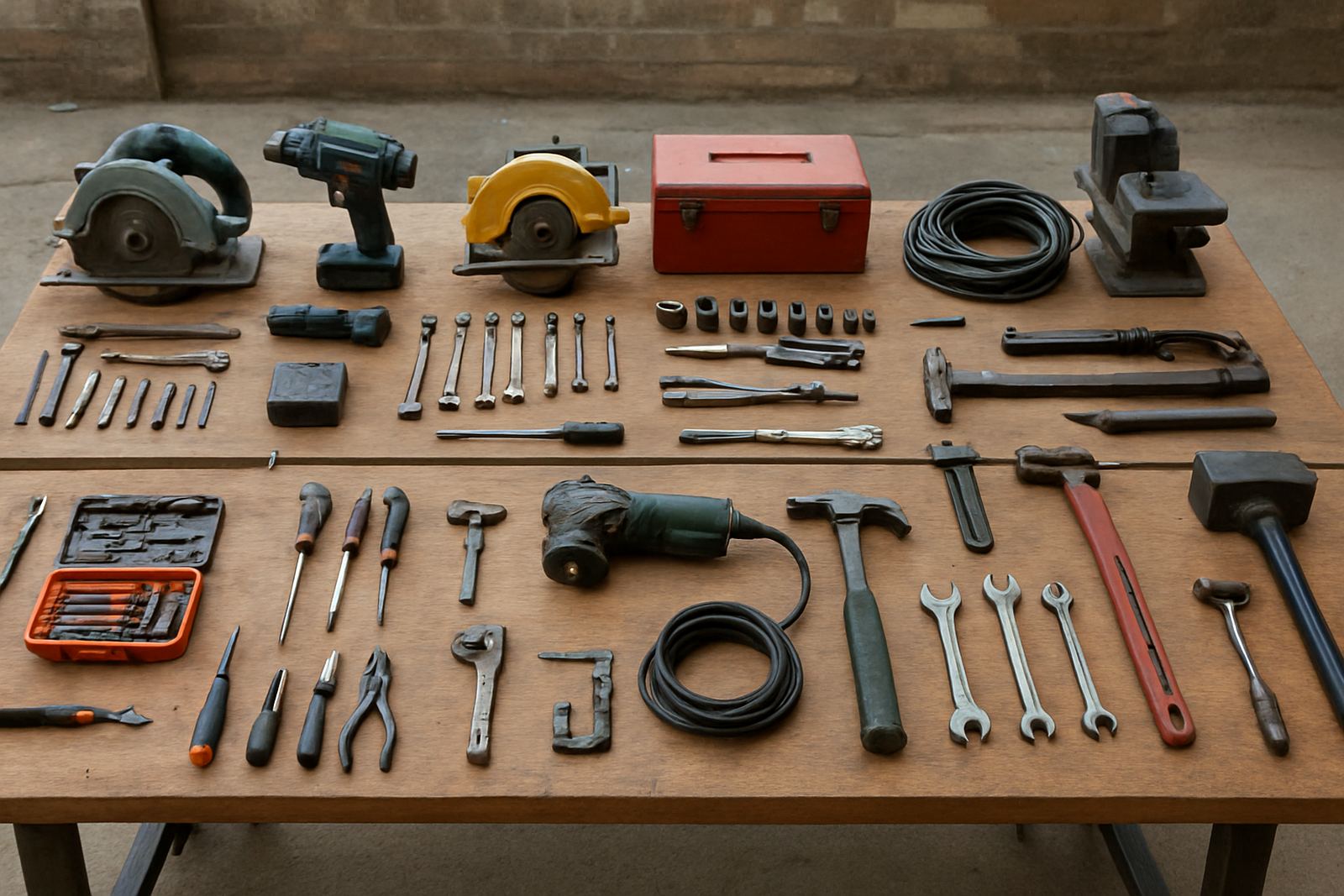
Take a surplus engineering store in Germiston with two pipe benders, one compressor, several benches, a pallet of fittings and a collection of hand tools. If everything is listed in one bulk lot, many buyers will ignore it because the mix is too broad. If the assets are grouped by use, the sale becomes easier to follow and more bidders can take part.
A better structure may be to offer the pipe benders as separate lots, group the compressor with its hose set and regulators, and create one or two mixed tool bundles for the smaller items. The benches can go as a furniture-style lot if they are in usable condition. That approach gives trade buyers, start-up workshops and clearance buyers all a reason to bid. It also makes collection smoother because each winner knows exactly what they are taking off site. This is the kind of planning that helps a sale feel orderly rather than rushed.
The clearest lots usually sell the cleanest
Lot grouping is part valuation, part logistics and part buyer psychology. When it is done well, bidders see value faster, sellers get fewer collection issues and the auction has a better pace. The best results usually come from lots that are easy to understand, easy to collect and specific enough to attract the right buyer without overcomplicating the sale.
That is why lot grouping should be treated as a core part of auction preparation, not an afterthought. It supports cleaner catalogues, better buyer confidence and fewer disputes after the hammer falls. For businesses clearing surplus machinery across Johannesburg, Pretoria, Durban, Cape Town and Bloemfontein, that can make a real difference to the final outcome.