What you will find in this category
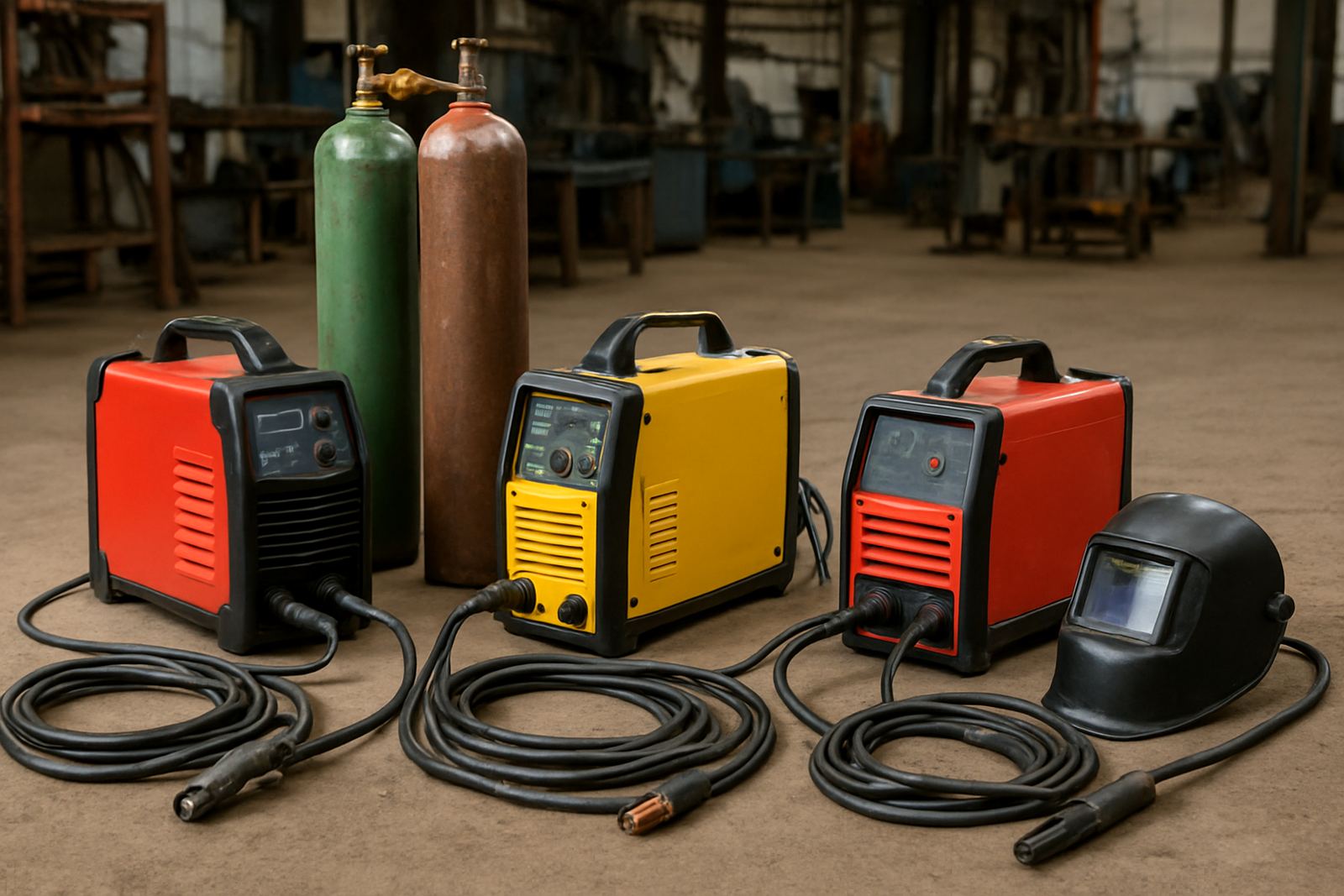
This category covers welding machines and the support equipment that usually sits with them in a working workshop. You will commonly find stick welders, MIG and TIG sets, plasma cutters, wire feeders, welding trolleys, earth clamps, torch leads, regulators and spares. Some lots are complete and ready to test, while others are sold as part of a closure or surplus clearance and may need servicing before first use.
Most machines offered through auction are used, so condition can range from clean low-hour units to older sets that have been standing in a plant room for some time. In South African workshops, that often means checking for dust build-up, worn cables and heat damage from repeated use. If the lot includes consumables or gas gear, note that these extras can save setup time and Rand on the day.
- Single-phase and three-phase welding machines
- MIG, TIG, stick and plasma cutting units
- Wire feeders, torches, regulators and earth leads
- Associated fabrication benches and safety gear
- Workshop surplus from engineering, transport, manufacturing and maintenance sites
Common sizes and power ratings
Welding sets are listed in different output ranges, depending on the job they were used for. Smaller inverter machines are often suited to light maintenance, gate repairs and on-site fabrication, while larger transformer or industrial inverter units are used in fabrication shops, production lines and plant maintenance. When reading a lot, check the amperage, duty cycle and input power so the machine matches your work rate and supply.
Typical sizes you may see include 160A to 200A compact units, 250A to 300A workshop machines and 400A plus industrial sets. Some run on 230V single-phase power, while bigger units need 380V to 400V three-phase supply. On sites affected by load-shedding, inverter units can be easier to manage with the right backup power, though the generator must be sized properly for the starting load and welding current.
- Input power: 230V single-phase or 380V to 400V three-phase
- Output range: commonly 160A, 200A, 250A, 300A and 400A plus
- Duty cycle: check the stated percentage at a given amperage
- Wire size support: 0.8 mm, 1.0 mm and larger on some MIG sets
- Gas support: CO2, argon mix or other approved shielding gases where required
Where these machines suit best
Welding machines are used in a wide range of South African operations, from steel fabrication in Germiston and Isando to farm repairs, municipal maintenance, trailer building and transport depots. A small workshop may need one dependable 200A machine for daily repair work, while a larger plant could buy several sets to replace ageing stock after a closure.
For buyers in coastal areas such as Durban and Cape Town, storage conditions matter because humidity can affect leads, connectors and internal boards. In Gauteng, dust and metal grindings are often the main issue. If you are buying for a site with mixed work, look for a machine that can handle repeated starts, long cable runs and the type of electrode or wire you already use.
- General fabrication and steelwork
- Vehicle body repair and trailer work
- Plant maintenance and shutdown teams
- Farm workshops and remote sites
- Training rooms, hire fleets and reserve equipment stores
Installation, power and gas requirements
Before you place a bid, confirm what is needed to put the machine into service. Some units are plug-in and ready for a standard socket, while others need a qualified electrician to connect them to a dedicated supply. If the machine uses shielding gas, check whether the lot includes cylinders, regulators and hoses, or whether you will need to arrange those separately. You should also make sure the site has enough ventilation and safe cable routing.
Industrial welding equipment can draw a lot of current, especially under heavy duty cycles. It is worth checking the breaker size, cable thickness and generator capacity if the machine will run off backup power. For sites in towns with strict municipal rules on fumes or noise, you may also need extraction and a proper work area before first use. A quick inspection saves a lot of trouble later.
- Confirm whether the machine is 230V or 400V supply
- Check plug type, cable length and breaker requirements
- Ask if a gas bottle is included, and whether it is empty or leased
- Inspect torch condition, earth lead and connector wear
- Make sure ventilation and extraction suit the welding process
Care, servicing and storage after collection
Used welding machines last longer when they are kept clean and dry. Blow out dust with dry air, inspect cooling fans, and check that cable lugs are tight before the unit goes into regular use. If the machine was standing in storage, test the output at low load first and watch for overheating, fault lights or unstable arc behaviour. On MIG sets, worn rollers and blocked liners are common causes of poor feed.
For coastal buyers, store machines off the floor and away from open doors where salt air can creep in. In hot workshop conditions, keep an eye on duty cycle and allow cooling time between long weld runs. Good servicing also means replacing cracked leads, damaged knobs and missing covers early, rather than waiting for a breakdown during a job.
- Clean filters, vents and fan paths regularly
- Check earth clamps, torch tips and connectors
- Replace worn wire liners and feed rollers
- Keep units covered and off damp concrete floors
- Schedule electrical testing before putting older stock into service
What to check before you bid
Read the lot details carefully and look at the photos from every angle. Check the make, model, serial number if shown, input voltage, amperage range and whether accessories are included. If you need a machine for a specific electrode size, wire diameter or gas process, make sure the unit matches that requirement before bidding. Some lots are sold as single machines, while others are grouped with benches, compressors or fabrication tools.
It is also worth checking if the machine has been tested, whether it powers on, and if any fault notes are listed. A machine that is complete but not recently used may still be a good buy, but factor in cables, consumables and possible repair costs. If you need multiple units for a workshop, compare the total collection cost and transport from Germiston, Johannesburg East, Pretoria, Durban, Cape Town or Bloemfontein before you commit.
- Amperage, duty cycle and supply voltage
- Included accessories and missing parts
- Overall condition of cables, torch and controls
- Test status and any fault notes in the listing
- Collection timing, transport and site access requirements
Why these lots move fast at auction
Welding equipment is practical stock. A good set can go straight into a maintenance team, a fabrication bay or a farm workshop without long lead times. That is why these lots often attract buyers from across South Africa, especially when they come from plant closures or workshop clearances where the machines were still in daily use. If you have a target spec in mind, be ready early and know your limit before the close.
At BidThis, listings are arranged for clear viewing, buyer support and collection coordination, so you can check the lot properly before bidding. That matters with welding machines, because the right power rating and a clean accessory set can make the difference between a usable buy and extra spend after collection.
Key facts
| Typical output range | 160A to 400A plus, depending on the lot |
|---|---|
| Input power | 230V single-phase or 380V to 400V three-phase |
| Processes | Stick, MIG, TIG and plasma cutting where listed |
| Common accessories | Torch leads, earth clamps, regulators, wire feeders, trolleys |
| Use cases | Fabrication, maintenance, farm repair, trailer work, shutdown teams |
| Condition | Used, surplus or closure stock, sold as per lot notes |