What a CNC Lathe Does on the Shop Floor
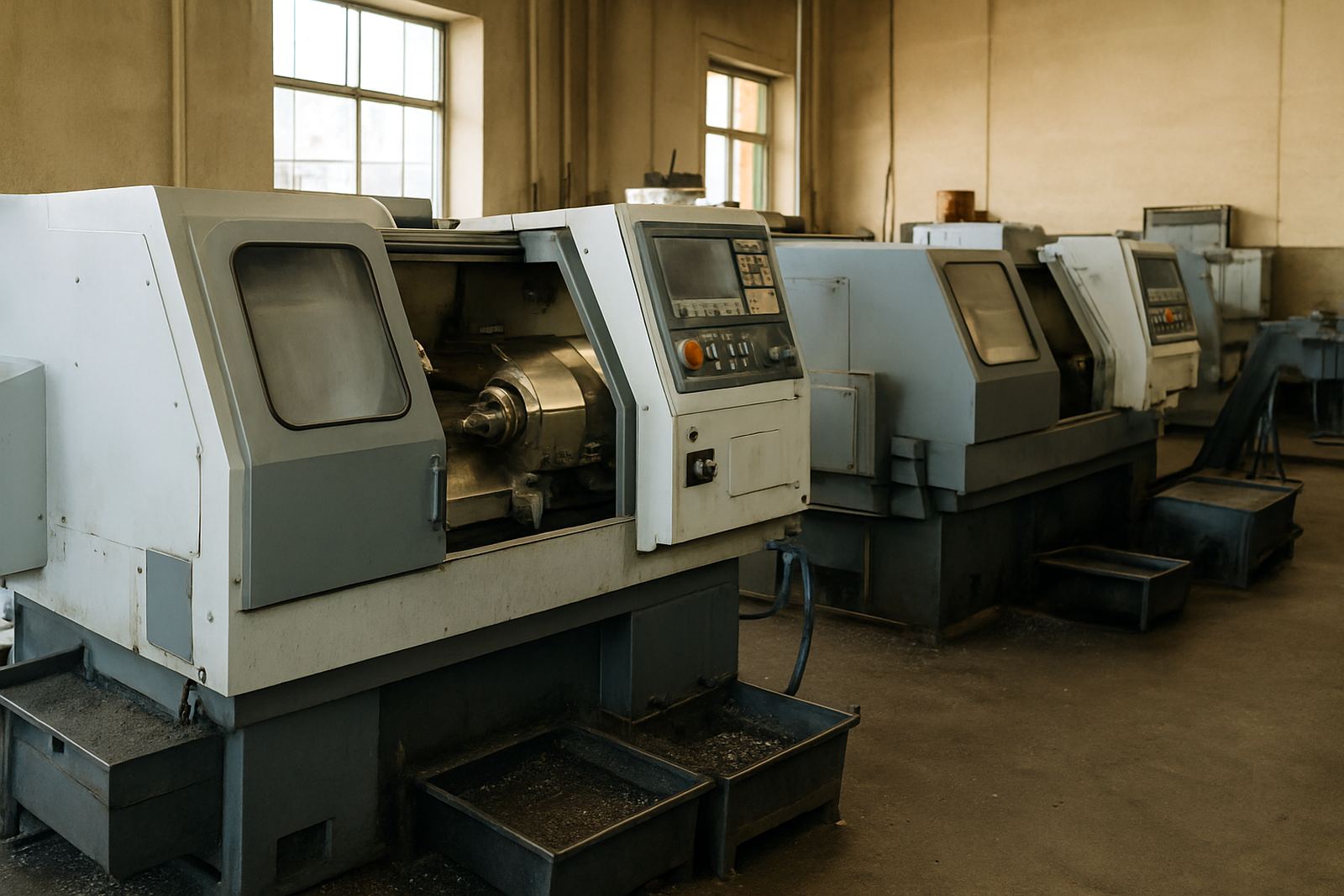
A CNC lathe cuts round parts by holding the workpiece in a chuck and turning it against a controlled cutting tool. It is used for shafts, bushes, flanges, pins, spacers, hydraulic parts and many other components where concentricity matters. In a busy engineering shop, a good used machine can keep production moving on short lead times and reduce dependence on outside machining.
On auction, you may find basic two-axis turning centres, machines with live tooling, bar feed capability, sub spindles or chip conveyors. Some units are set up for small batch work, while others handle longer runs with tool turret changes and programmable cycles. When you are bidding, it helps to match the machine to the actual work you do, not just the nameplate size.
Common Sizes, Bed Lengths and Options to Look For
CNC lathes vary from compact bench-style turning centres to heavy industrial machines that take large chuck sizes and long bed lengths. A smaller unit may suit a maintenance workshop or toolroom, while a larger machine is better for mining supply, general engineering, agricultural parts or contract work. In South Africa, many buyers need a machine that can fit through a standard workshop door yet still handle meaningful work, so checking dimensions matters just as much as spindle power.
- Chuck size: often 160 mm, 200 mm, 250 mm or larger
- Turning diameter over bed: commonly 300 mm to 600 mm
- Turning length between centres: about 500 mm to 2 000 mm or more
- Spindle bore: important for bar work and passing long stock
- Turret stations: usually 8, 10 or 12 positions
- Extras: tailstock, live tooling, chuck guards, bar feeder, parts catcher
If your job includes mixed batches, a machine with live tooling can save setup time because drilling and side milling can be done in one clamping. For repetitive shaft work, a bar feeder may be more useful than extra turning length.
Where CNC Lathes Fit Best in South Africa
These machines suit engineering firms, automotive part makers, maintenance departments, agricultural repair shops and contract manufacturers. They also work well for businesses doing replacement parts, repair parts and small production runs where consistency is important. Around Johannesburg, Pretoria, Durban, Cape Town and Bloemfontein, many operators use used CNC turning centres to keep turnaround times down while staying within budget.
A lathe that has been used in a clean machining environment often presents better than one that has seen heavy coolant abuse and poor housekeeping. Coastal humidity in Durban and parts of Cape Town can affect electrics, slideways and cabinets if the machine has sat unprotected, so inspect for corrosion and moisture marks. Inland machines may show less rust but can still have wear from long shifts and neglected lubrication.
- Engineering shops making short and medium production runs
- Maintenance teams needing fast turnaround on worn parts
- Component producers supplying local industry and mining
- Contract machinists taking repeat work from multiple clients
- Toolrooms needing accurate turning for repair and development work
Power, Installation and Workshop Requirements
Most CNC lathes need a 3 phase electrical supply, typically 380 V to 400 V, with proper earthing and an isolator that matches the machine load. Some smaller units can run on lighter supply arrangements, but that must be checked against the plate and control cabinet before you bid. A lathe with a spindle motor, coolant pump, hydraulic unit and chip conveyor can draw a fair amount of current, especially at start-up. In areas affected by load-shedding, many buyers also plan for a suitable standby supply or controlled shutdown procedure.
Allow enough floor space for loading, maintenance and swarf removal. You will need level concrete, clear access for a forklift or crane, and room for coolant tanks, bar stock and finished parts. If the machine uses compressed air for chucking, chip clearing or tool change functions, check the air demand and quality. Some models also need mist extraction or coolant mist control, depending on the work being done.
- Check total machine weight before moving it, often 2 tonnes to 8 tonnes or more
- Confirm supply voltage, phase and breaker size
- Plan for forklift access, rigging and safe offloading
- Provide dry storage for tooling, inserts and gauges
- Arrange coolant handling and swarf disposal in line with site rules
Condition Checks Before You Place a Bid
Used CNC lathes can be excellent value, but the right checks matter. Start with the spindle, turret, slides and control response. Listen for unusual bearing noise, watch for backlash and make sure the machine homes correctly. Check whether all axes move smoothly and whether the turret indexes without hesitation. If possible, ask for a test cut or a running demonstration. A machine that powers on is not the same as a machine that holds tolerance.
Also look at the chuck jaws, tailstock, tool holders, guards and coolant system. Missing accessories can add real cost after the sale. If the control screen is damaged, batteries are flat or a drive fault is showing, budget for that before bidding. Some buyers only focus on machine size and miss the small items that keep production going, such as manuals, parameter backups and spare tooling.
- Control boots and all axes respond correctly
- Spindle speed changes cleanly with no vibration
- Turret locks firmly and repeats position accurately
- Hydraulic and coolant systems show no major leaks
- Guards, doors and interlocks are present and working
- Tooling, chucks, manuals and backups are included where listed
Servicing, Care and Running Costs After Purchase
Once the machine is in your workshop, basic care makes a big difference to service life. Keep the ways clean, change coolant when needed, check lubrication lines, and remove swarf daily. Dust, grinding grit and poor coolant management shorten the life of slides and seals. If the machine is going to run in a coastal area, keep the cabinet closed, protect exposed metal and inspect electrical contacts regularly.
For planned maintenance, keep a record of spindle hours, oil changes, filter changes and alarm history. Replace worn jaws, belts and wipers before they cause bigger damage. It is also sensible to have a local technician familiar with CNC controls and turning centres inspect the unit after installation. A good used lathe can serve for years if it is set up properly and not overloaded.
What to Confirm When Ordering Through BidThis
Before placing a bid, confirm the exact model, serial number, machine dimensions and any included tooling. Make sure you know whether the sale is for the complete machine only or for a lot that includes extras like a bar feeder, extractor, workholding or spare tooling. If the machine is on a site with access limits, ask about loading times, collection rules and who is responsible for dismantling. That avoids delays and unexpected costs.
Before bidding, confirm whether the machine can still be inspected under power, whether the control is working properly, and whether any known faults have been disclosed by the seller. If you are buying for a branch in Johannesburg East, Pretoria, Durban, Cape Town or Bloemfontein, check transport lead time and offloading arrangements early. A well matched used CNC lathe can be a practical buy, but only if the details are clear before the hammer falls. If anything is unclear, ask before you bid, not after.
Key facts
| Machine type | CNC turning centre / CNC lathe |
|---|---|
| Typical power supply | 3 phase, usually 380 V to 400 V |
| Common chuck sizes | 160 mm to 250 mm and larger |
| Typical turning diameter | 300 mm to 600 mm over bed |
| Typical turning length | 500 mm to 2 000 mm plus |
| Common options | Live tooling, tailstock, bar feeder, parts catcher, chip conveyor |