
What a skid steer does on site
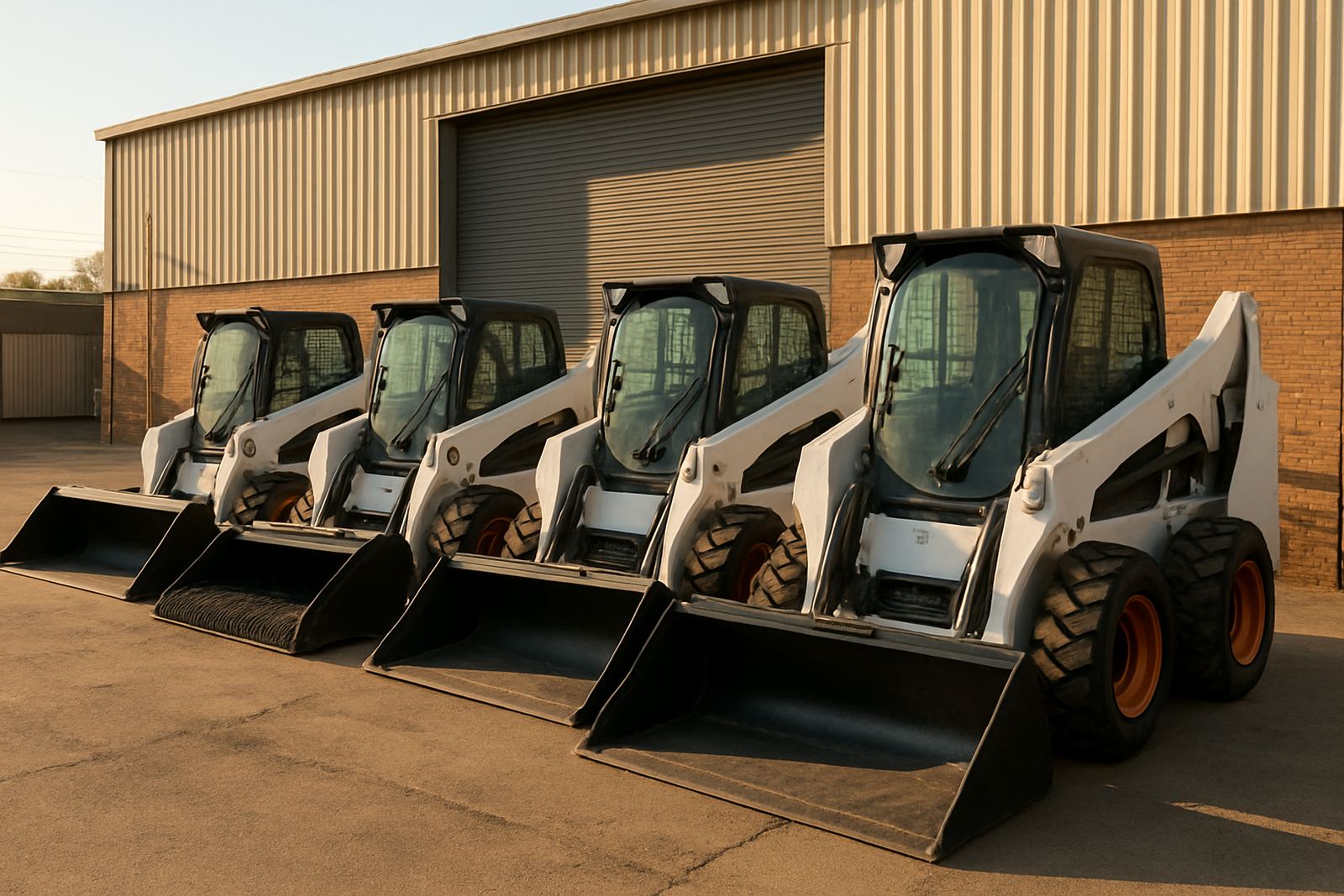
A skid steer is a small, highly manoeuvrable loader with a rigid frame and wheels or tracks that turn by varying speed on each side. That makes it easy to work in narrow yards, inside depots, around warehouses and on smaller building sites where space is limited. With the right attachment, one machine can do material handling, grading, sweeping, digging and pallet work.
For buyers in Johannesburg, Pretoria, Durban, Cape Town and Bloemfontein, skid steers are often chosen for their size and quick task changes. They are practical for contractors, landscaping teams, farmers, maintenance crews and businesses that need a machine that can move between jobs without fuss. Many used units come with buckets, forks, augers, trenchers or sweepers, so check exactly what is included before you bid.
- Common uses: loading rubble, moving stock, levelling sand, cleaning yards and handling pallets.
- Good for tight access areas, indoor yards and smaller plots.
- Often used with buckets, forks, brooms, augers and grapples.
Size ranges and the main options to compare
Skid steers are usually grouped by operating capacity, lift height and track or wheel setup. Smaller machines are easier to trailer between sites and are better for lighter material handling. Larger units can lift more, carry heavier buckets and work longer shifts, but they need more transport space and stronger loading equipment.
When comparing units, look at operating weight, rated operating capacity, tipping load, engine power and hydraulic flow. If you need to run attachments such as a planer, auger or high-flow broom, the hydraulic spec matters just as much as the engine size. A machine with tired hydraulics may still start and drive but struggle under load, especialy when used daily.
- Typical operating weight: about 1 500 kg to 4 500 kg.
- Rated operating capacity: around 400 kg to 1 700 kg depending on size.
- Engine power: often 40 hp to 100 hp on used units.
- Lift heights: roughly 2.4 m to 3.3 m to hinge pin on many models.
Where skid steers work best in South Africa
These loaders suit urban and industrial work where access is tight and time is short. In Gauteng, they are useful for construction yards, plant maintenance, warehousing and general clean-up. Along the coast in Durban or Cape Town, buyers often prefer machines that have been stored well and kept free of heavy corrosion, because salt air can affect pins, hoses and electrical connectors.
They also suit landscaping and grounds maintenance on estates, schools, sports facilities and commercial parks. For municipal work, a skid steer can help with litter clean-up, soil movement and small repair jobs, provided the site rules allow the machine and the operator is trained. If you are buying for farm use outside Bloemfontein or in outlying areas, check that the unit can handle rough ground and transport between sites.
- Best for short, repetitive tasks with quick attachment changes.
- Useful on paved yards, compacted gravel and controlled sites.
- Can work indoors if ventilation and floor loading are suitable.
Power, fuel and setup before first use
Most skid steers use diesel engines and need clean fuel, correct oil levels and a sound battery. If the machine is track driven, inspect the undercarriage before use because worn rollers, sprockets and tracks can become expensive fast. Wheel machines are simpler to move on hard surfaces, while tracked units usually give better grip on soft ground and uneven sites.
Before operating, confirm the hydraulic couplers match the attachment and that the quick-attach plate is compatible. Some units need standard flow only, while others need high-flow hydraulics for heavier attachments. On battery side, make sure the charging system and starter are healthy, because a machine that sits through load-shedding or long idle periods can develop starting issues if maintenance slips.
- Fuel: usually diesel.
- Power supply: 12V electrical system on many units, with alternator charging.
- Hydraulics: standard flow on general units, high-flow on attachment-ready machines.
- Transport: confirm trailer or lowbed capacity before collection.
Care, service points and wear parts to watch
A used skid steer needs regular attention to pins, bushes, tyres or tracks, hydraulic hoses, filters and cooling fins. Dusty worksites around Gauteng can block radiators, while coastal humidity can shorten the life of exposed fittings if the machine is not washed and dried. Greasing pivot points and checking for play in the arms will help catch wear early.
Ask for the service record, recent repairs and any known leaks. On older machines, listen for gearbox noise, slow hydraulic response and uneven travel, as these can point to repair costs after purchase. If the bucket floor is thin or the cutting edge is worn, factor in replacement costs as part of your bid, not after.
- Check daily: oil, coolant, hydraulic leaks and tyre or track condition.
- Service items: filters, belts, grease points and battery health.
- Wear points: loader arms, quick coupler, bucket edge and drive components.
What to check before you place a bid
Read the lot listing carefully and confirm the machine model, hour reading, attachment package and any faults listed by the seller. If possible, attend a viewing at the Germiston Viewing Yard, Johannesburg East Viewings, Pretoria Viewing Point, Durban Viewing Point, Cape Town Viewings, Bloemfontein Viewings, Isando Viewing Point or Alberton Viewing Point, depending on where the unit is held. A short inspection can tell you more than a spec sheet on its own.
Look for damage to the cab, seat, controls, tyres, tracks and loader arms. Check whether the machine starts cold, drives in both directions and lifts smoothly under load. Also confirm whether the sale includes keys, manuals, attachments and any loose parts. If you plan to move the machine across provinces, make sure collection timing and transport are practical for your crew and truck availability.
- Confirm operating hours, serial number and attachment compatibility.
- Inspect for leaks, cracked glass, worn hoses and loose pins.
- Check what paperwork will be released after payment clearance.
- Budget for transport, service, tyres or tracks after purchase.
Key facts
| Typical operating weight | 1 500 kg to 4 500 kg |
|---|---|
| Rated operating capacity | 400 kg to 1 700 kg |
| Engine power | 40 hp to 100 hp |
| Lift height | About 2.4 m to 3.3 m |
| Fuel type | Diesel |
| Common attachments | Buckets, forks, augers, sweepers, trenchers and grapples |