
What a used cold room includes and how it works
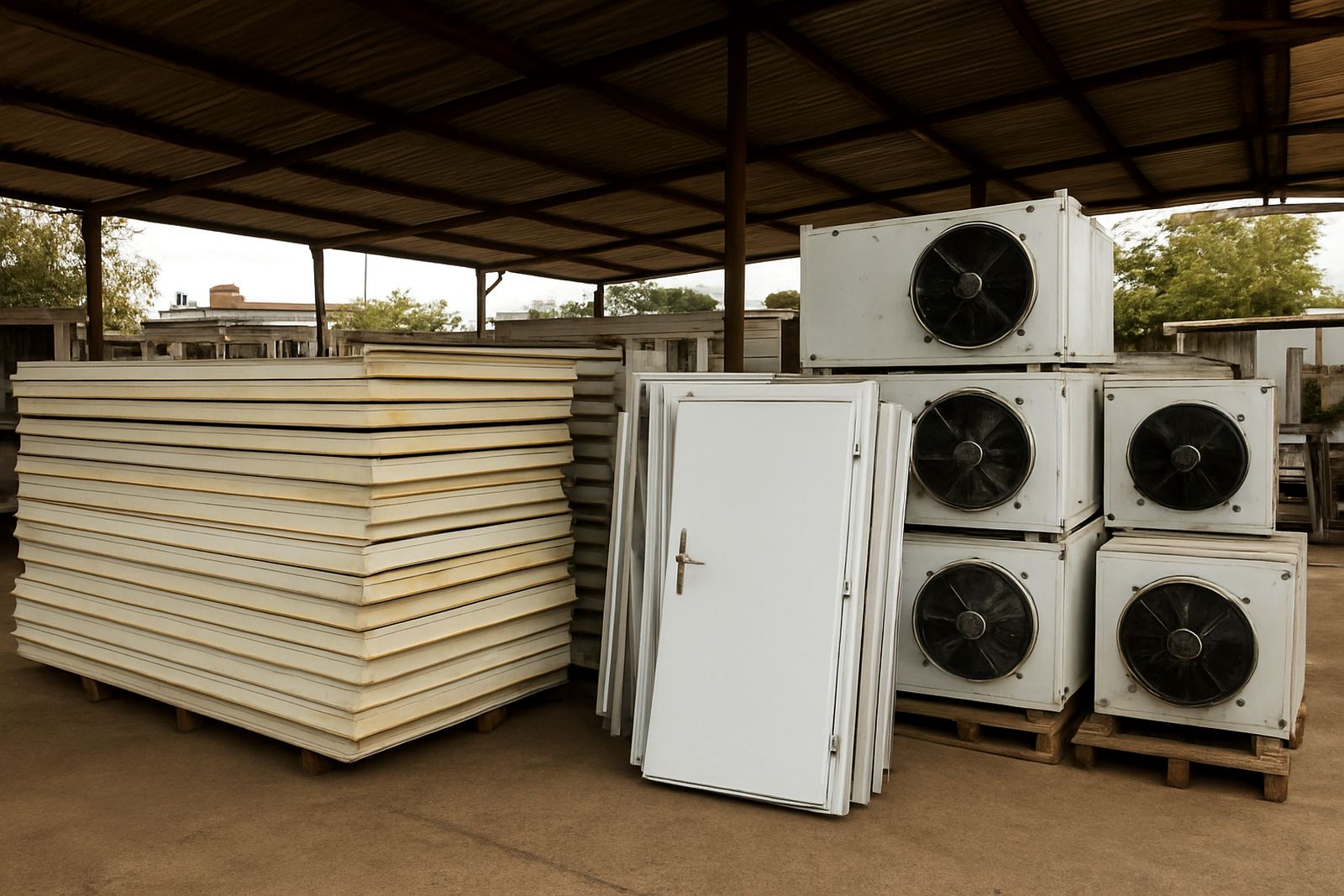
A cold room is an insulated storage enclosure built from insulated wall, roof and floor panels, plus a matching insulated door and refrigeration equipment. In the used market, buyers may find complete rooms or separate parts such as panel sets, hinged doors, sliding doors, evaporators, condensing units, control panels and door hardware.
The main job is simple: keep the inside at a controlled low temperature so stock stays safe for longer. Many facilities use them for dairy, meat, fruit, flowers, frozen foods, beverages, pharmaceuticals and general perishables. Used units are often a good fit when the structure is sound and only certain parts need replacement. A lot depends on panel condition, the seal on the door and whether the refrigeration system has been maintained properly.
For buyers in South Africa, the practical value is in matching the room to the site. A small retail back room in Johannesburg East will need a very different setup from a depot in Durban or a packhouse near Cape Town. Humidity, loading frequency and load shedding all affect the final choice.
Sizes, panel thicknesses and common layout options
Used cold rooms are usually sold by internal size, panel thickness and equipment type. Common panel thicknesses are 75 mm for chilled rooms and 100 mm or 120 mm for colder or more demanding applications. Freezer rooms may use thicker panels, often 150 mm or more, especially where ambient heat is high or the door opens often. Standard panel skins are usually pre-painted steel or stainless faced in higher wear areas.
Typical sizes range from compact rooms of about 2 m x 2 m x 2.2 m for back-of-house storage, up to large walk-in rooms of 6 m x 12 m or more for distribution yards. Ceiling height often sits between 2.1 m and 3 m depending on the site and racking requirements. Some buyers need a straight walk-in room, while others need an L-shaped layout, a split room, or a room with an airlock to reduce temperature loss.
- Chilled storage: usually 0°C to 5°C for fresh produce, dairy and drinks.
- Frozen storage: often -18°C to -25°C for long-term cold holding.
- Display or prep rooms: may run warmer, around 8°C to 12°C.
- Doors: hinged, sliding or rapid-use styles depending on traffic.
When buying used, ask for exact measurements, panel thickness, door opening size and whether the floor is insulated or needs a separate base. Small details matter because even a 20 mm gap can affect sealing and running cost.
Where used cold rooms suit best
Used cold rooms suit businesses that need controlled storage but do not want to pay for a brand new fit-out. They are common in supermarkets, butcheries, fruit and vegetable depots, restaurants, bottle stores, packhouses, wholesalers, storage yards and smaller manufacturing plants. They also work well for temporary overflow storage during seasonal peaks or maintenance shutdowns.
In places like Durban and other coastal areas, corrosion resistance is important because salt air can shorten the life of external condensers and metal fixings. In Gauteng, dust and frequent power interruptions are often the bigger concern, so many buyers look for clean electrical panels, good compressors and the option to connect a standby generator. Municipal compliance can also matter where rooms are installed in food preparation areas, especially if drainage, cleaning access and escape routes are inspected.
For some users, a used room is ideal for short-term expansion. A retailer in Pretoria may need extra chilled space before December. A produce business in Bloemfontein might need a freezer room for a new contract. The key is making sure the unit can be installed quickly and taken apart later if the site changes.
Installation, power supply and cooling requirements
Installation starts with a level floor, enough ceiling height and access for panels and equipment. The room must be assembled square so the door seals properly and the panels lock tightly together. Many rooms are bolted or cam-locked, which makes removal and reassembly easier. For larger sites, floor load capacity should be checked before the room is placed, especially where pallet jacks, shelving or heavy stock will be used.
Power needs depend on room size, temperature set point and how often the door opens. Small rooms may run on single-phase supply, while most medium and large systems need three-phase power. Buyers should confirm the compressor rating, starter type and control voltage before collection. In areas with load shedding, a generator or backup plan is often needed because repeated warm-ups can damage stock and overwork the unit. If the room uses remote condensing equipment, allow space for airflow around the condenser and keep it clear of wall obstructions.
- Check the supply voltage and phase before you move the unit.
- Confirm whether the compressor and evaporator are included.
- Ask if pipework, gas charge and controls are part of the lot.
- Make sure drainage is available for defrost water and cleaning.
Some systems may need refrigerant top-up after relocation, so a qualified technician should handle commissioning. Never assume the unit will be plug-and-play once it arrives on site.
Care, cleaning and servicing after purchase
Once installed, a cold room needs regular care to stay efficient. Doors should close tightly and the gasket must be kept clean. Hinges, latches and sliding tracks should be checked for wear. Internal surfaces must be washed with suitable food-safe cleaners, then dried properly to prevent odours and mould. Any damaged panel joints should be sealed before moisture gets into the insulation.
Fans, coils and drain lines also need attention. Dust on evaporator fins reduces airflow and makes the system work harder. Ice build-up around the door or on the ceiling can point to poor sealing, high humidity or defrost faults. In coastal towns, external steelwork may need extra corrosion checks every few months. In busy retail sites, door handles and sills wear quickly because of constant traffic.
A good servicing plan usually includes routine gas pressure checks, thermostat testing, electrical inspection and compressor monitoring. If the room is older, ask whether parts are still available for the control system and whether the insulation has been water damaged. A room can look fine outside but still have soft, wet or sagging panels inside, which is why inspection matters.
What to check before you place a bid
Used cold rooms can offer real value, but only if the lot is checked properly before bidding. Start with the panels. Look for dents, rust, swollen edges, broken cam locks and any signs that water has entered the insulation. Then inspect the door frame, seals, threshold plate and hinges. If the door was dragging or not latching properly, budget for repairs.
Next, check the refrigeration side. Ask whether the condensing unit, evaporator, controls and pipework are included. If only the panels are sold, you will need to source the cooling equipment separately. It is also worth confirming the previous operating temperature, room use and whether the system was running on a generator or unstable supply. A unit that stood idle for months may need more than a quick service.
- Exact internal and external dimensions.
- Panel thickness and insulation type.
- Door type, opening direction and frame size.
- Included equipment: compressor, evaporator, controls, pipework.
- Condition of seals, locks, hinges and floor panels.
- Removal access, lifting points and collection plan.
If you are buying for a site in Germiston, Isando, Alberton or further afield, think through transport and reassembly before bidding. Cold rooms are bulky and even a small set of panels needs careful handling. A clear spec upfront saves time and avoids costly surprises later.
Key facts
| Product type | Used cold room panels, doors and refrigeration components |
|---|---|
| Common sizes | About 2 m x 2 m x 2.2 m up to 6 m x 12 m and larger |
| Panel thickness | 75 mm, 100 mm, 120 mm and 150 mm depending on use |
| Temperature range | About 0°C to 5°C chilled, or -18°C to -25°C frozen |
| Power supply | Single-phase for smaller units, three-phase for larger systems |
| Typical use | Retail, food storage, packhouses, warehouses and light industry |