
What a Baler Does on Site
A baler uses pressure to compress loose material into a tied or strapped bale. In farming, that can mean hay or lucerne. In recycling and warehousing, it is often cardboard, plastic film, paper or general dry waste. The result is simpler handling, better stacking and fewer trips for collection trucks.
For South African sites, that matters when space is limited and labour must be used carefully. A compacted bale takes up far less room in a shed, on a loading bay or in a skip area. It also keeps material neater during wet weather and windy days, which is useful for operations in places like Germiston, Durban and Cape Town where storage conditions can change fast.
Balers are usually bought by farms, feed stores, recyclers, wholesalers, factories and logistics yards. Some are stand-alone machines for small volumes, while others form part of a larger line with conveyors, bins and forklifts. Before you bid, check what material the machine was used on, because a hay baler and a waste baler are not always interchangeable.
Common Sizes and Bale Types
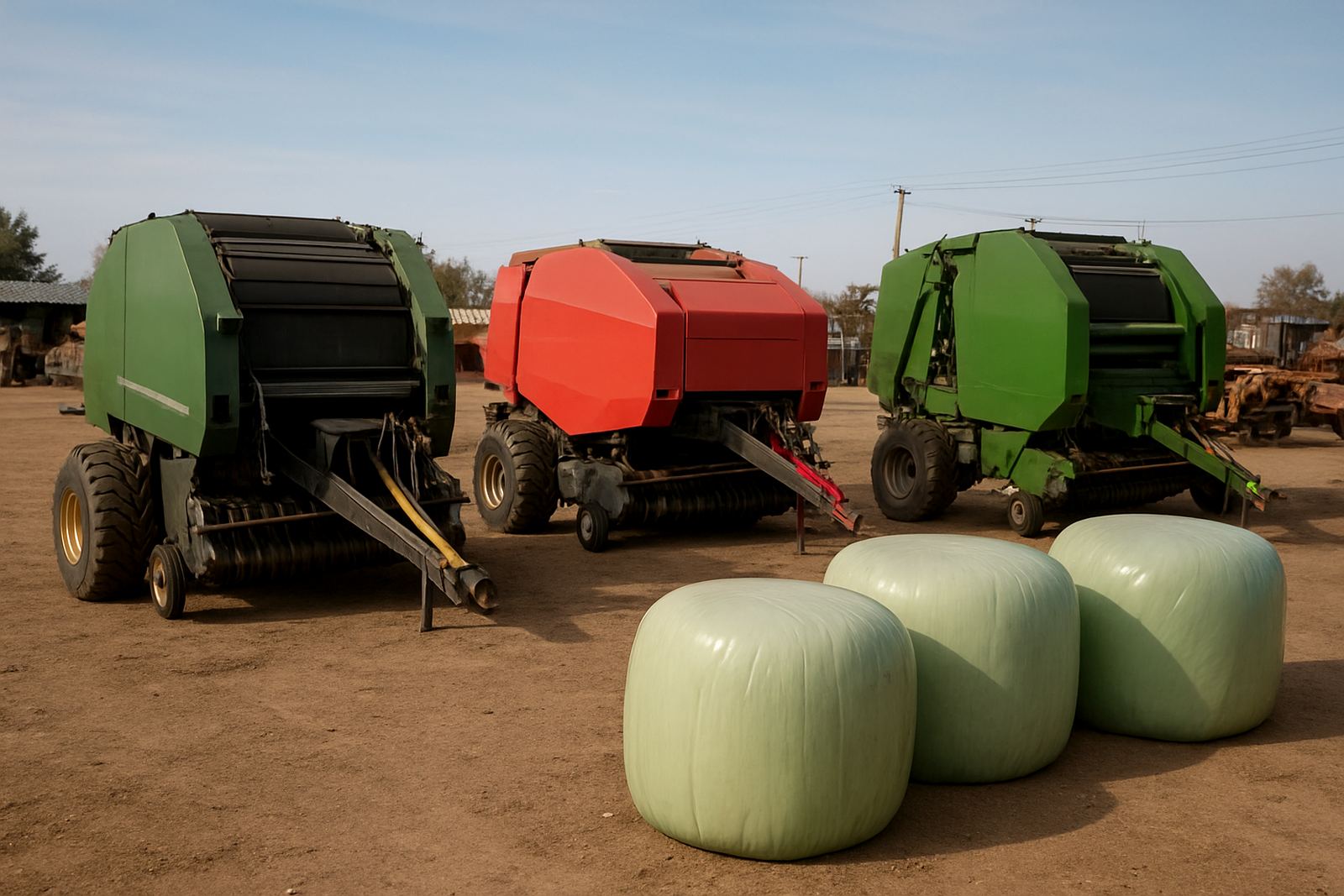
Balers come in different chamber sizes and pressing force ratings. Small vertical units suit lighter waste streams and smaller premises. Larger horizontal or auto-tie units are used where volume is high and consistent output is needed. Hay balers may produce square bales or round bales, while waste balers normally produce rectangular blocks for easier stacking.
- Small vertical balers: suited to retailers, small warehouses and depots with low to medium carton volume.
- Mid-size vertical balers: good for distribution centres, farms and recyclers handling regular daily loads.
- Horizontal balers: better for high throughput sites that want faster cycle times and larger bale output.
- Hay balers: used on agricultural operations for dried forage and crop material, with bale size set by the machine model.
- Manual tie or auto-tie: manual tie needs more operator input, while auto-tie saves time where output is steady.
If you are buying for a yard in Pretoria or Bloemfontein, consider access space for loading and bale removal. A larger unit may be efficient, but it must still fit through doors, under roof height limits and around forklift turning areas.
Where Balers Fit Best in South African Operations
Balers suit sites that create a regular stream of loose material and want to reduce transport costs. Agricultural users often place them close to a shed, packhouse or feed store. Recycling opertaors and commercial sites usually install them near a sorting area or goods receiving bay so material can be fed in as it is separated.
They are useful where municipal collection is irregular, where skip space is costly, or where dry recyclables can be stored until a buyer is ready. In coastal towns, covered storage matters because moisture can ruin cardboard and reduce the value of fibre. In industrial areas with load-shedding, buyers also look for machines that restart safely and do not lose settings after a power cut.
Many businesses use balers to support cleaner yards and easier movement of stock. If your site handles both recyclables and general waste, make sure the machine is matched to the heaviest material you plan to process, not just the lightest one.
- Warehouses and distribution centres
- Farms and feed operations
- Recycling yards and buy-back centres
- Manufacturing plants and packhouses
- Wholesale and retail back-of-house areas
Installation, Power and Site Requirements
Used balers must be checked against your power supply before you collect or transport them. Smaller machines often run on 220 V single phase, while medium and larger units may need 380 V three phase. Check motor rating, current draw and starter type. If the machine was previously on a site with different supply conditions, budget for an electrician to confirm the controls and cable size.
Hydraulic balers need clean oil, sound hoses and a safe electrical isolator. Some hay and agricultural machines may include hydraulic or mechanical drive components that must be inspected for wear before commissioning. If the unit is going into a damp coastal area, look for rust on the frame, electrical panels and ram guides. Good ventilation is important too, especially where heat builds up in enclosed rooms.
Allow enough floor space for feeding, bale removal and maintenance access. You will also need a level concrete slab, safe lighting and clear forklift routes. If the machine is being moved between sites in Johannesburg, Durban or Cape Town, plan for lifting points, transport width and any bridge or loading dock limits.
- Confirm voltage and phase before bidding
- Check floor loading and slab condition
- Allow safe access for forklifts or pallet jacks
- Make space for bale storage and wrapping if needed
Care, Servicing and Daily Checks
A baler can last well if it is cleaned and serviced on a routine basis. Daily checks should cover the ram, safety switches, hydraulic oil level, straps or wire feed, and signs of trapped debris. Dust and scrap build-up can affect cycling and create wear on guides and seals. After power interruptions, check the controls and test the emergency stop before full use.
For waste balers, keep feed material dry and avoid metal items that can damage the chamber. For hay balers, inspect pickup tines, belts, knots and bearings if applicable. Replace worn straps, blades or wires before they fail in the middle of a run. In humid conditions or where the machine stands idle, a simple rust-prevention routine can save money later.
Ask for service records where available. A machine with regular oil changes, replaced seals and proper electrical repairs is easier to commission than one that has been left standing for years. It is also worth checking whether the model uses standard consumables that are easy to source locally.
What to Check Before You Place a Bid
Buying a used baler is about more than the asking price. You need to know what material it handled, how often it ran and whether any major parts have been repaired. A clean-looking unit can still have worn cylinders, weak welds or a tired motor. Ask for clear photos of the chamber, controls, ram, wiring and safety guards.
Before ordering, check the following:
- Material history: hay, cardboard, plastic or mixed dry waste
- Power supply: 220 V or 380 V, single phase or three phase
- Bale size: length, width and weight range
- Cycle time: how fast the ram completes a press
- Condition: oil leaks, rust, damaged panels, missing guards
- Collection plan: transport, lifting gear and site access
If the baler is going to a busy Gauteng yard or a coastal warehouse, ask whether it was tested recently under load. That gives a better picture than static photos alone. A practical inspection now can save downtime, spare parts costs and a lot of frustration later.
Key facts
| Typical bale size | Varies by model, often about 0.5 m to 1.2 m in length for waste units |
|---|---|
| Power supply | 220 V single phase or 380 V three phase depending on machine size |
| Press force | Commonly from 5 tonne to 60 tonne on used units |
| Material handled | Hay, cardboard, plastic film, paper and other dry waste streams |
| Bale tie method | Manual tie, strap tie or auto-tie depending on model |
| Site use | Farms, recycling yards, warehouses, factories and packhouses |