Bakery assets we list and sell
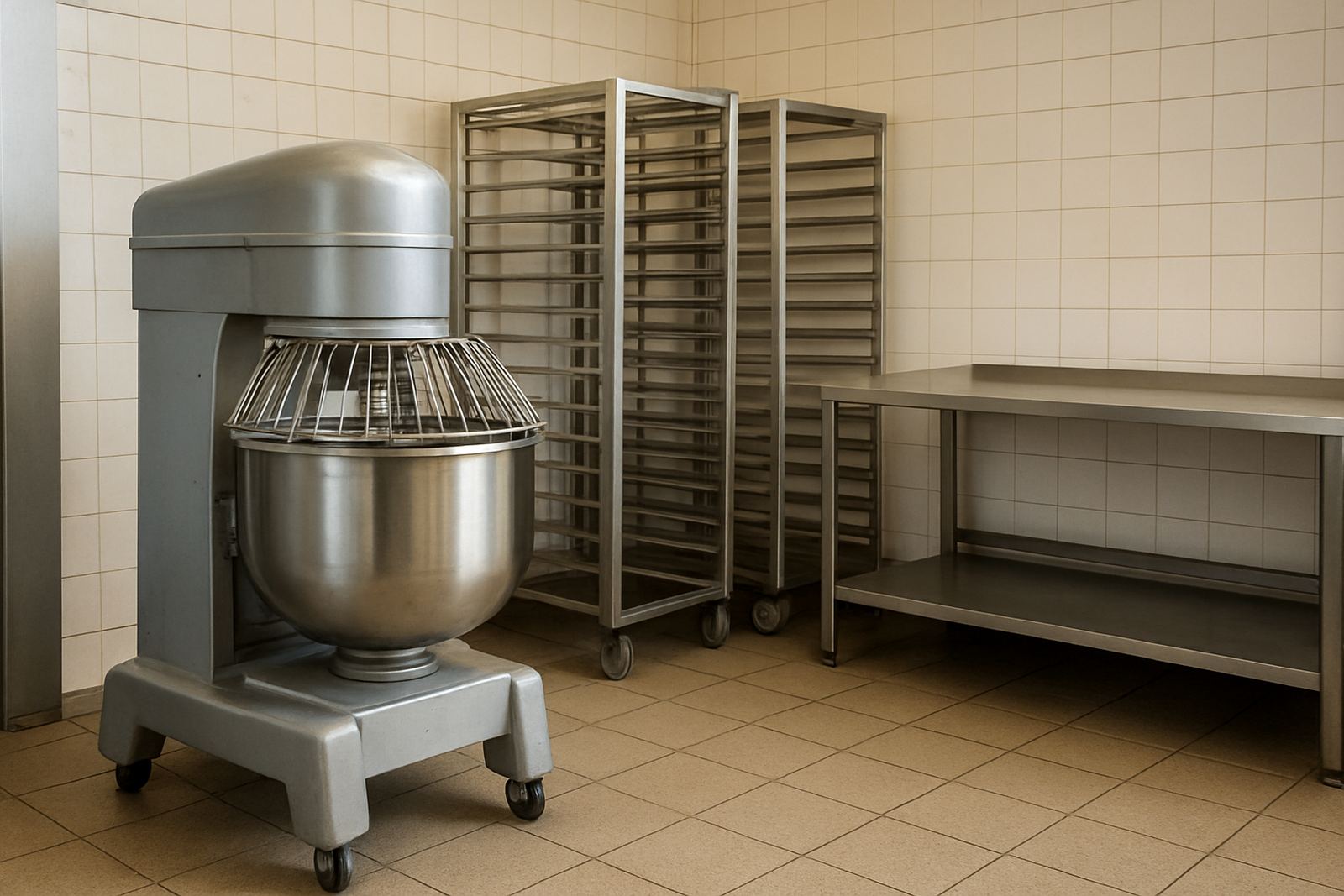
Bakery equipment covers the core machines and support items used to mix, prove, bake, cool and pack product at scale. On BidThis, buyers often look for spiral mixers, planetary mixers, deck ovens, rack ovens, convection ovens, dough dividers, moulders, sheeters, provers, cooling racks, slicers and stainless steel prep tables. You may also find tray trolleys, pans, dough troughs, scales and extraction fans from commercial baking lines. Many lots come from bakeries, supermarkets, hotels, canteens and food manufacturing sites that are reducing capacity or replacing lines.
The right asset depends on your output, the space you have, and whether you are baking bread, rolls, cakes or savoury items. A small café in Melville may only need a 20 litre mixer and one or two deck ovens, while a production bakery in Germiston or Pretoria may need multi-bowl mixers, proofers and a rack oven with trolleys. We catalogue each lot so you can compare size, power draw and condition before bidding.
- Mixers: 10 to 80 litre bowls are common on the open market
- Ovens: single deck, double deck, convection and rack types
- Prep gear: dividers, moulders, slicers and work tables
- Support items: trays, racks, trolleys and proofing cabinets
Typical sizes and output ranges
Used bakery equipment is sold in a wide range of capacities, and the best match depends on your daily batch size. A small mixer can handle 5 to 15 kg of dough per cycle, while larger spiral mixers may take 30 to 120 kg per batch. Ovens vary just as much: compact countertop units suit test kitchens and smaller shops, while multi-deck or rack ovens are built for higher turnover and longer runs. Some equipment is gas heated, some electric, and some needs both power and gas controls on site.
Before you bid, think about tray size, batch times and how many shifts you run. A bakery in Durban with high humidity may need reliable proofing control and ventilation, while a site in Bloemfontein may prioritise stable electric supply and simple servicing. If your operation runs during load-shedding, check whether the equipment can be supported by a generator or inverter system, because not every oven or mixer will restart neatly after a power cut.
- Small shops: 10 to 20 kg mixers and single or double ovens
- Mid-size bakeries: 30 to 60 kg mixers, provers and convection ovens
- Production sites: 80 kg plus mixers, rack ovens and dough handling lines
- Space planning: allow room for loading, cleaning and trolley movement
Where this equipment suits best
Bakery assets suit businesses that need consistent production and repeatable product quality. These lots often work well in retail bakeries, wholesale bread plants, supermarket bakehouses, restaurant groups, school kitchens and food service businesses. They also suit entrepreneurs setting up a new operation who want practical equipment at a lower entry price than buying new. In some cases a single machine can unlock a whole extra product line, such as rolls, buns or pastries.
It is worth matching the machine to the site layout. For example, a buyer in Johannesburg East may need smaller units that can fit through narrow service doors, while a buyer in Cape Town may need equipment that can handle coastal moisture without rust issues. Stainless steel surfaces, sealed bearings and decent drainage around prep areas help a lot in day to day use. If you are buying for a shop in a shopping centre, check noise levels and whether the machine footprint suits the back-of-house area. A machine that is too large can slow the whole line down, no matter how cheap it was.
- Retail bakeries and coffee shops
- Wholesale bread and roll production
- Hotels, canteens and catering kitchens
- School, church and community feeding programmes
Installation, power and gas requirements
Used bakery equipment must be checked carefully before installation, especially where gas, heavy current or ventilation is involved. Smaller mixers and prep items may run on standard single-phase supply, but larger ovens and high-capacity mixers often need three-phase power. Gas ovens or gas-assisted units may require compliant pipework, regulators and shut-off valves, plus proper airflow and fire safety measures. If the seller has disconnected the machine, ask whether cables, plugs, burners or trays are still with the unit before collection.
On site, allow for floor loading, heat clearance and safe access around the machine. Some rack ovens and mixers are heavy enough to need rigging or a forklift at the collection point and delivery point. In Germiston, Isando and Alberton industrial areas, buyers often arrange their own transport and lifting gear, so it is smart to factor that into your bid. One missing connection or worn motor can add cost quickly, so it pays to know what is included and what is not.
- Check single-phase or three-phase supply before bidding
- Confirm gas type, burner condition and compliance needs
- Measure doors, aisles and ceiling height before collection
- Allow for lifting, transport and reinstallation costs
Care, cleaning and regular servicing
Bakery equipment stays usable for longer when it is cleaned and serviced properly. Dough build-up, flour dust and sugar residue can affect guards, belts and bearings, while heat and steam can wear seals and electrics. After each run, wipe down food-contact surfaces, empty crumb trays and inspect moving parts for wear. Ovens should be checked for door seals, thermostats and hot spots, and mixers should be listened to for unusual vibration or grinding.
In coastal areas like Durban or Cape Town, rust prevention matters more than many buyers expect. A machine that has been left idle in a damp storeroom can show surface corrosion even if it looks fine from a distance. Ask about service records, last use date and whether the equipment was tested under power. If a unit has been standing for months, budget for fresh belts, bearings or a service call before production starts. That little bit of maintenance up front can save a full stop later on.
What to check before you place a bid
When ordering bakery equipment through an auction, the lot description is only part of the picture. You need to check capacity, condition, fittings and whether the item is complete. If there is a mixer, ask about bowl sizes, attachments and motor rating. If there is an oven, check the heat source, tray count, internal dimensions and control panel. Where possible, view the asset in person at one of our Germiston, Pretoria, Durban, Cape Town or Bloemfontein viewings so you can judge wear and damage for yourself.
Look beyond the sale price as well. Transport, rigging, cleaning and recommissioning can all add to the final cost. A lot that looks affordable may not be the best value if it needs major repair or expensive electrical work. That is why clear lot notes and practical viewings matter. BidThis gives buyers the details they need to make informed decisions, without the guesswork that often comes with used plant.
- Check whether bowls, trays, racks and guards are included
- Confirm voltage, phase and gas setup before collection
- Review physical condition, rust, leaks and missing parts
- Work out transport, installation and servicing costs before bidding
Key facts
| Common equipment | Mixers, ovens, provers, dividers, moulders, slicers and prep tables |
|---|---|
| Size range | Small 10 to 20 litre mixers up to 80 litre plus production mixers |
| Power options | Single-phase, three-phase and some gas assisted units |
| Typical users | Retail bakeries, wholesale plants, hotels, canteens and food factories |
| Condition checks | Motors, belts, burners, door seals, controls and rust |
| Collection needs | Transport, lifting gear, rigging and safe access for heavy units |