What Counts as Irrigation Equipment
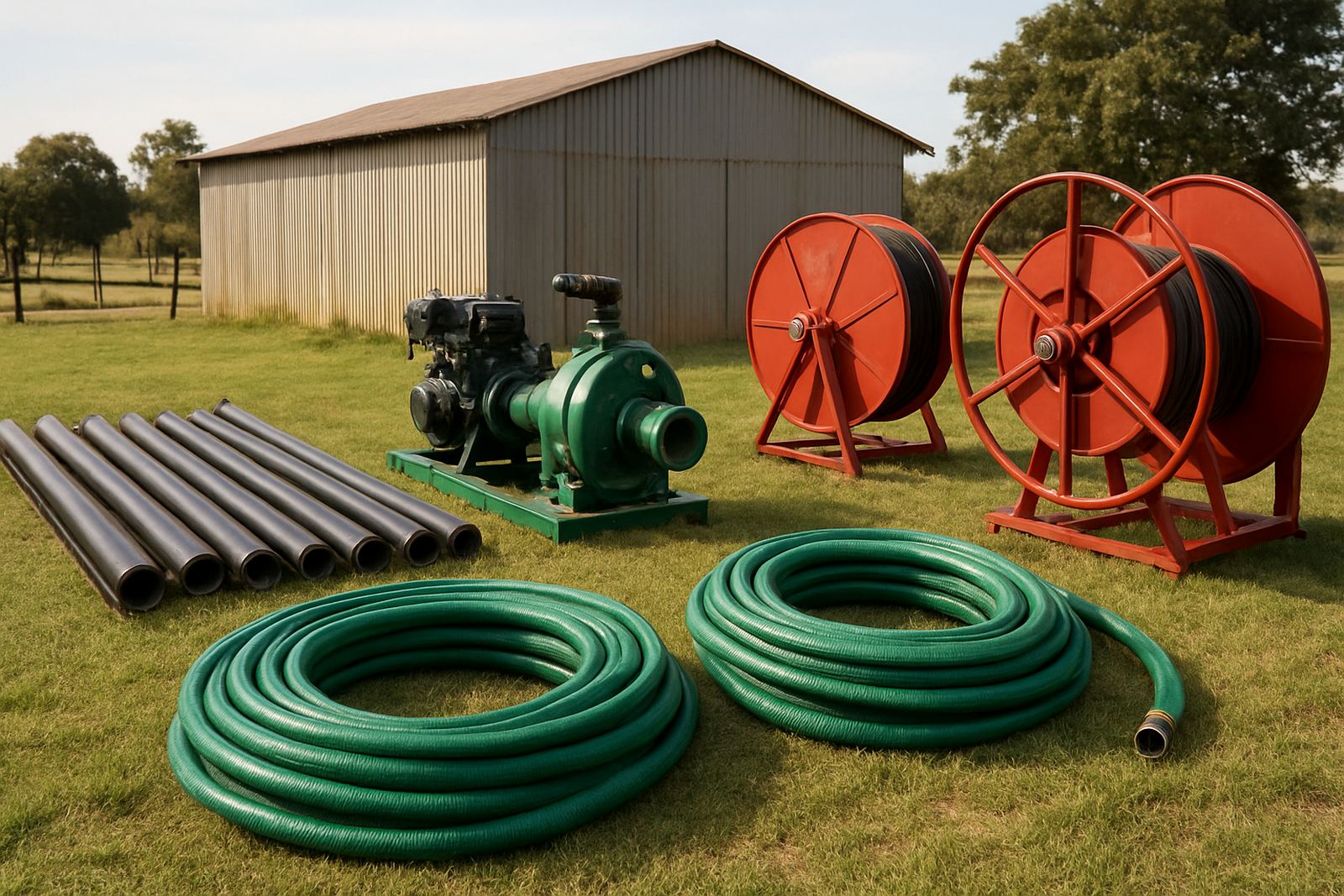
Irrigation equipment covers the parts used to move, control and spread water across fields, orchards, gardens and landscaped sites. On BidThis, that can include centrifugal pumps, submersible pumps, poly pipe, PVC mains, sprinklers, drippers, valves, filter units, manifolds, hose reels and fittings for fixed or portable systems. Some lots are complete working sets, while others are mixed surplus stock from farms, irrigation contractors and municipal-style maintenance stores.
For buyers, this type of stock is often the most practical way to replace broken parts or set up a low-cost system for a block of land, a nursery, or a sports field. For sellers, it is a useful way to move equipment that is still serviceable but no longer suits the current layout, crop plan or water source.
- Pumps for boreholes, dams and storage tanks
- Pipe and hose in common agricultural and landscaping lengths
- Sprinklers, drip lines, valves and filter housings
- Field fittings, couplers, clamps and repair parts
Sizes, Ratings and Common Options
Irrigation lots are usually listed by pipe diameter, pump size, flow rate and the type of fittings included. Common pipe sizes range from 20 mm micro line through to 63 mm, 75 mm, 90 mm and 110 mm mains, with some heavier agricultural lines reaching larger diameters. Pumps are often described by power rating and output, for example 0.75 kW, 1.5 kW, 2.2 kW, 4 kW or higher, depending on the application.
Sprinklers and emitters may be sold as individual items, boxed quantities or mixed pallets. Buyers should check whether a lot is suited to low-pressure drip work, medium-pressure field spray, or a higher-pressure setup for longer throw distances. Where a system uses electric control, solenoid valves and timers, the electrical details matter just as much as the pipe size.
- Pipe diameters from small garden line to wide bore mains
- Pump power from single-phase units to larger three-phase sets
- Drip, spray and overhead sprinkler options
- Plastic, galvanised and mixed-material fittings depending on the lot
Where These Systems Suit Best
This equipment suits farming, horticulture and grounds care work where water has to be moved reliably over distance. In Gauteng, it is often used for vegetable blocks, shade houses and landscaped commercial stands where water pressure can vary from area to area. In Durban and other humid coastal areas, buyers also look for fittings that can handle corrosion and regular cleaning after use near saline air.
Irrigation equipment is also useful for commercial property maintenance, golf course work, nursery propagation areas and dust suppression on yards and open lots. In drier inland areas like Bloemfontein and parts of the North West, the emphasis is usually on water efficiency and correct zoning so that every litre counts. If the site has long runs, uneven ground or restricted water supply, the pump and pipe choice becomes even more important.
- Farms and smallholdings with borehole or dam-fed systems
- Nurseries, tunnels and propagation benches
- Landscaping crews and estates
- Sports grounds, industrial yards and dust control use
Power, Water Source and Installation Basics
Most irrigation equipment needs a proper match between water source, pump and pipe layout. Some pumps run on standard single-phase power, while larger units need three-phase supply and correctly sized cable protection. If the site has unstable power or load-shedding, buyers often choose systems that can restart cleanly, or plan for a backup generator, inverter or tank-fed gravity arrangement where practical.
Installation normally includes a stable base for the pump, suction piping that is sealed well, a non-return valve where needed and the right filter setup before water reaches drippers or fine nozzles. For buried or permanent lines, trench depth and backfill quality matter. In areas with municipal rules about water use, buyers should also confirm that the planned system matches the site’s permitted water source and timing requirements.
- Check if the pump needs single-phase or three-phase power
- Confirm suction lift, discharge height and total line length
- Match filters to the water quality, especially from dams or boreholes
- Plan for brackets, supports and valves before the first run
Care, Servicing and Working Life
Used irrigation stock can last well if it is cleaned, stored and serviced properly. Pumps need seal checks, bearing checks and a look at impellers for wear, especially if they have run in sandy or silty water. Pipes and fittings should be checked for cracking, UV damage and flat spots from bad storage. Drippers and sprinkler heads often need flushing before use, since sediment and old fertiliser residue can block flow.
On farms near the coast or in hot sun, corrosion and brittle plastics show up faster, so a quick inspection before refitting is worth it. Replace damaged O-rings, cracked couplers and perished hoses before commissioning. If a lot has been standing for some time, ask about the last service point and whether the unit was tested under water pressure. That saves time later and avoids a day lost to leak hunting.
- Flush lines before first use
- Check seals, gaskets and hose condition
- Inspect motors, starters and control gear for heat damage
- Store away from direct sun where possible
What To Check Before You Place a Bid
Before bidding, confirm exactly what is included in the lot. A pump alone may need a motor, starter, foot valve or discharge fittings that are not part of the sale. Pipe lots can look complete but still need couplers, clamps or reducers to join into your existing line. It is also worth measuring the spaces on your truck or trailer, because long pipe bundles and pump skids can be awkward to collect from a viewing yard.
BidThis viewings in Germiston, Isando, Alberton, Johannesburg East, Pretoria, Durban, Cape Town and Bloemfontein help buyers inspect condition before auction close. Check serial plates, flange sizes, outlet and inlet diameters, electrical tags and visible repairs. If you are buying for resale or redeployment to another site, note the size and condition of every part so you can budget for the missing bits without surprises.
- Confirm the lot contents against the listing photographs
- Measure inlet, outlet and pipe diameters in millimetres
- Ask whether the unit was tested, dry stored or still installed
- Plan collection timing and transport for bulky items
Key facts
| Typical pipe sizes | 20 mm, 25 mm, 32 mm, 40 mm, 50 mm, 63 mm, 75 mm, 90 mm and 110 mm |
|---|---|
| Pump power range | From small single-phase units to larger three-phase motors, often 0.75 kW to 7.5 kW plus |
| Common materials | PVC, poly pipe, galvanised metal, plastic fittings and mixed component sets |
| Water delivery types | Drip, micro spray, overhead sprinkler and transfer pumping |
| Typical use areas | Farms, nurseries, landscaped sites, sports grounds and industrial yards |
| Condition notes | May include used, tested, untested, repaired or surplus stock depending on the lot |