What a milling machine does in a workshop
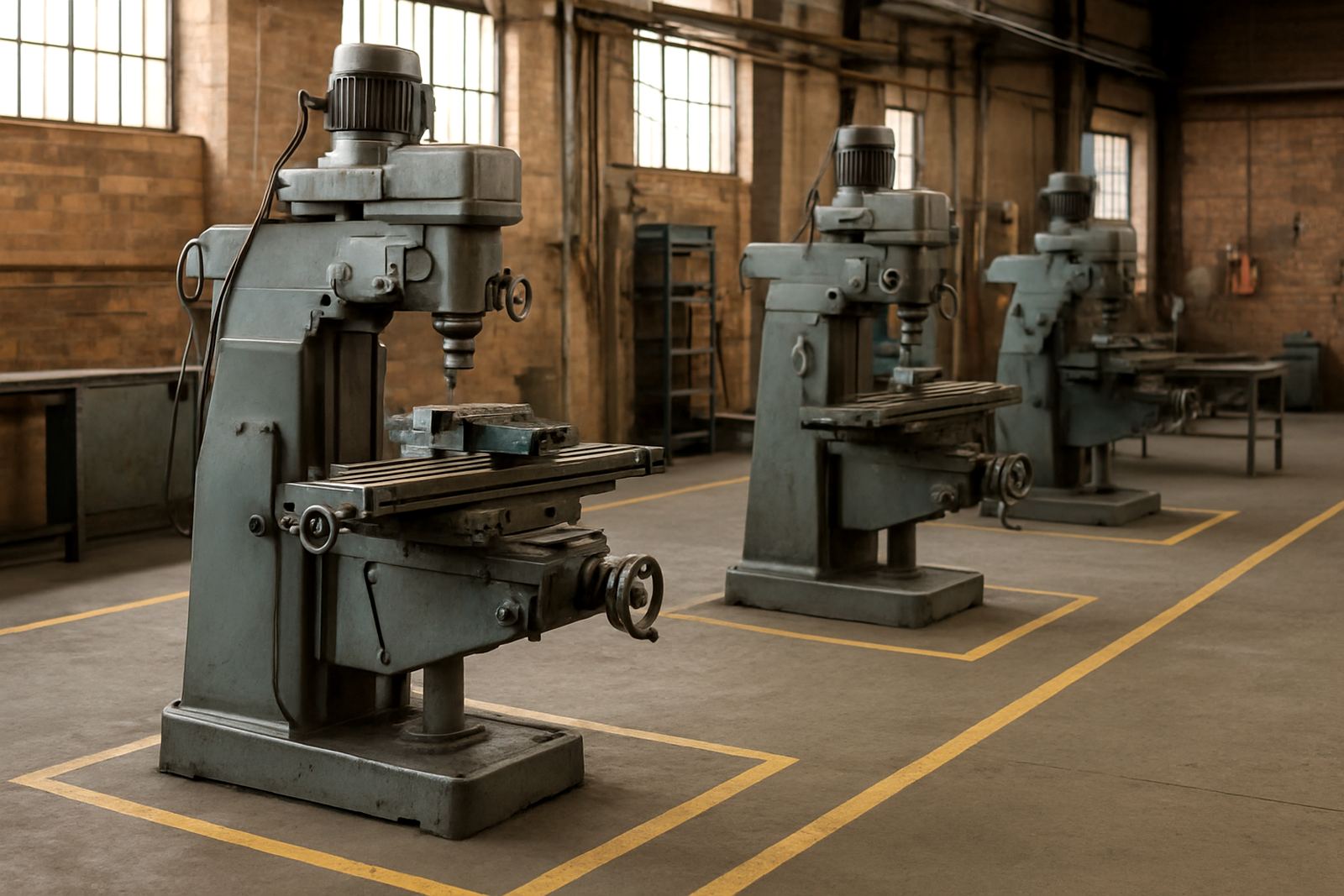
A milling machine removes material with a rotating cutter to shape metal, plastics and some composite materials. It is used for slots, faces, keyways, pockets, shoulders and drilled patterns where straight, accurate cuts matter. In South African workshops these machines are common in general engineering, maintenance departments, toolrooms and training centres where repeatable work is needed day after day.
Used milling machines on auction often come from factories upgrading lines, colleges refreshing their training bay or workshops clearing surplus assets after a relocation. You may find a plain knee mill, a heavier universal type or a CNC unit with a control panel and guarded enclosure. Some machines are older but still useful for light production and prototyping, while others need minor electrical work, new belts or a service before they go back into daily use.
- Vertical mills suit drilling, slotting and face work.
- Horizontal mills are better for heavier cuts and long workpieces.
- Universal mills can handle more setups with the right tooling.
- CNC mills are useful where repeat parts and tighter tolerances are needed.
Sizes, table travel and spindle details to compare
Milling machines vary a lot in footprint and capacity, so the right choice depends on the parts you make and the space you have. Small toolroom machines may fit into a compact bay, while industrial units need proper floor space, headroom and access for lifting gear. When you compare lots, look closely at table size, axis travel, spindle taper and motor rating because these tell you what the machine can really handle.
For many buyers, the key number is table travel. A machine with 700 mm by 250 mm table travel may suit light maintenance work, while a larger machine with 1000 mm or more travel gives room for longer components and jigs. Spindle speeds also matter. A variable speed head is handy for mixed work, especially when you move between aluminium, mild steel and harder alloys. Some units include digital readouts, coolant systems, power feeds and vice sets, while others are sold as a bare machine with the minimum tooling.
- Table size: often from about 900 mm x 250 mm up to 1500 mm x 350 mm.
- Spindle taper: commonly R8, ISO, BT or similar tool holding systems.
- Spindle speed: around 50 to 4000 rpm depending on the machine type.
- Motor size: typically 1.5 kW to 7.5 kW, with heavier units higher.
Where milling machines suit best
Milling machines suit engineering workshops that need accurate shaping and repair work without waiting on outside suppliers. They are also useful in schools, TVET colleges and apprentice training facilities where learners need to practise setting, clamping and measuring. In smaller towns and industrial areas, one good mill can save time on shaft keyways, bracket plates and one-off parts that would otherwise mean downtime.
They are common in Gauteng manufacturing spaces, Durban maintenance shops, Cape Town fabrication yards and Free State training centres. In areas like Germiston, Isando and Alberton, buyers often look for machines that can support routine plant repairs, fabrication and toolmaking. If you run in a dusty environment or near the coast, you need to think about protection against grit and humidity because that affects slides, bearings and electrical cabinets over time.
- General engineering workshops
- Maintenance and repair departments
- Training colleges and apprenticeships
- Fabrication and light production shops
- Toolrooms and patternmaking spaces
Power supply, floor space and installation needs
Most milling machines need a stable electrical supply and a firm level floor. Smaller machines may run on standard single phase power, but many workshop models need 3 phase supply at 380 V to 400 V. Before bidding, check what your site actually has available, especially if you are in an older industrial unit where load-shedding, wiring capacity or a weak supply can cause problems. A machine with a higher motor draw may also need proper protection, isolation and a qualified installer.
Allow enough clearance around the machine for loading material, changing cutters and cleaning chips. A forklift, pallet jack or crane may be needed for delivery and placement, depending on the machine weight. When a mill is moved between sites, check the base, levelling feet and anchor points so it sits correctly before use. Coolant tanks, chip trays and splash guards should also be checked for leaks and corrosion before commissioning.
- Check whether the machine is single phase or 3 phase.
- Confirm the motor voltage, current draw and starter type.
- Measure door widths, aisle space and ceiling height before collection.
- Plan for lifting gear and a solid floor that can take the load.
Care, servicing and common wear points
A used milling machine can give years of service if it is kept clean and lubricated. The most common wear points are slideways, leadscrews, spindle bearings, belts, motors, handwheels and coolant pumps. On older machines, backlash in the table feeds and play in the spindle should be checked before you start production. If a machine has been standing idle, surface rust, stale coolant and dried grease are common issues and should be dealt with early.
Regular care is straightforward. Wipe down the ways, keep the table free of chips and check oil levels before use. On coastal sites, moisture control matters because rust forms quickly on bare metal and electrical terminals can corrode. If the machine is fitted with DRO scales or electronic controls, make sure the cabinets are sealed and clean. A service record is useful, but if there is no paper trail the condition of the machine itself becomes more important than the age.
- Inspect spindle noise, vibration and heat after running.
- Check table backlash and feed smoothness in all axes.
- Look for coolant leaks, damaged hoses and blocked sumps.
- Test emergency stops, guards and electrical safety switches.
What to check before you place a bid
Every milling machine lot should be checked for size, condition and the accessories included. A machine with vises, collets, tooling, arbors and coolant gear can be more useful than a bare unit at a lower price. Ask whether the machine was running at the time of consignment, whether it was under power for viewing and whether any faults are noted in the lot details. If you are buying for a specific job, make sure the spindle taper, table slots and travel match your work.
Check the collection requirements before you bid. Some machines can be loaded in one piece, while larger units may need partial strip-down. If there are stairs, narrow gates or strict site rules, the collection plan must fit the site. For businesses buying across Johannesburg, Pretoria, Durban, Cape Town or Bloemfontein, transport costs can change the real value of the lot, so factor in rigging, freight and commissioning.
- Machine dimensions and estimated weight
- Power type, motor size and control setup
- Included tooling, vices and coolant system
- Known faults, missing parts or missing guards
- Collection access and lifting requirements
How buyers use BidThis for milling machine lots
BidThis lists milling machines from sellers across South Africa and supports buyers who want clear lot information before they commit. The aim is simple: help you compare machines that are available now, understand what is included and plan your viewing or collection properly. If you need a mill for repair work, teaching or light production, the auction route can open up better pricing than buying new, especially when you do not need the latest control package.
From Germiston to Pretoria and down to the coast, buyers look for practical machines that can go back into service without long delays. The best lot is not always the newest one. It is the one with the right travel, the right power setup and enough tooling to start working once it lands in your workshop.
- Review lot notes and photos carefully.
- Use the viewing opportunity where possible.
- Check transport and installation costs before bidding.
- Match the machine to your material, space and power supply.
Key facts
| Machine type | Vertical, horizontal, universal and CNC milling machines |
|---|---|
| Typical table travel | From about 700 mm to 1500 mm, depending on model |
| Typical spindle speed | Around 50 rpm to 4000 rpm |
| Motor rating | About 1.5 kW to 7.5 kW and above on heavier units |
| Power supply | Single phase on smaller units, 3 phase 380 V to 400 V on many workshop machines |
| Common accessories | Vice, collets, arbors, coolant system, DRO, guards and tool holders |