What an air compressor does in a workshop or plant
An air compressor stores air under pressure so you can run tools and equipment that need a steady supply of compressed air. In a workshop that may mean tyre inflation, spray painting, air ratchets, blow guns and cleaning lines. In a factory it can support packaging, pneumatic controls, maintenance work and light production tasks. Used compressors often come in because a business has upgraded, closed a line, or needs to clear surplus stock after a plant change.
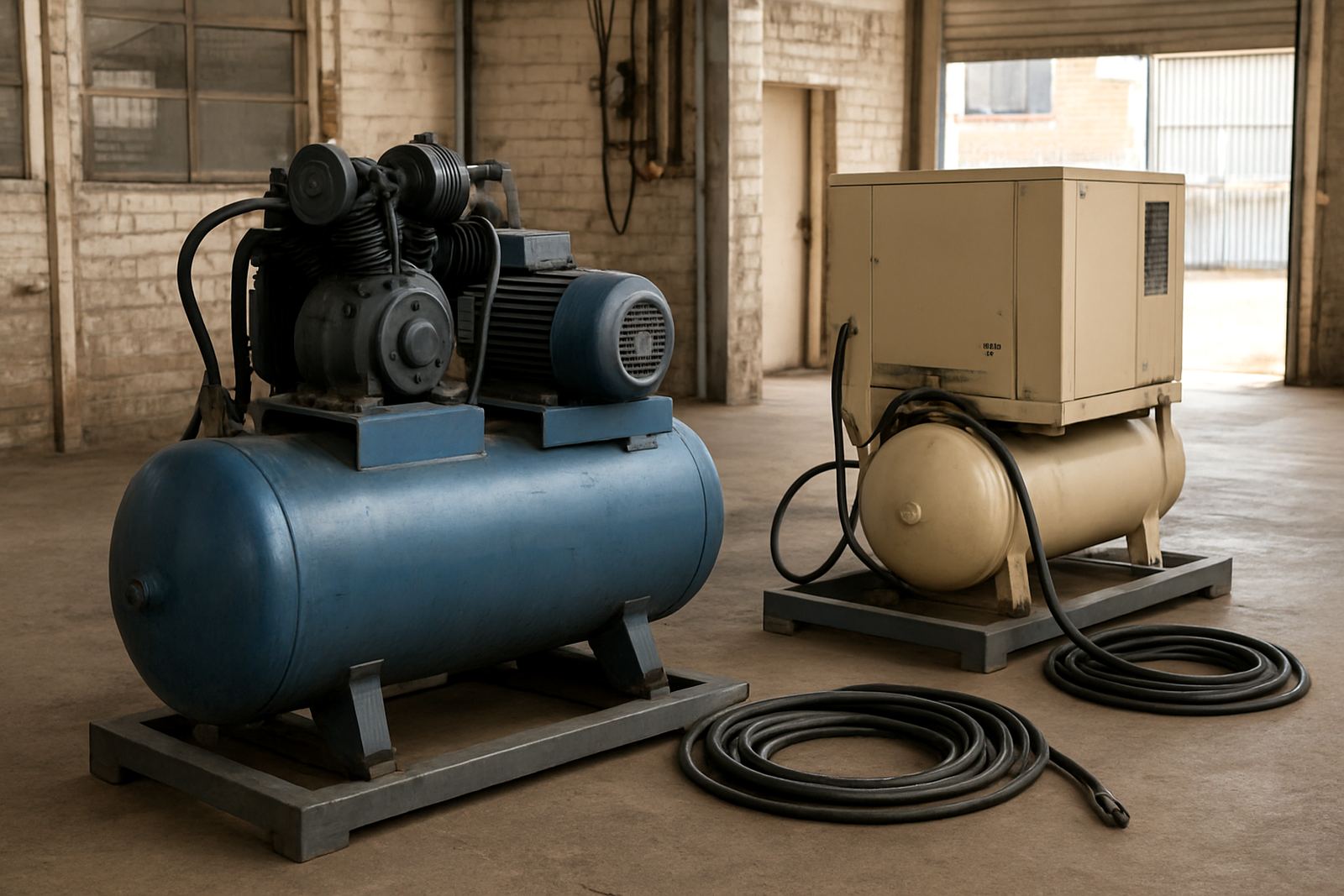
We list compressors that are suited to a range of budgets and duty cycles, from small piston units for light maintenance to larger rotary screw units for regular plant use. Condition, hours and service history can vary a lot, so it helps to match the machine to the actual job rather than just the nameplate size. On auction, the right unit can save a fair amount of Rand if you are prepared to inspect it and allow for commissioning costs.
Common sizes, tank types and drive options
Air compressors are usually described by tank size, delivery pressure and motor power. Smaller workshop units may have 24 to 100 litre tanks, while site and factory models can run from 200 litres up to several thousand litres in receiver capacity. Output is often shown in cfm or litres per minute, and pressure is usually around 8 to 10 bar for general use. Some heavy duty systems run higher, but only where the tool or process needs it.
- Piston compressors: suited to intermittent use, body shops, tyre bays and general repair work.
- Rotary screw compressors: better for long runs, multiple users and steadier air demand.
- Single phase units: useful where only 230 V power is available, but usually smaller.
- Three phase units: common in factories and larger workshops, with better running capacity.
- Petrol or diesel driven units: used where grid power is not practical, such as remote yards or mobile operations.
When buying used, check whether the unit is fixed speed or load/unload, whether it has a dryer or aftercooler, and if the receiver tank is included. A unit with the right flow but too little tank capacity can still struggle in busy periods, especially in humid coastal areas like Durban and Cape Town where moisture control matters.
Where these compressors suit best
These compressors suit mechanical workshops, fabrication shops, panel beaters, logistics depots, garages, food packing rooms, general factories and municipal service yards. They also fit businesses that need a spare compressor on site for load-shedding back up or to keep a production line moving during maintenance. In Gauteng, many buyers look for units that can handle dust and frequent starts. On the coast, buyers often want better moisture management and space for filtration.
Before you bid, think about noise levels, floor space and ventilation. A compressor placed in a small enclosed room will run hotter and may wear faster. If your site in Germiston, Isando or Alberton has shared power boards, make sure the supply can handle the starting current. For sites in Pretoria, Durban or Bloemfontein, also check whether the installation area allows safe collection and lifting access for the machine and receiver.
- Suitable for intermittent or continuous duty, depending on size and type
- Useful where compressed air tools are already in daily use
- Good for replacement of older, less efficient units
- Works well as a second unit for standby cover
Power supply, pressure needs and installation checks
Installation needs depend on the compressor type. Smaller single phase units usually plug into a standard supply, while larger workshop and factory units may need a dedicated three phase feed, isolator and proper cabling. If a compressor is diesel or petrol driven, you will need safe fuel storage and a well ventilated position. For any electric unit, check motor amperage, starting current and whether your site has enough capacity when other equipment is running at the same time.
Pressure and air demand must also match the job. A spray booth may need stable pressure and dry air, while a tyre shop may need fast recovery and regular bursts. If you are replacing a machine, compare the old unit’s delivery, tank size and duty cycle before you bid. We see buyers get caught out when a machine has enough pressure but not enough flow, or the other way round. It sounds basic, but it matters once the tools are on the floor.
Care, servicing and what to look for during viewing
Used compressors should be checked for oil leaks, belt wear, damaged guards, loose mounts, corrosion on the tank and signs of overheating. Listen for unusual knocking, excessive cycling and air escaping from fittings or safety valves. On a screw unit, ask whether service intervals were followed and whether filters, separator elements and oil were changed on time. On a piston unit, check the compressor head, rings and discharge line. Moisture in the receiver tank is a warning sign, especially in humid parts of KZN and the Western Cape.
- Look at the hours metre, if fitted, and compare it with the general condition
- Check the tank for rust, dents and old repairs
- Ask whether the unit was used indoors, outdoors or in a dusty area
- Confirm if starter panels, hoses, filters and silencers are included
- Inspect for missing feet, cracked mounts or damaged wiring
After collection, plan for a proper service before putting the compressor into daily use. That may include oil change, filter replacement, tank drain checks and load testing. If the unit has been standing for a while, it is worth budgetting for seals or belts too.
Ordering details for surplus and replacement compressors
When ordering through an auction listing, check the make, model, serial number, power type, receiver size, pressure rating and whether the compressor is sold as a working item, untested item or for repair. Also confirm whether the sale includes hoses, dryer units, air receivers, spare parts or only the main compressor. If you need a replacement for an existing machine, compare the footprint and pipe connections so the changeover is practical.
For collection, plan lifting gear, loading access and a vehicle that can handle the weight. Small units may be easy enough to move by hand, but larger compressors can need a forklift or crane truck. If the item is in Germiston, Johannesburg East, Pretoria, Durban, Cape Town, Bloemfontein or one of the viewing points, make sure you know the yard rules and collection window before you travel. A quick check saves time and avoids problems at pickup, which is something buyers often overlook.
Key facts
| Types available | Piston, rotary screw, petrol and diesel driven units |
|---|---|
| Pressure range | Commonly 8 to 10 bar, with some higher pressure units |
| Tank size | From 24 litres on small units to large receiver systems for plant use |
| Power supply | Single phase 230 V, three phase, or engine driven |
| Typical use | Workshop tools, tyre bays, spray work, plant maintenance and general compressed air |
| Condition notes | May be surplus, replacement stock, working, untested or for repair |