What a TLB is and why it stays in demand
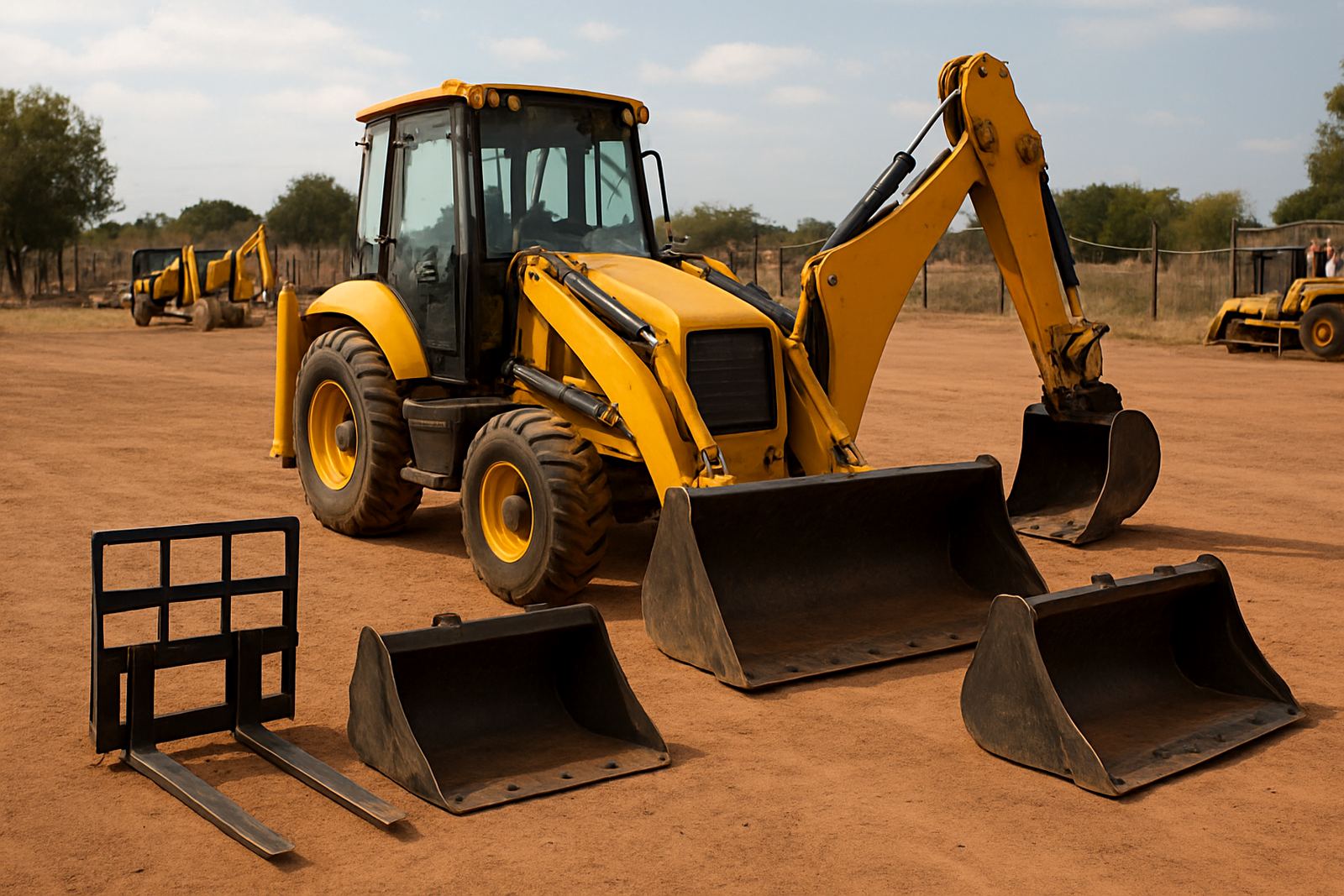
A TLB, or tractor loader backhoe, combines a front loader with a rear backhoe on one chassis. That makes it a practical choice when one machine has to dig, load, move spoil and clean up a site without bringing in three separate units. In South African yards, on farms and at service sites, TLBs are often kept busy because they can handle water pipe trenches, road patching, drainage work and general material handling.
Used TLBs are popular on auction because they offer real value for businesses that need a machine quickly and do not want the cost of a new purchase. Older units can still be useful if the boom pins, hydraulics, tyres and gearbox are in fair condition. When you are buying through auction, the key is to match the machine to the actual work you plan to do, not just the badge or year model.
Common sizes, attachments and working setups
Most TLBs in the used market fall into a few familiar size bands. Smaller units are easier to move between sites and suit light utility work, while larger machines give you stronger breakout force and better lifting performance. Some units are standard backhoe loaders, while others include quick-change buckets or extra hydraulic lines for specific attachments.
- Dig depth: often around 3.5 m to 5.5 m, depending on boom length and configuration
- Loader bucket width: commonly 2,000 mm to 2,500 mm for general material handling
- Backhoe bucket options: narrow trenching buckets, standard dig buckets and clean-up buckets
- Tyres: industrial tread is common, with some units fitted for mixed road and yard use
- Transmission: manual, shuttle or powershift setups may be listed
- Cab options: open station or enclosed cab for dusty, hot or wet sites
Some auction stock also includes units with extendable dipper arms, rear stabilisers in better condition, or side-shift features for tighter work near walls and kerbs. Check whether the machine has auxiliary hydraulics if you plan to use a breaker or other powered attachment.
Where TLBs suit civil, farming and utility work
TLBs are used widely because they fit many day-to-day jobs without needing a large crew. In civil work, they are handy for trenching, backfilling, loading stone and clearing out drainage lines. On farms they can help with yard maintenance, fence line work, feed handling and small earthmoving jobs. Municipal and utility contractors often use them for repairs in tight spaces where bigger plant is not practical.
For buyers in Gauteng, KwaZulu-Natal, the Western Cape and the Free State, the right TLB often depends on road access, fuel use and how much of the work is on hard ground versus soft soil. If your work is mostly in Johannesburg, Pretoria or Durban where sites can be tight and traffic is busy, a more compact unit may be easier to manage. On larger farms near Bloemfontein or the coastal belt around Cape Town, bigger tyres and stronger hydraulics can be worth the extra spend.
- Utility trenching for water, fibre and drainage
- Farmyard loading and loose soil movement
- Roadside repair and municipal maintenance
- Small site clearing and spoil removal
- Construction support where a full excavator is not needed
Power, fuel and site access requirements
TLBs do not need a fixed installation, but they do need a suitable work area, regular diesel supply and space to operate safely. Buyers should check whether the machine starts easily from cold, idles cleanly and lifts under load without hesitation. In South Africa, load-shedding is usually more relevant to your support workshop than to the machine itself, though charging batteries, running welders and keeping pumps going can affect maintenance planning.
Access matters too. A TLB needs a level enough area to load and offload, room to swing the backhoe and enough turning space for recovery trucks or lowbeds. If the machine will be used near coastal areas like Durban or Cape Town, corrosion on pins, connectors and body panels should be checked carefully because humidity can speed up wear. On dusty inland sites, filters and cooling systems need close attention, because clogged radiators can cause overheating fast.
- Fuel: diesel only, with service history ideally showing regular filter changes
- Hydraulics: check hoses, cylinders, oil level and visible leaks
- Tyres: inspect for cuts, sidewall damage and uneven wear
- Transport: confirm dimensions, weight and whether a lowbed is required
What to check before you place a bid
Before bidding, study the lot details and make sure the machine suits your job and budget. On used TLBs, small issues can become expensive if they affect digging force, steering, or hydraulic response. It is worth checking whether the machine has service records, whether any major components were repaired, and whether the hours are believable for the visible wear on pedals, pins and seats.
Also look at the cab condition, glass, controls and warning lights. A machine that looks tidy can still hide slack joints or weak hydraulics. If you can view the unit in person, test the loader arms, backhoe swing, outriggers, steering and gear engagement. Ask what comes with the machine and what does not, because missing buckets or damaged teeth can change your real cost. A quick inspection now can save a lot later, especially if the machine has been standing.
- Confirm serial numbers and the exact model listed
- Check dig depth, loader capacity and attachment compatibility
- Review tyre condition and undercarriage wear points
- Look for oil leaks, cracked hoses and loose pins
- Ask about service history and recent repairs
- Confirm collection arrangements and site access for transport
Care, servicing and buying through auction
Once a TLB is in service, routine care keeps it working longer and helps protect resale value. Greasing pins, checking hydraulic oil, cleaning radiators and watching for abnormal play in the boom should be part of normal use. In wet coastal conditions, wash down mud and salt regularly. In dry inland areas, keep filters clean and check for dust around seals. A machine that is looked after properly can stay useful for years, even if it is not new.
When buying through auction, factor in servicing straight away after collection. Budget for filters, oils, a full inspection and any safety items that need replacement. If you are working on civil jobs or around public roads, make sure the lights, brakes and warning devices are in order. TLBs are tough machines, but they still need consistent upkeep and a clear match between the job and the machine.
Key facts
| Machine type | Tractor loader backhoe |
|---|---|
| Typical engine | Diesel, 4 cylinder or 6 cylinder depending on model |
| Operating weight | About 6,000 kg to 9,500 kg |
| Backhoe dig depth | About 3.5 m to 5.5 m |
| Loader bucket width | About 2,000 mm to 2,500 mm |
| Common use | Trenching, loading, site clearing and municipal maintenance |