What Water Pumps Do On Site
Water pumps are used wherever liquid has to be shifted from one point to another, whether that is a basement flood, a construction sump, a mine dewatering job or a tank transfer in a factory yard. On auction lots you may find a simple clean-water pump for general transfer, a heavy duty dewatering unit for muddy water, or a submersible pump that works straight from the wet pit. The right pump saves time and reduces the chance of standing water damaging floors, stock or electrical gear.
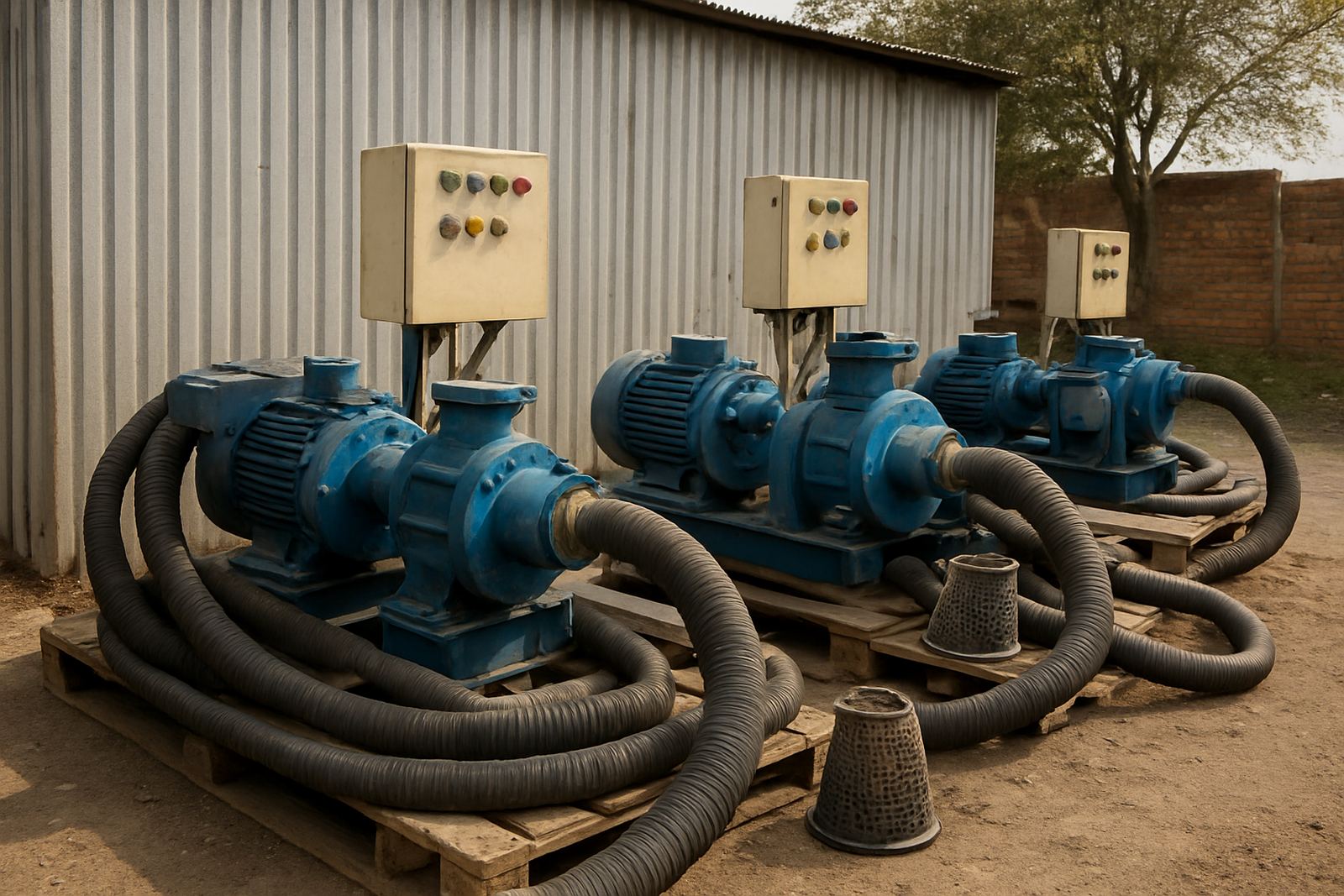
Most used units are sold as standalone machines, though some arrive with frames, hoses, floats, strainers, control panels or starter kits. Buyers should check the pump type against the liquid being handled, because a pump suited to rain water will not always cope with abrasive slurry or fibrous waste. In Gauteng, coastal towns and inland sites alike, water pumps are often bought for backup use when load-shedding or pipe failures interrupt normal operations.
Common Types And Typical Sizes
The pumps that come through auction vary quite a bit in size and duty rating. Small transfer pumps may suit workshops and light plant rooms, while larger site pumps are used on mines, factories and civil works. Centrifugal pumps are usually chosen for higher flow with lower head. Submersible pumps sit in the water and are useful where suction lift is a problem. Dewatering pumps are built for dirty water, silt and muddy runoff, and can keep working where ordinary pumps block up.
- Small portable pumps: 1 to 3 kW, often single-phase, suitable for clean water and short runs
- Mid-size centrifugal units: 4 to 15 kW, often three-phase, for irrigation, transfer and circulation
- Submersible pumps: 0.75 to 11 kW, used in pits, sumps, tanks and flooded areas
- Dewatering pumps: 5 to 30 kW and more, with solids handling and abrasion-resistant parts
- Common discharge sizes: 25 mm, 50 mm, 75 mm, 100 mm and above
Head and flow matter as much as motor size. A pump moving 200 litres per minute at 10 metres head is not the same as a unit pushing water 30 metres uphill or across a long site hose, so buyers should compare real working duty not just the nameplate.
Where These Pumps Work Best
Water pumps are used across many South African industries, from construction and agriculture to manufacturing, logistics and municipal support work. On building sites they remove storm water from excavations and trenches. In workshops and plants they move cooling water or wash water. On farms they can help with irrigation, dam transfer and animal watering systems. In industrial yards they are useful for tank decanting, wash bay drainage and emergency response after pipe bursts.
They also suit temporary jobs where a permanent installation is not practical. A contractor in Durban may need a portable pump for a wet trench, while a warehouse in Pretoria may need a submersible unit to clear a sump after heavy rain. In Cape Town and coastal areas, buyers should think about corrosion from salt air and moisture, especially when pumps have been stored outside or near the sea.
- Construction pits and foundation dewatering
- Factories, wash bays and process water transfer
- Agricultural irrigation and dam pumping
- Basements, sump pits and flooded service areas
- Emergency standby use during outages or pipe failures
Power, Fuel And Installation Details
Before placing a bid, check how the pump is powered. Many site pumps use three-phase electric motors, which need suitable supply, protection and cabling. Smaller units may run on single-phase power for lighter work. Diesel driven pumps are common where there is no reliable electricity or where the pump must move around a site without dependence on a fixed supply. Some older sets are fitted to trailers or skids for easier transport, while others are fixed-base units that need proper anchoring.
Installation should match the job. Suction lines must be as short and straight as practical, and discharge hoses need the correct diameter to avoid pressure loss. If the pump is submersible, check the cable length, float switch arrangement and lift height. If it is a centrifugal pump, inspect the seal arrangement and priming system. A poorly installed pump can lose flow fast or overheat, so buyers should plan for motor starters, breakers, hose fittings and inlet strainers as well. That is where many problems start, not the pump itself.
Care, Servicing And Storage Between Jobs
Used water pumps can give good service if they are cleaned and checked after each job. Impellers should be free of stones, wire, rags and scale. Seals and bearings need regular inspection, especially on pumps used in muddy water or left running for long shifts. Electrical units should have cables checked for cuts, heat damage and bad joins. Diesel pumps need routine fuel, oil and filter checks, plus battery care if they are electric start. Leave a wet pump full of dirty water and it will punish you later.
Storage matters too. In humid coastal areas, rust can build up fast on shafts, bolts and frames. Keep pumps under cover, drain them after use, and rotate stored shafts if the machine will stand for months. If a unit has been out of service for some time, it is worth checking the seals, impeller clearance and insulation resistance before it is put back into work. A quick service now can avoid an expensive breakdown on a wet site later on.
- Flush clean after pumping muddy or abrasive water
- Inspect seals, bearings and impellers before reuse
- Check hose wear, clamps and suction strainers
- Test motor insulation and cable condition on electric sets
- Keep diesel units fuelled correctly and batteries charged
What To Check Before You Bid
When ordering or bidding on a used water pump, start with the duty requirement. You need to know the liquid type, required flow, lift height, hose length and power available on site. Confirm whether the pump is for clean water, dirty water or slurry. Then check the inlet and outlet sizes, motor rating, voltage, phase, fuel type and starting method. If the job is in a municipal area, also consider noise limits, drainage rules and where discharge water may go.
Ask for the pump’s condition details and any photos of the plate, casing, seals and connections. If the set includes a frame, starter box or hose kit, confirm what is actually included. Buyers should also look at age, wear marks, vibration signs and any previous repair work. A pump may look complete but still need bearings, a seal kit or a new cable before it can go back to site. Better to check carefully than to find out on a Sunday night with water rising.
For sellers, clear lot descriptions help buyers understand the application and reduce after-sale issues. Good photos, accurate measurements and honest notes on running condition all matter when moving assets through timed online auctions.
Key facts
| Pump types | Centrifugal, submersible, dewatering |
|---|---|
| Typical motor sizes | 0.75 kW to 30 kW plus |
| Power options | Single-phase, three-phase, diesel driven |
| Common discharge sizes | 25 mm to 100 mm plus |
| Typical uses | Clean water transfer, flooded areas, pits, sumps, slurry and site dewatering |
| Key checks | Flow, head, seals, cables, hoses, impeller wear and voltage compatibility |