What A Site Cabin Is And How It Is Used
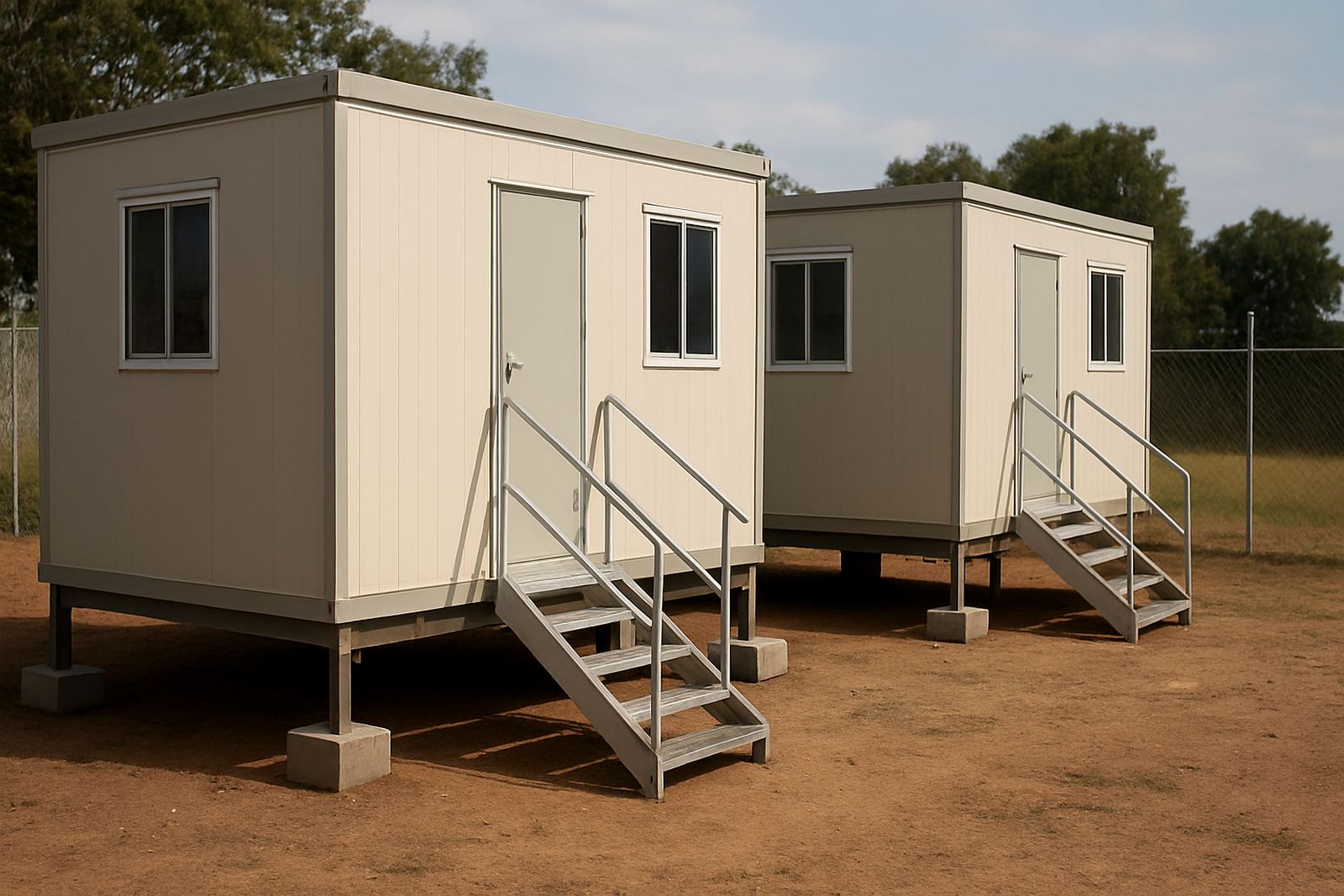
A site cabin is a transportable steel-framed unit fitted out for work on temporary or semi-permanent sites. Most units are used as a small office, foreman room, document store, tea room, guard room or first-aid point. They are built to move by crane or forklift and can be placed on level ground, blocks or a prepared base.
For contractors in Gauteng, the coast, or inland mining areas, a cabin gives you a lockable space that can be used fast. It is a practical option when you need shelter from sun, rain and wind, or when municipal or landlord rules limit permanent additions. Used cabins are common on construction projects, road works, yards and plant shutdowns.
- Steel or timber frame construction
- Insulated wall and roof panels on many units
- Single or double door layouts
- Windows with security bars or sliding panes
- Interior fit-out can include lights, sockets and linings
Common Sizes, Layouts And Optional Fit-Outs
Cabins are sold in a range of lengths and widths. The most common sizes are compact 3 m by 2.4 m units, standard 6 m by 2.4 m site offices, and larger 9 m or 12 m units for teams that need more room. Height and floor condition matter when loading and placing the unit, especially if the site has limited access or low overhead clearance.
Some cabins are plain shells, while others have been used as full offices with counters, shelving, air-conditioning and partition walls. When you bid, check whether the cabin includes insulation, a steel floor, internal cladding, ceiling boards and a fitted electrical board. If the unit is near the coast, ask about corrosion on the frame, hinges and window fittings because salty air can move quickly through untreated steel.
- 3 m x 2.4 m for security points and single-user offices
- 6 m x 2.4 m for small teams and site admin
- 9 m x 2.4 m or larger for split office and storage use
- Options may include toilets, kitchenette space or internal partitions
- Some units are fitted for stacking, skidding or crane lifting
Where Site Cabins Suit Best On South African Projects
Site cabins suit any operation that needs a clean, lockable space without building permanent rooms. They are often used on building sites in Johannesburg and Pretoria, on logistics yards in Germiston and Isando, and on coastal projects in Durban and Cape Town where weather protection matters. They also work well on farms, security compounds, event venues and municipal maintenance sites.
They are a good fit when you need a quick office near the work front or when staff must move between sites. If your project runs after hours or during load-shedding, a cabin can be set up with backup lighting and a small inverter system. For longer use, make sure the floor is level and that drainage is sorted, because standing water will shorten the life of the underframe and timber sections.
- Construction and civil works
- Temporary project offices
- Security control points
- Tool and document storage
- Remote depot support and shutdown work
Installation, Power Supply And Service Connections
Most site cabins are simple to install but the ground prep matters. The unit should sit level on concrete pads, sleepers or steel supports, with enough clearance for doors and steps. A crane truck, telehandler or forklift is usually needed for placement depending on the cabin size and access. If the site is soft after rain, plan for matting or a firmer base so the unit does not twist.
Electrical connections are often basic and should be checked by a competent person before use. Many cabins run on 220V single phase supply for lights, sockets and a small air-conditioner. If the cabin includes a kitchenette or heater, confirm the load before connecting to a generator or site board. Gas is not standard on all units, but where there is a gas hob or water heater, cylinders must be stored safely outdoors and away from heat sources.
- Allow for level ground and safe access steps
- Check cable entry points and distribution board condition
- Confirm if the unit is wired for 220V or higher loads
- Plan earthing, especially on generator-fed sites
- Keep cylinders, if fitted, outside the cabin in a ventilated spot
Care, Cleaning And Ongoing Servicing
Used site cabins need regular care if you want them to last through repeated moves. Check the roof for leaks, door seals for gaps, and window frames for rust or loose glass. Clean dust from hinges, locks and floor edges, and repaint bare steel as soon as it shows. In coastal areas, rinse down salt build-up more often because it can attack fittings and fasteners quicker than inland conditions.
Inside the cabin, keep floors dry and clear of heavy point loads. If the unit is used as an office, service lights, plugs and air-conditioning before the next move. After transport, inspect the underframe and lifting points for bent steel or cracked welds. Small repairs now are cheaper than chasing water damage or a broken door later, and it saves downtime on site too.
- Inspect roof sheets and flashings after heavy wind or rain
- Lubricate locks and hinges regularly
- Touch up rust spots before they spread
- Service any electrical fittings before re-use
- Check lifting points after every move
What To Check Before You Bid On A Cabin
Before you buy, confirm the cabin size, condition and whether it matches your site plan. Ask for clear photos of the roof, floor, doors, windows and corners. If the unit must be moved through a narrow gate or onto a second-floor slab, measure carefully because a 6 m cabin is not something to guess on. Also check if the unit is complete or missing fittings such as steps, curtain rails, counters or air-conditioning brackets.
You should also confirm the legal and practical side of the move. Some sites need collection arranged in a narrow time window, and some municipalities or estates require access approval for trucks and cranes. If the cabin was used on a long project, ask whether it had water ingress, flooding, or hard use from heavy equipment being stored inside. A little checking up front helps avoid surprise repair costs.
- Measure access width, height and turning space
- Ask for floor condition and underframe photos
- Check whether steps, ramps and fittings are included
- Confirm the collection method and lifting gear needed
- Review any missing windows, locks or electrical parts
Key facts
| Typical sizes | 3 m x 2.4 m, 6 m x 2.4 m, 9 m x 2.4 m, 12 m x 2.4 m |
|---|---|
| Construction | Steel frame with insulated panels or timber lined sections |
| Common uses | Site office, security point, storage room, tea room, first aid room |
| Power needs | Usually 220V single phase for lights and sockets, higher loads need checking |
| Placement | Level pads, sleepers or concrete base with crane or forklift handling |
| Condition checks | Roof, floor, frame, doors, windows, wiring, rust and leaks |