What a diesel genset is and why buyers watch these lots
A diesel genset is a diesel engine coupled to an alternator, built to produce electrical power when the grid is unavailable or when a site needs extra supply. On auction you will often see stand alone sets, containerised units, silent canopy units and open-frame machines, depending on the site they came from. Many are ex-warehousing, factory, retail, fleet or mining support assets, and the condition can range from lightly used to well maintained with service history.
These units are bought for standby power during load-shedding, emergency backup for critical equipment, and prime power where a site runs off generator supply for part or all of the day. Buyers look at fuel use, running hours, cooling type, alternator condition and whether the unit has been serviced regularly. A clean genset with proper records usually saves time later, but check everything yourself before bidding. A missed oil leak or poor battery can turn a bargain into a headache.
Common sizes, fuel types and control options
Diesel gensets sold through auction can start at smaller 20 kVA units for workshops and smaller offices, then move up through 50 kVA, 100 kVA, 250 kVA and 500 kVA machines, with larger industrial sets also appearing from time to time. Some units are single phase, others three phase, and many larger models are rated for 50 Hz supply at 400 V. The right size depends on motor starting loads, HVAC equipment, pumps, compressors and how much reserve you want above your normal demand.
- Open set: easier to inspect and often suited to plant rooms or enclosed sites.
- Canopy set: lower noise, useful where neighbours or municipal by-laws matter.
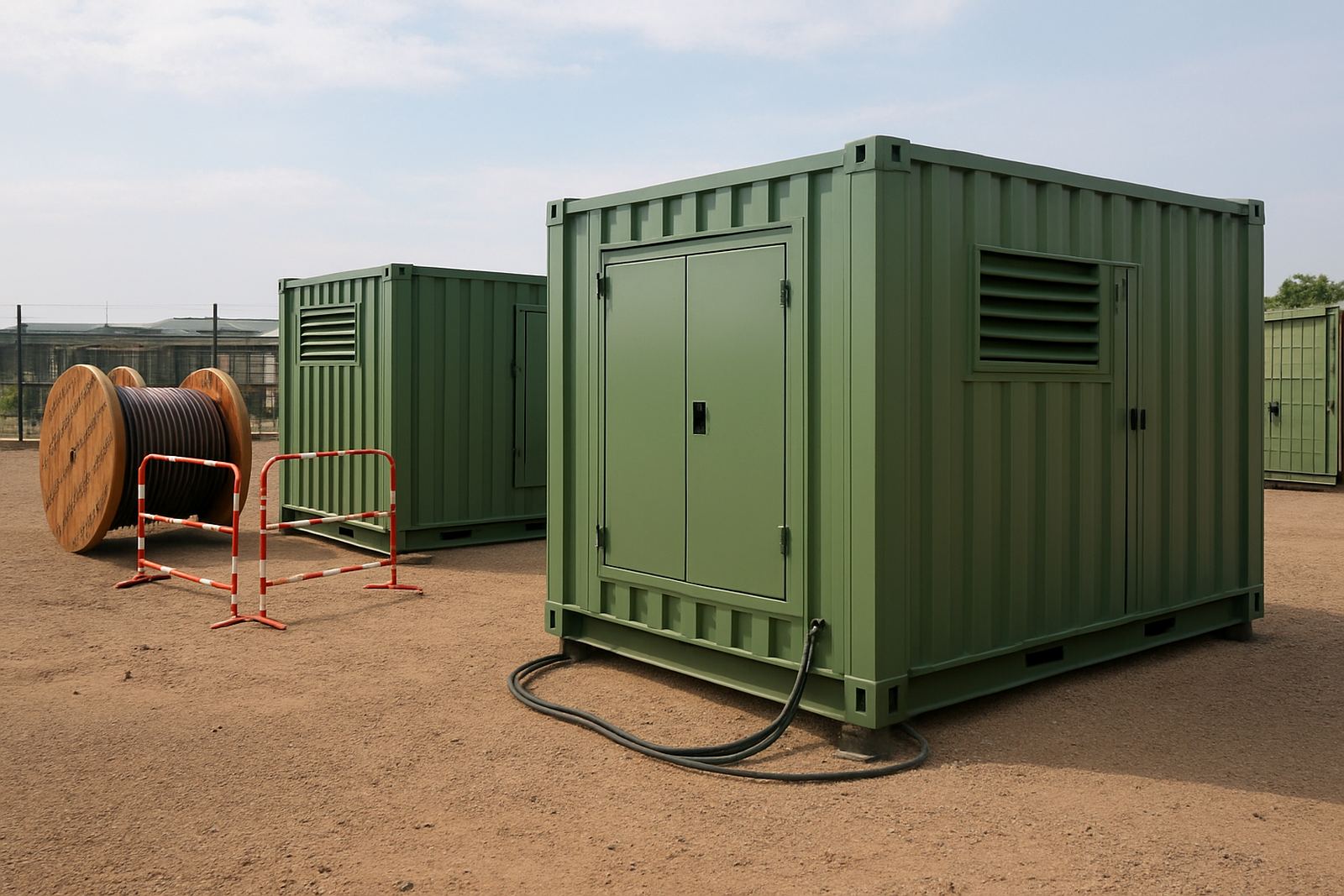
- Containerised set: better for outdoor yards and coastal humidity.
- Auto changeover compatible: suitable where standby power must cut in quickly.
- Manual start: common on older or simpler installations.
Some units include day tanks, base tanks, battery chargers, control panels and automatic voltage regulation. Others are sold as the engine and alternator only, so check exactly what is included before you bid.
Where diesel gensets suit local operations
These machines suit factories, warehouses, farms, cold rooms, telecom sites, workshops, offices, clinics, shopping centres and event venues. In Johannesburg and Pretoria they are often used to keep production lines, server rooms and security systems running through interruptions. In Durban and Cape Town, buyers often pay close attention to corrosion protection because coastal humidity and salt air can affect radiators, panels and exhaust systems faster than people expect.
A genset also helps where municipal supply is weak, where a site is remote, or where a business wants a backup source for critical hours only. Prime power applications need more care with fuel planning, load management and service intervals, while standby sets may sit idle for long periods and still need regular testing. If you are buying for a site in Germiston, Isando or Alberton, plan space for access, refuelling and exhaust routing before the truck arrives.
Installation points, load requirements and site checks
Before placing a bid, work out the electrical load and the physical fit. Measure the footprint, confirm the lifting point and check if the unit must pass through a gate, roller door or low roofline. You also need to know whether the site can handle the starting current of motors and whether the supply is single phase or three phase. A 150 kVA genset may sound generous, but if it must start large compressors or multiple pumps at once, the reserve can disappear quickly.
- Confirm kVA, kW, voltage, phase and frequency.
- Check fuel tank size and daily consumption at expected load.
- Ask if the set has a canopy, container or weatherproof housing.
- Inspect cable terminations, breaker size and control panel condition.
- Make sure the exhaust route and ventilation are suitable for the room or yard.
If you are planning a permanent install, ask your electrician about earthing, changeover gear and local compliance needs. On some sites the wrong cable size or poor ventilation causes heat issues and nuisance trips, so the setup matters as much as the machine.
How to inspect and maintain a used genset before bidding
Used gensets need a close look. Check the hour metre, oil colour, coolant level, battery age, belt wear and signs of overheating around the radiator or cylinder head. Look for smoke staining, fuel seepage, vibration marks and loose mounts. If the unit has been standing for a long time, ask whether it was started recently and whether the battery bank still holds charge. On older units, a tired alternator bearing or blocked air filter can become an issue quickly.
Service records are helpful, but the real test is condition on the day of viewing. Listen for uneven idle, note warning lights on the control panel and look at the exhaust for excessive black or blue smoke. If possible, ask whether the seller has run a load test. A clean service file is useful, yet a machine that starts well and holds voltage under load is better than paperwork alone.
What to confirm before you place a bid
Use the lot description, photos and viewing to confirm the key points. When a genset is sold as-is, the responsibility for transport, installation and commissioning is on the buyer, so the more you know up front the better. Ask about spares, manuals, fuel system condition and whether the machine was decommissioned properly. If it came from a commercial building or industrial site, check if the seller removed all associated cabling and changeover gear or if those items are included.
- Brand and model if visible, plus serial number.
- Rated output in kVA and any prime or standby rating shown.
- Engine hours and last service date.
- Whether the unit starts, runs and charges as expected.
- Included items such as batteries, tanks, silencers and base frames.
- Transport requirements, access restrictions and collection timing.
Set your maximum bid with collection and recommissioning costs included. A unit bought cheaply but needing new batteries, filters and an electrician can still make sense, but you need the full number before you raise your paddle.
Viewing, auction timing and collection across South Africa
BidThis handles used machinery and business asset auctions from Germiston, with viewings and collections arranged through our Gauteng and national points. Buyers can inspect selected lots at Germiston Viewing Yard, Johannesburg East Viewings, Pretoria Viewing Point, Durban Viewing Point, Cape Town Viewings, Bloemfontein Viewings, Isando Viewing Point and Alberton Viewing Point. For diesel gensets, viewing is the best time to check condition, size and access before the auction closes.
Once you have won the lot, plan collection with the weight, palletising needs and lifting method in mind. Some units move on a flatbed with a forklift at each end, while larger sets may need a crane or rigging crew. We help keep the process clear so buyers know where to go, what to collect and when. If you are chasing backup power for a factory, farm or site office, this is a practical way to source used equipment without buying blind.
Key facts
| Typical output range | 20 kVA to 500 kVA plus, subject to the lot |
|---|---|
| Supply type | Single phase or three phase |
| Frequency | 50 Hz |
| Voltage | Commonly 230 V or 400 V |
| Fuel type | Diesel |
| Common formats | Open set, canopy set or containerised set |