Used scaffolding for access, maintenance and shutdown work
Scaffolding is a temporary access system made up of frames, standards, ledgers, transoms, braces, boards and base plates. It is used where ladders are not practical for longer jobs, higher work areas or sites that need a stable platform for tools and materials.
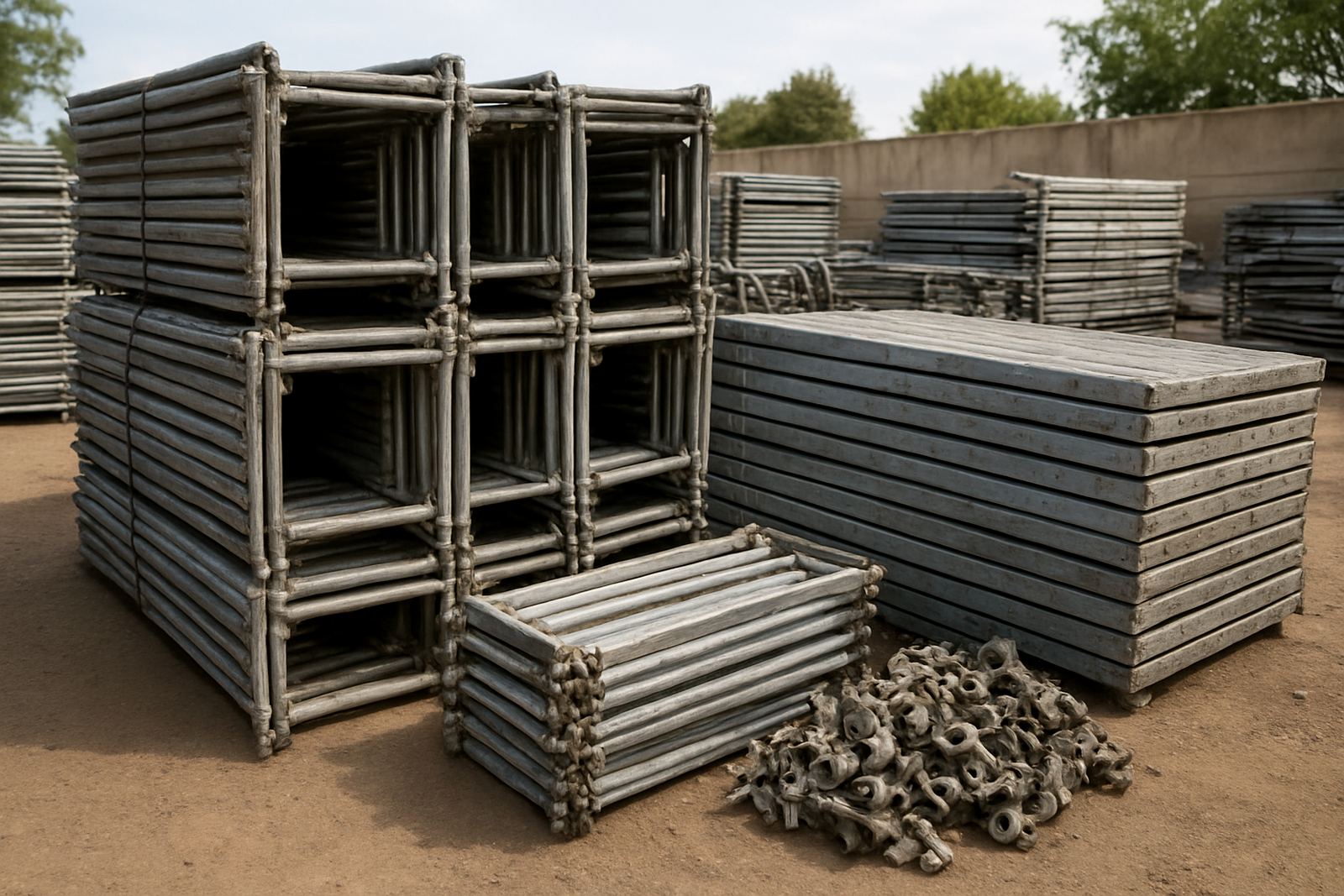
The lots on auction are typically used scaffolding from contractor fleets, factory shutdowns and surplus project stock. That can include frame sets, walk boards, toe boards, couplers, ladders, guardrails, jacks and castors. Condition varies by lot, so it is important to check for bent tubes, worn boards, damaged pins and missing fittings before you bid.
Common sizes and what you can expect in each lot
Used scaffolding is usually sold in mixed lots rather than as single parts, which is useful when you need enough material to cover a wall, roof edge or production line. Frame widths often range from 0.7 m to 1.25 m, with standard frame heights around 1.7 m to 2.0 m. Boards are commonly 2.4 m to 3.0 m, while braces and ledgers are matched to the frame system in the lot.
For buyers, the key is to understand the full stack height you can build, not only the individual frame size. Many lots include enough components for a small mobile tower, a maintenance bay or a sectional access run. If you are planning a larger setup, count the number of frames, braces, platforms and base items carefully so you do not end up short.
- Frame sets for general building access
- Boarding for working platforms and walkways
- Bracing for stability and lateral support
- Base jacks and plates for uneven ground
- Castors for mobile tower applications
Where scaffolding suits site work in South Africa
Scaffolding is well suited to construction, painting, cladding, signage installation, warehouse repairs and industrial shutdowns. In Johannesburg and Germiston it is often used for factory maintenance and roof access, while in Durban buyers often look for material that has held up well in coastal humidity. In Cape Town, wind exposure matters, so a buyer should check the bracing and tie points carefully.
It also works well for schools, churches, municipal buildings and property maintenance where access must stay controlled. If your team moves between sites in Pretoria, Bloemfontein or the East Rand, a mixed lot can be a cost-effective way to keep spare parts on hand for quick repairs and extensions.
- Internal and external building maintenance
- Shutdown work at factories and plants
- Roof edge access and ceiling repairs
- Painting, plastering and cladding jobs
- Short term access at multiple sites
Setup, labour and power requirements
Most scaffolding systems are manually assembled and do not need electricity or gas to operate. What you do need is trained labour, level ground and the correct accessories for safe erection. On rough yards or older industrial floors, base jacks and sole boards help spread the load and improve stability.
For mobile towers, locking castors and level adjustment are important. For fixed runs, ties or anchoring may be needed depending on height, wind exposure and the site rules. Always check the municipal or site safety requirements before work starts, especially on public facing jobs in busy parts of Johannesburg, Durban or Cape Town where pedestrian control matters.
Loading and collection should also be planned properly. Scaffolding is bulky and steel sections take space, so a flatbed or bakkie with proper strapping may be enough for smaller lots but bigger jobs need a truck or trailer with decent tie downs.
What to inspect before you bid
Because this is used equipment, condition can differ from one lot to another. Photos and item notes should be checked closely, and where possible buyers should view the lot in person at the relevant yard or viewing point. Look for corrosion, cracked welds, bent frames, warped boards and missing locks or pins. If a lot has been stored outdoors, moisture damage and surface rust may already be present.
A practical checklist helps avoid buying material that will cost too much to repair. If you are buying for a shutdown, do not only count the pieces, also check whether the system is complete enough to build the height and length you need.
- Measure frame width, height and board length
- Check for straightness and visible structural damage
- Confirm that braces, pins and couplers are included
- Inspect boards for cracks, splits or heavy rot
- Ask whether the lot is mixed with different systems
Care, storage and re-use after collection
Once collected, scaffolding should be sorted, cleaned and stacked by size so the next job is quicker to set up. Steel parts can be wire-brushed and stored under cover to slow down rust, especially in coastal areas where humidity is high. Timber boards should be kept off the ground and out of standing water.
It is worth setting aside damaged parts for repair or disposal before the next build. Good storage makes a big difference to resale value and to safety on site. A tidy set of frames and boards is easier to count, easier to transport and less likely to go missing during a busy job.
Buying through BidThis and planning collection
BidThis runs online auctions for used machinery and business assets across South Africa, with seller stock from Germiston and viewing access in Johannesburg East, Pretoria, Durban, Cape Town and Bloemfontein. If you are bidding on scaffolding, use the lot photos, measurements and viewing notes to judge whether the material fits your project and your transport plan.
Before collection, confirm the clearing terms, loading access and any site rules for the yard. Scaffolding lots can be large and awkward, so it helps to arrive with the right labour, truck space and straps. If your job is split across several sites, ask whether the lot can be grouped with other surplus stock or multi-site dispersal requirements before pickup.
Key facts
| Product type | Used scaffolding frames, boards and access components |
|---|---|
| Typical frame size | 0.7 m to 1.25 m wide, 1.7 m to 2.0 m high |
| Board lengths | Commonly 2.4 m to 3.0 m |
| Materials | Steel frames with timber or metal boards, depending on lot |
| Power or gas needed | None for assembly, manual erection only |
| Best suited to | Construction, maintenance, shutdowns, painting and roof access |