
What retail shelving includes
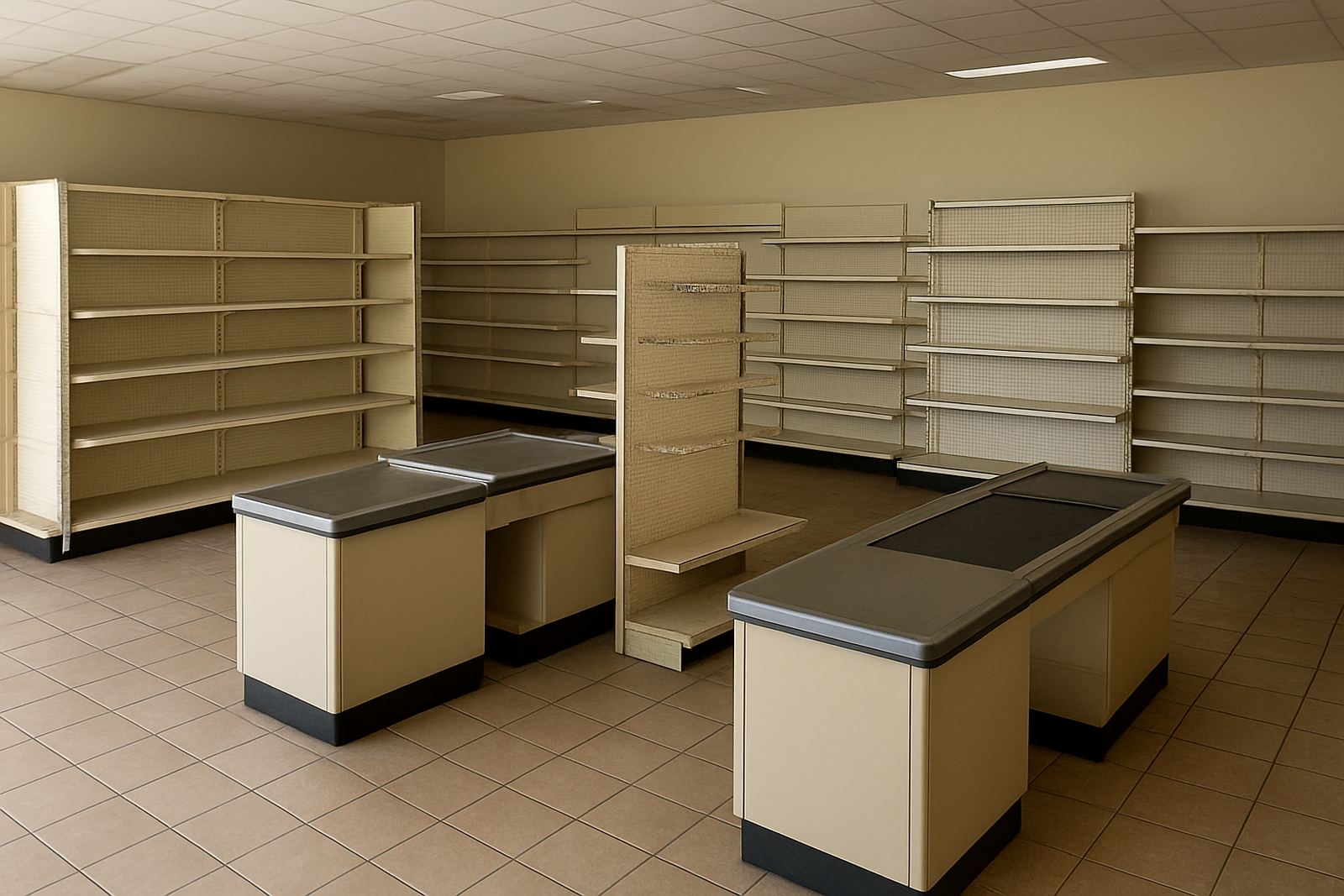
Retail shelving usually covers the full set of shop display items removed during a refit or closure, including gondola units, wall bays, end caps, shelf brackets, peg hooks, baskets and cashier surrounds. Some lots are sold as complete runs, while others are split into smaller sections for transport and re-use in another store.
Most used retail shelving is made from powder-coated steel, with chipboard or laminate shelves in some cases. Heights commonly range from 1.2 metres to 2.4 metres, while shelf depths often sit between 300 mm and 600 mm. Bay widths are often 900 mm, 1 000 mm or 1 200 mm, though mixed sizes do come through on liquidation sales.
- Single-sided wall shelving for perimeter runs
- Double-sided gondolas for aisle displays
- End bays for specials and high-turn stock
- Hook panels, baskets and wire accessories
- Counter units and small service fixtures
Sizes, finishes and common options
Because retail stores vary from small independent shops to larger format outlets, shelving is listed in a mix of sizes and finishes. You may find narrow runs for convenience stores, wider bays for hardware and general merchandise, or mixed-height units for clothing and mixed retail floors. Some systems are modular, so a buyer can build up a full run from matching sections.
Finishes vary from light grey to white, black and galvanised steel. In coastal areas like Durban and Cape Town, buyers often look for better corrosion resistance, especially where salt air and daily cleaning are part of the routine. In Gauteng, used shelving often comes from enclosed malls, warehouses or stores with air conditioning, which can reduce rust and moisture damage.
- Typical heights: 1.2 m, 1.5 m, 1.8 m, 2.1 m and 2.4 m
- Typical shelf depths: 300 mm, 370 mm, 450 mm and 600 mm
- Typical bay widths: 900 mm, 1 000 mm and 1 200 mm
- Finish types: powder-coated steel, galvanised steel, laminated shelves
- Options: kick plates, header panels, dividers and base decks
Where retail shelving suits best
This product suits supermarkets, mini marts, pharmacies, hardware stores, clothing shops, takeaway counters, bulk stores and seasonal pop-up retail. It is also useful for back-of-house stock rooms where boxed stock needs to be kept off the floor and clearly separated by category. In many liquidation sales, shelving is one of the first items buyers target because it is practical, reusable and easy to resell.
For sellers, retail shelving works well when a site is being cleared quickly after a lease end, fire sale or store closure. For buyers, the advantage is simple: you can get good use out of a complete display setup without paying full new-store pricing. If you are fitting out a branch in Johannesburg East, Pretoria, Germiston or Alberton, a matched lot can save time on sourcing and reduce the need for custom steel work.
- Front-of-shop display and aisle layouts
- Pharmacy and health product shelving
- General dealer and spares counters
- Warehouse picking and stock holding areas
- Temporary trading spaces during refits or expansions
Installation, fixing and utility needs
Most retail shelving does not need power or gas. It is a dry fitting, which makes it easier to install during a strip-out or new store setup. However, some units include light boxes, electronic shelf labels or display lighting, and those items will need checking before removal and reuse. If shelving is anchored to walls or floors, the buyer should allow for suitable fixings and any patching needed after collection.
Installation is usually straightforward on level floors, but older buildings in Germiston, Isando and central Johannesburg may have uneven slabs or wall surfaces that need attention. If the shelving was set up in a mall or franchised store, there may also be site rules about drilling, fire exits and aisle widths. For most retail use, leave clear walking space and make sure shelves are not overloaded once stock is added.
- No power needed for basic shelving
- No gas needed at all
- Check for wall anchors, bolts and end supports
- Allow for safe aisle spacing and emergency access
- Confirm if any lighting or signs are included
Care, servicing and condition checks
Used shelving should be checked for bent uprights, damaged shelf lips, missing brackets and rust around base plates. Light surface marks are common on liquidation stock and are usually easy to clean, but dents or warped panels can affect load bearing. In humid or coastal locations, a close look at corrosion is worth the time, especially on exposed steel joins and feet.
Cleaning is simple: wipe down with a mild detergent, dry properly and replace any chipped paint or loose fasteners. If the shelving came from a food store or pharmacy, check for old labels, adhesive residue and dust build-up behind the panels. Good servicing keeps the shelves looking neat and helps avoid wobble, which matters when stock is loaded daily and restocked after hours. A quick check before collection can save time later, so it is worth doing.
- Inspect load points and shelf brackets for bending
- Check for rust, especially on feet and lower rails
- Confirm all fasteners and connectors are present
- Look for cracks in plastic trims or shelf inserts
- Ask whether the lot was used in a dry, indoor store or a harsher environment
What to check before you place a bid
Before bidding on retail shelving, measure your floor space and think about the layout you need. A 1.2 metre aisle on paper can feel tight once baskets, trolleys and staff movement are added. It helps to know whether you want wall runs only, a central gondola row or a mixed lot with end bays and counters. If you are fitting a new store, keep the dimensions handy so you can compare them against the lot listing before auction day.
Check if the lot is sold as one complete set or as separate sections, and whether collection must be done from one site or several. Multi-site dispersals are common on larger sales, so transport planning matters. Ask what is included, such as brackets, shelf lips, signage frames or base decks, and confirm whether the photos show the full condition or only selected angles. If you are buying for a store in Pretoria, Cape Town or Bloemfontein, make sure your vehicle or contractor can handle the size and weight before you bid.
- Measure bay width, height and shelf depth
- Confirm quantity of uprights, shelves and brackets
- Check if the lot is complete or mixed
- Ask about access for collection and loading
- Allow for transport, labour and reassembly on site
Key facts
| Product type | Retail shelving, gondolas, wall bays and shop fixtures |
|---|---|
| Typical height | 1.2 m to 2.4 m |
| Typical shelf depth | 300 mm to 600 mm |
| Typical bay width | 900 mm, 1 000 mm or 1 200 mm |
| Material | Powder-coated steel, galvanised steel, chipboard or laminate shelves |
| Power or gas requirement | None for standard shelving; lighting or labels may need power |