
What a laser welder does in day to day production
A laser welder uses a focused beam to join metal with a narrow heat affected zone, so the surrounding surface keeps its shape better than with many conventional welding methods. That makes it useful for automotive trim, sheet metal repairs, toolrooms, kitchen equipment, signage, medical parts and fine fabrication where distortion must be kept down.
Used units often come from shops that need speed on repeat work. In Johannesburg East, Germiston, Isando and Pretoria, buyers often look for machines that can handle light fabrication during load-shedding windows, then return to the same settings without long setup time. A good machine should give stable beam output, easy torch or head movement and clear controls for power, pulse and travel speed.
- Works well on thin-gauge metal where heat control matters
- Can reduce grinding and rework after welding
- Useful for repairs, small batch work and detail finishing
- Often paired with shielding gas for cleaner joints
Machine sizes, power ratings and common options
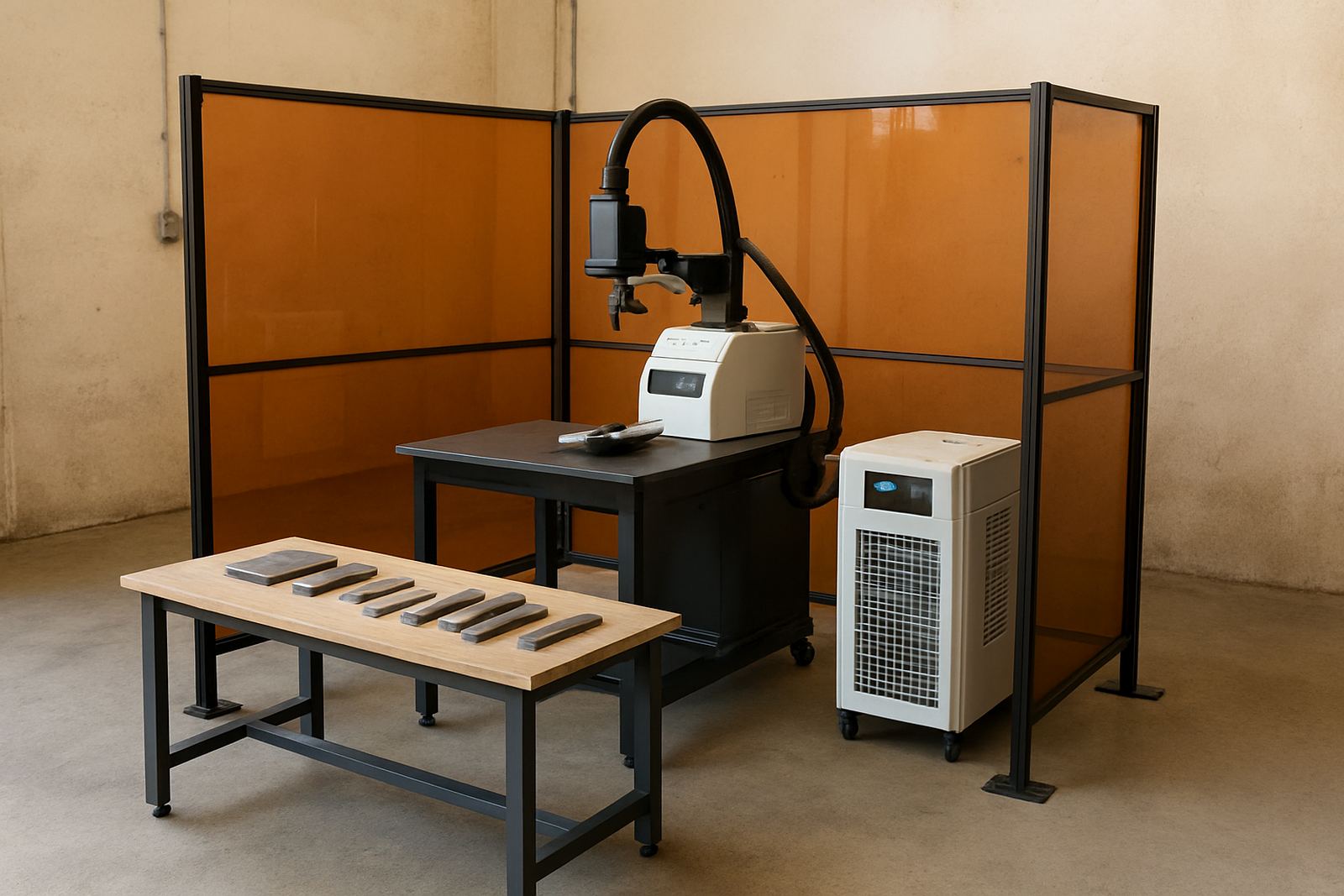
Laser welders are usually sold as handheld units or fixed workstation systems. Handheld models are more flexible for repairs and larger panels, while enclosed systems suit repeat parts and safer operator control. Typical used units may range from 1 kW to 3 kW, with some industrial setups going higher depending on material and duty cycle.
Cabinet size and cooling method matter as much as beam power. Air-cooled compact units take up less floor space but may suit lighter work only. Water-cooled models are common in higher duty environments, especially where long shifts are run in Gauteng or coastal areas with warm ambient temperatures. In Durban and Cape Town, humidity can affect storage and electrical panels, so buyers should check that seals, fans and filters are in decent condition.
- Handheld or enclosed workstation format
- Common power range: 1 kW, 1.5 kW, 2 kW and 3 kW
- Cooling: air cooled or water cooled
- Controls may include pulse mode, spot mode and continuous weld mode
- Some units include wire feeder support for gap filling
Where laser welders suit South African workshops
These machines suit fabrication shops, maintenance departments, stainless steel specialists, appliance repair yards, sheet metal workshops and production plants with fine finishing requirements. They are also useful where surface appearance matters, for example display fixtures, food equipment and metal furniture. Because they make neat welds with limited spatter, they can cut down on post weld cleanup and help keep throughput steady.
For buyers in Bloemfontein, Alberton and the East Rand, transport and power planning should be part of the purchase. A machine that runs on a standard three phase supply may be easier to place in an existing workshop than one needing a special circuit upgrade. If the unit will move between sites, check whether it has wheels, lifting points and a torch cable that reaches the work area without strain.
- Best for thin sheet, brackets, trims and precision repair work
- Suitable where appearance and low distortion matter
- Useful in controlled production areas and maintenance bays
- Can support short runs, repair jobs and batch work
Power, gas and installation checks before you bid
Before bidding, confirm the supply requirements and make sure your site can handle the load. Many laser welders need a stable 220 V single phase or 380 V three phase supply, depending on size and output. If your site is running on generators or inverter backup during outages, check the surge behaviour and whether the machine needs a clean sine wave. A weak supply can cause faults or poor beam stability, which is expensive to sort out later.
Most welding setups also need shielding gas, commonly argon or an argon mix, depending on the material and finish required. Some jobs need a wire feeder too, especially where gaps are present. Keep an eye on hose condition, regulator fittings, lens protection and any signs of contamination in the nozzle area. The work bay should have good extraction, clear walkways and enough room for the operator to move safely around the part.
- Confirm voltage, phase and amperage before collection
- Check whether a chiller or water unit is included
- Ask what shielding gas is used and how it is supplied
- Make sure extraction and safety screening are in place
- Measure access routes for delivery, lifting and installation
Care, servicing and wear points on used units
Laser welders need regular care to stay reliable. Lenses and protective windows should be inspected often, because dust, weld smoke and metal spatter can reduce output quality. Cooling systems need clean water or coolant at the right level, and filters should be checked for blockages. In coastal areas, moisture can lead to corrosion on fittings and connectors if the machine is left idle for long periods.
When inspecting a used unit, look for signs of overheating, loose cable ends, cracked hoses, damaged handpieces and noisy fans. Check whether the control panel responds cleanly and whether the machine starts without error codes. A unit that has been serviced properly should show cleaner internals, neat cable routing and consistent weld test results. If the seller has test material, ask for a live demonstration on similar thickness metal, not just a quick power on check.
- Replace or clean protective lenses and filters regularly
- Keep coolant fresh and within the recommended range
- Inspect torch heads, cables, hoses and connectors
- Store the machine in a dry area away from grinding dust
What to check before you place a bid
Used laser welders can be good value, but only if the details are clear. Ask for the exact model, power rating, year of manufacture and service record. Check whether consumables are easy to source locally and whether the machine comes with the torch, foot pedal, wire feed unit, clamps and manuals if applicable. It helps to know if the laser source has been replaced already, because that changes the long term cost.
For auction buyers, the safest approach is to match the machine to your actual work. If you weld 0.8 mm to 2 mm stainless all day, you do not need a setup built for heavy plate. If you run multi site operations around Gauteng or send machines between branches, ask about packing, palletising and collection timing so the unit gets to site without damage. A few extra checks now can save a costly surprise later.
- Request power rating, duty cycle and cooling type
- Confirm accessories, spare parts and consumables included
- Check service history and any repair notes
- Match the machine to material thickness and daily output
- Ask how the unit will be prepared for collection
Key facts
| Typical output | 1 kW to 3 kW on common used units |
|---|---|
| Power supply | 220 V single phase or 380 V three phase, model dependent |
| Cooling | Air cooled or water cooled |
| Material range | Thin stainless steel, mild steel, aluminium and coated sheet |
| Gas requirement | Often argon or an argon mix for shielding |
| Common formats | Handheld laser welder or enclosed workstation |