
What a plasma cutter does on site
A plasma cutter uses a high-temperature ionised jet to cut steel, stainless steel and aluminium with a clean, narrow kerf. In a workshop or on a repair crew, it is commonly used for plate work, brackets, gate repairs, light fabrication, truck bodies and plant maintenance where speed matters more than a polished edge.
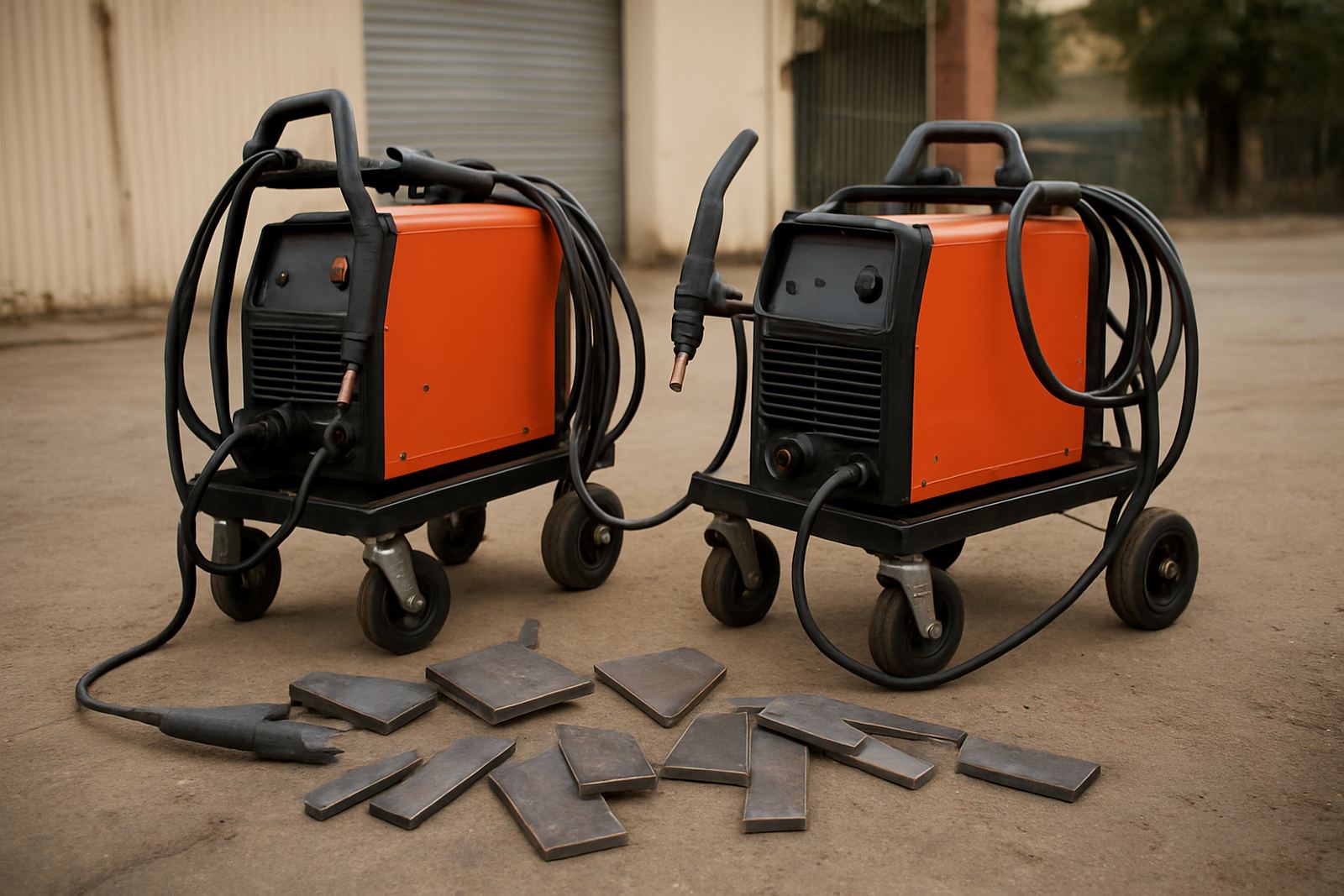
Used units on auction may be compact hand-held machines for 6 mm to 12 mm cutting, or heavier inverter and transformer units for 16 mm to 25 mm and, on some models, even more on severance. The right choice depends on the thickness you cut most often, the duty cycle, and whether you need a portable machine for site work or a fixed unit for a fabrication bay. A lot will often include the torch, earth lead and sometimes a trolley or moisture trap, but always check the listing closely.
For buyers in places like Germiston, Isando or Alberton, a plasma cutter can be a practical buy for busy shops where steel work comes in daily and load-shedding means you need equipment that can be started and stopped without a long warm-up period. It is a useful machine, but only if the consumables are in good shape and the unit has been looked after.
Common sizes and output ratings to compare
Plasma cutters are usually described by output current, cutting capacity and input power. Smaller 40 A machines suit thin sheet and light maintenance. Mid-range 60 A to 80 A units cover general fabrication. Larger 100 A to 120 A machines are better for heavier plate and longer runs, though they need stronger electrical supply and better cooling.
- Input power: 230 V single phase for lighter units, or 380 V to 400 V three phase for larger industrial models
- Output current: usually 40 A, 60 A, 80 A, 100 A or 120 A
- Cutting capacity: clean cut and severance figures should be checked separately
- Duty cycle: important for all day use, especially in busy workshops
- Torch length: common lengths are 4 m, 6 m and 10 m depending on reach needed
When comparing lots, do not focus only on the headline amperage. A 60 A machine with a strong duty cycle can be more useful than a bigger unit that overheats after short bursts. Also check whether the machine has pilot arc, since that helps when cutting painted, rusty or slightly dirty steel. Some units are air plasma only, which is normal for this kind of equipment, while others may have more advanced cut controls and fine adjustment for thinner material.
Where plasma cutters suit best in South African workshops
Plasma cutters suit fabrication yards, agricultural repair shops, truck and trailer builders, scrap sorting operations, steel merchants, maintenance departments and general engineering firms. They are also handy for dismantling work where oxy-fuel is too slow or where a smaller heat-affected zone is preferred. In coastal areas such as Durban and Cape Town, buyers should also consider corrosion on the casing, torch connectors and cooling fan intake because humidity can shorten the life of neglected equipment.
For contractors working across Johannesburg, Pretoria or Bloemfontein, portability matters. A smaller inverter unit can be carried between jobs, while heavier machines are better left in one place with a proper workbench and extraction. If you are cutting sheet every day, a neat finish and lower grinding time can save labour. If you are dealing with thicker plate, you will need more power and a machine that can take longer duty cycles without tripping. Its worth matching the machine to the real work, not the nice-sounding brochure figures.
On auction listings, look for signs that the machine came out of a workshop with regular use rather than rough treatment. Tidy wiring, straight torch leads and clear labels on the control panel are all useful indicators. A machine that has lived in a dusty yard but was serviced may still be a better buy than one that looks new but has had no care.
Power, gas and setup before first use
Most plasma cutters need a steady electricity supply and clean compressed air. The air supply is not optional. Without proper air pressure and dry air, the cut edge will be rough, consumables will wear fast and the torch may misfire. Many buyers use a compressor with a filter and water trap, especially in humid areas or where the air line runs long distances. For larger units, check that the site supply can handle the starting load and the continuous draw.
- Electrical supply: confirm single phase or three phase before collection
- Breaker size: check the input current and match it to your installation
- Air pressure: follow the machine plate or manual, usually measured in bar or kPa
- Air quality: dry, filtered air helps protect consumables and the torch
- Cables and hoses: inspect for cracking, overheating or poor repairs
In many workshops around Germiston and Johannesburg East, power quality can vary, so it helps to use the correct surge protection and avoid long undersized extension leads. Keep the machine on a level surface with good ventilation and enough space around the fan openings. If the unit uses a separate compressor, place it where noise and dust will not affect the cut area. A little planning avoids nuisance trips and poor cuts later on.
Servicing, consumables and what wears out first
The parts that usually need attention first are the electrode, nozzle, swirl ring and shield cap. These are consumables, and they wear faster when the air is dirty, the operator drags the torch too much or the current is set higher than needed. A well kept machine can still cut well after years of use, but only if the torch body, leads and cooling fan are looked after. Watch for scorch marks, loose connections and repeated fault lights.
Routine care should include blowing out dust, checking the air line, inspecting the torch trigger and replacing worn tips before they damage the torch head. If the unit has a digital display, make sure the digits are clear and the settings respond properly. Keep records of any repairs, because a machine with a service history is easier to price and easier to move on later. In auction buying, service notes can tell you more than a shiny paint job.
For sellers, clean photos and accurate notes help bidders understand what they are looking at. For buyers, ask whether the machine was used for light maintenance or full shift production, and whether any torch parts are missing. That small detail can change the real cost quite a lot.
What to check before you place a bid
Before you bid, read the lot description carefully and compare it with the photos. If a viewing is available at one of our Germiston, Johannesburg East, Pretoria, Durban, Cape Town or Bloemfontein points, make time to inspect the machine in person. On plasma cutters, the practical checks matter: does it power up, is the torch complete, are the leads sound, and does the display show any fault codes.
- Check whether the machine is single phase or three phase
- Confirm the output current and rated cutting thickness
- Look for torch damage, missing consumables and lead repairs
- Ask if the air fittings, regulator or trolley are included
- Verify if the unit was tested before listing or sold as is
Also check the size and weight if you will need collection from a multi-site dispersal or a busy yard with forklift loading. Some units are easy to move by hand, while others need proper lifting gear. If you are buying for a customer site, measure the space available and make sure your power point, compressor and cable length will suit the setup. A quick check before bidding is better than finding out after collection that the machine does not fit the job.
Key facts
| Output current | 40 A to 120 A, depending on lot |
|---|---|
| Input power | 230 V single phase or 380 V to 400 V three phase |
| Cutting thickness | Typically 6 mm to 25 mm clean cut, higher on severance |
| Torch length | Commonly 4 m, 6 m or 10 m |
| Air supply | Compressed air required, dry and filtered |
| Typical use | Fabrication, repairs, maintenance and site cutting |