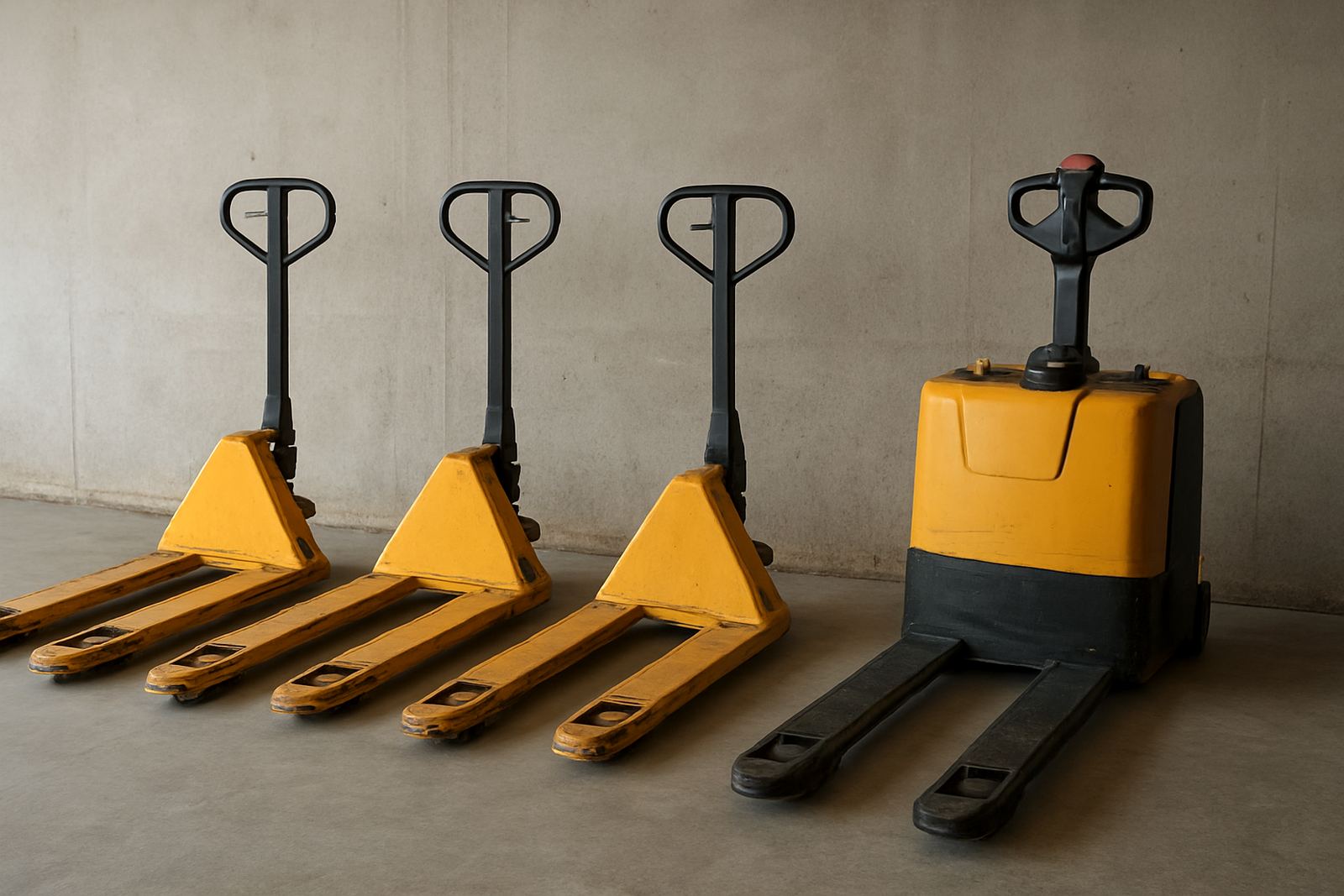
Manual and electric pallet jacks for everyday handling
Pallet jacks are used to lift and move palletised goods over short distances without the need for a full-size forklift. Manual units rely on hand pumping and steering, while electric models use a battery-powered drive and lift system for easier movement through busy warehouses, retail stock rooms and dispatch areas.
For many South African sites, a pallet jack is the practical first step in material handling. It helps with deliveries, stock transfers and loading bay work where space is tight or where a forklift is too large for the route. In Germiston, Isando, Alberton and other industrial areas, they are common on floors where goods must move quickly between racking, staging and trucks.
- Manual pallet jacks suit light to medium daily use
- Electric pallet jacks suit frequent moves and heavier loads
- Low-profile models help with shallow pallets and tighter clearances
- Stainless or galvanised options are better for damp or coastal conditions
Common sizes, fork lengths and load ratings
Most pallet jacks are selected by fork size and load capacity. Standard fork lengths around 1 150 mm work for common pallets, while longer forks around 1 220 mm or more are useful for wider loads and some export pallets. Fork widths usually sit around 520 mm to 685 mm overall, depending on the model and the pallet type being handled.
Load ratings typically range from 2 000 kg to 3 000 kg for manual units, with electric pallet jacks often rated at 2 000 kg or higher. A lower profile, often around 75 mm to 85 mm fork height, helps when pallets sit close to the floor. For sites handling drums, crates or mixed stock, the turning radius and overall length should also be checked before ordering.
- Typical fork length: 1 150 mm, 1 180 mm or 1 220 mm
- Typical fork width: 520 mm to 685 mm overall
- Typical load capacity: 2 tonne to 3 tonne
- Low entry height: ideal for low-clearance pallets
Where pallet jacks work best on site
Pallet jacks suit flat, level floors and routes with short travel distances. They are used in warehouses, cold rooms, hardware stores, food distribution centres, workshops and storerooms where stock needs to move from receiving to racking or from racking to dispatch. They are not meant for rough gravel yards or steep ramps, though a skilled operator can still manage a gentle gradient with care.
In coastal towns, corrosion resistance matters because humidity can shorten service life if the jack is left in damp areas. In inland sites, dust and floor debris can affect wheels and seals. If you are running early shifts or working through load-shedding, electric units should be matched with charging discipline so the battery is ready when trucks arrive and staff are under pressure.
- Best for flat internal floors and paved loading areas
- Useful in narrow aisles where turning space is limited
- Suitable for short-distance pallet transfer, not long haul movement
- Handy for operations that need faster stock movement without forklift costs
Power requirements, charging and no-fuss setup
Manual pallet jacks need no power, fuel or charging. That makes them useful when operations run on a tight budget or where there are frequent outages. Electric pallet jacks require a charging point, battery care and enough space for safe parking between shifts. Most sites will need a dry, ventilated area for charging, with clear access and no clutter around the unit.
There is no major installation work for a standard pallet jack, but the working area should be checked first. Floors should be level, smooth enough for the wheel type and clear of broken pallets, wire straps and loose packaging. If the jack is going into a cold room, a wet dock area or a corrosive environment, specify that upfront so the wheel material, finish and battery setup can be matched correctly.
- Manual models need only trained operators
- Electric models need charging access and battery checks
- Flat floors improve wheel life and operator control
- Wet or corrosive areas may need special finish and wheel selection
Care, servicing and working life
A pallet jack lasts longer when it is cleaned regularly and checked before use. Wheels should turn freely, forks must stay straight and the hydraulic system should not lose pressure. On electric models, battery condition, connectors and control handles need regular inspection. If a unit starts making noise, creeping down under load or steering poorly, it should be taken out of service before it causes damage or injury.
For busy South African sites, a simple maintenance schedule saves money. Keep the wheels clear of string, shrink wrap and pallet splinters. Lubricate moving parts as required and inspect the frame for bends after heavy knocks. In humid areas, store the jack indoors when possible so rust does not build up along the forks and pump housing.
- Check wheels weekly for wear and debris
- Inspect hydraulic lift performance on manual units
- Charge electric units correctly and avoid deep discharge
- Keep the frame, forks and handle clean and dry
What to confirm before you place a bid
Before ordering a pallet jack, check the pallet size, average load weight and the floor route it will travel. You should also confirm whether the jack needs to fit into a truck body, cold room or tight aisle. If the site uses unusual pallets, say so early because fork length and width can make a big difference to day-to-day handling.
Know whether the unit is meant for occasional use or full-day work. A manual jack can be enough for light dispatch, while a high-traffic warehouse may need an electric model with better travel speed and less operator strain. If the floor is uneven or the environment is dusty, ask for wheel and finish guidance before you commit.
- Load weight and pallet type
- Fork length, width and entry height
- Manual or electric use pattern
- Floor condition, ramps and aisle width
- Indoor, cold-room or coastal use requirements
Key facts
| Product type | Manual and electric pallet jacks |
|---|---|
| Typical load capacity | 2 000 kg to 3 000 kg |
| Common fork length | 1 150 mm to 1 220 mm |
| Common fork width | 520 mm to 685 mm overall |
| Fork lower height | About 75 mm to 85 mm |
| Power needs | Manual no power; electric requires battery charging |