What a sheet guillotine does in daily workshop work
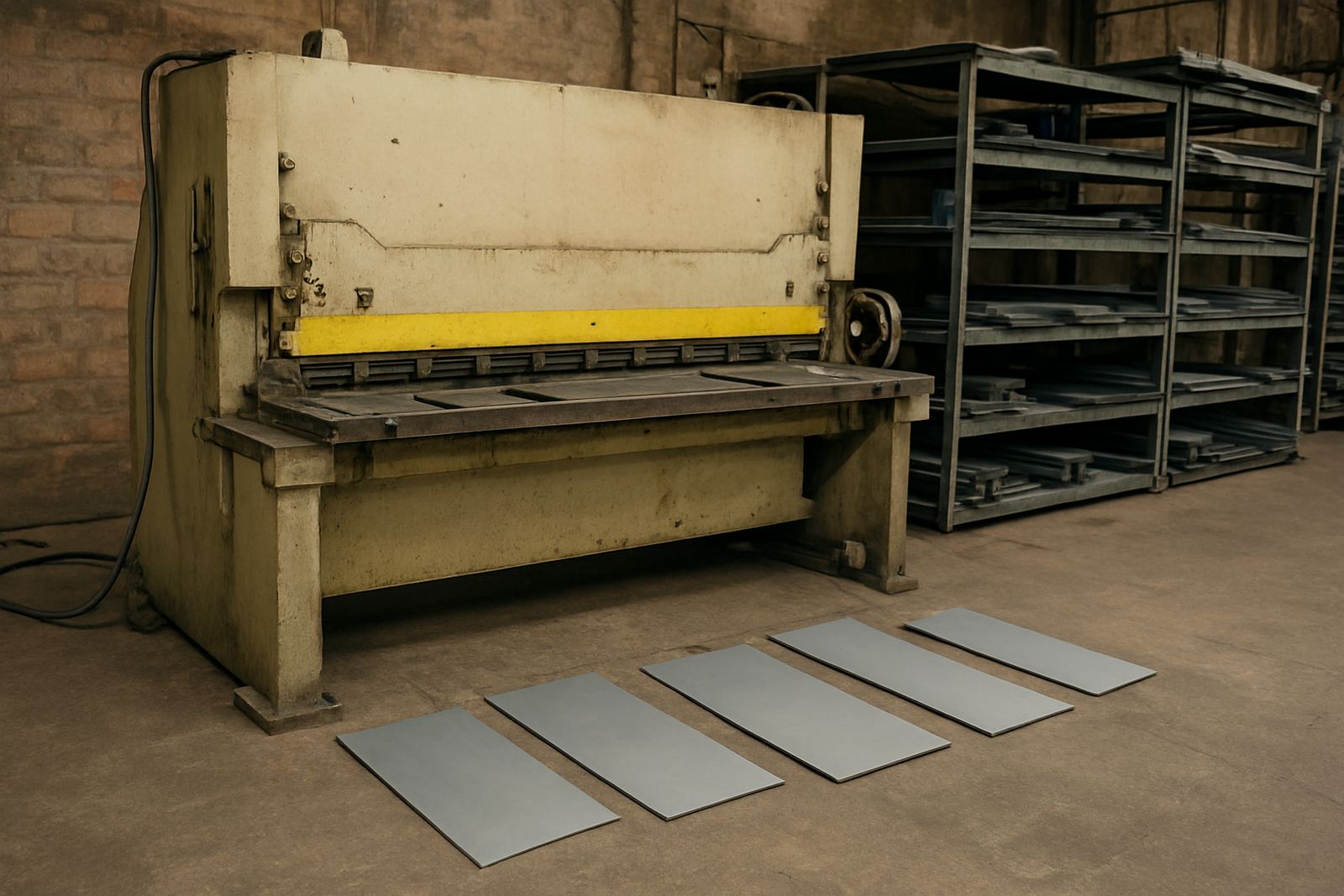
A sheet guillotine is a cutting machine used to trim flat sheet to size with a straight blade and a clamping beam. In metalwork shops it is used for making brackets, panels, trays, duct sections and general cut-to-size jobs where a clean edge matters more than a rough cut from a grinder. On the right material, the cut is quick and repeatable, which saves time when you are working through batches.
Most used guillotines on the market are built for mild steel sheet, although some will also handle aluminium, stainless steel or galvanised sheet depending on capacity and blade condition. For fabricators in Johannesburg, Pretoria or Durban, that matters when you are cutting for gates, roofing flashings, signage back plates, or maintenance jobs where dimensions must stay true. A good machine should clamp firmly, cut straight and leave a finish that needs little dressing.
These machines are found in fabrication shops, maintenance yards, vehicle body shops and light manufacturing plants. If your work includes frequent sheet trimming, one guillotine can replace a fair amount of hand cutting and reduce material waste, especially where offcuts can be reused. It also helps when load-shedding or intermittent supply means you want a machine that does not waste power or time.
Common sizes, throat depth and cutting capacity
Sheet guillotines are usually described by cutting length, material thickness and back gauge range. Common cutting lengths include 1.5 m, 2 m, 2.5 m and 3 m. Smaller units suit compact workshops and mobile repair teams, while longer machines are better for roofing sheet, ducting and general fabrication work where full sheets are processed. The right size depends on the largest sheet you handle and how much floor space you have around the machine.
Cutting capacity is often stated in mild steel at a specific thickness, for example 1.6 mm, 3 mm, 6 mm or more, depending on the machine type. Hydraulic machines usually offer better control and can take heavier material, while manual or light mechanical models are better for thinner stock and lighter use. Do not buy on the headline figure alone, check the thickness you actually cut every week and allow a safety margin.
- Cutting length: 1.5 m, 2 m, 2.5 m or 3 m
- Capacity: light sheet up to heavier fabrication plate, depending on model
- Back gauge: manual or powered, for repeat cuts
- Blade angle: fixed or adjustable on some machines
- Hold-down beam: mechanical or hydraulic clamping
Some machines include a squaring arm, front support arms and a digital readout on the back gauge. Those extras help with repeat work and reduce marking errors. If you regularly cut long strips for production, a powered back gauge is worth looking for, even if the machine is older.
Where a used guillotine fits best
Used sheet guillotines suit workshops that need straight cuts and predictable output without paying new-equipment prices. They are common in sheet metal fabrication, sign shops, ducting work, agricultural repairs and general engineering. In places like Germiston, Isando and Alberton, where workshops often handle mixed jobs, a guillotine can be one of the most practical machines on the floor.
They also make sense for businesses that take on municipal or contract work and need to process standard sheets quickly. If your team spends time trimming panels by hand, a guillotine can free up labour for welding, folding and assembly. It is not the right tool for curves or intricate shapes, but for straight lines it is efficient and tidy.
For buyers in coastal areas such as Durban, it is worth checking for surface rust, pitting on the table and electrical cabinet wear from humidity. In inland areas like Bloemfontein and Pretoria, dust and long periods of storage can affect guides, switches and blade alignment. A machine that has been stored well usually gives less trouble once it is back in service.
Power, installation and workshop setup
Installation needs depend on whether the machine is manual, mechanical or hydraulic. Light models may run on standard three-phase supply, while heavier hydraulic guillotines often need a stable three-phase connection and a suitable isolator. Some larger units have a substantial motor and require proper cable sizing, good earthing and a clean supply. If your site has voltage dips or load-shedding, factor in surge protection and restarting procedures.
These machines should stand on level concrete with enough room at the front and back for sheet handling. A guillotine is not a small footprint machine once you count in-feed and out-feed space, plus room for offcuts. Leave space for the operator to work safely and for a second person if you are handling full sheets or longer lengths.
- Check if the machine runs on single-phase or three-phase power
- Confirm motor size, starter type and cable requirements
- Measure floor space, including sheet feed and exit areas
- Check access for delivery, forklift lifting or offloading
- Plan for levelling, anchoring and safe guarding around the blade zone
Where the unit was used before also matters. A guillotine that came out of a high-output factory may be more worn than one used in a small maintenance shop, even if both look similar from the outside. Ask about the working environment, not only the age.
What to inspect before you place a bid
Before ordering, check the blade condition, table flatness, back gauge movement and clamping beam action. Dull or chipped blades can leave a poor edge and force the machine to work harder. Excess play in the back gauge makes repeat cuts difficult, while a weak clamp can let thin sheet move during cutting. If possible, look for clean cut samples from the same machine rather than relying on appearance alone.
Also check the side frames, hydraulic hoses, cylinders, foot switch, electrical panel and safety guards. On older machines, a neat paint job can hide wear on critical parts, so always ask what repairs were done and whether spare parts are still available. If the machine was moved between sites, inspect the base and alignment points for transport damage. A dropped machine can cut slightly out of square, even if it still runs.
- Blade wear, nicks and signs of repeated grinding
- Back gauge accuracy and smooth travel
- Hydraulic leaks, hose cracking and cylinder condition
- Safety guards, foot controls and emergency stop function
- Previous use, service history and any missing parts
Key facts
| Product type | Used sheet guillotine for straight cutting of sheet metal |
|---|---|
| Common cutting lengths | 1.5 m, 2 m, 2.5 m, 3 m |
| Typical material | Mild steel, aluminium, stainless and galvanised sheet, subject to capacity |
| Drive type | Manual, mechanical or hydraulic, depending on model |
| Power supply | Single-phase or three-phase, model dependent |
| Key controls | Back gauge, hold-down beam, blade gap and emergency stop |