What a Drill Press Does in Daily Workshop Work
A drill press holds the drill bit steady and brings the workpiece up to the tool in a controlled way, which gives better accuracy than a hand drill. It is used for through holes, countersinking, light reaming, tapping support and repeat drilling where hole position matters. In metal work, that consistency helps when making brackets, frames and machine parts. In timber shops, it is useful for dowels, hinge holes and jigs. Maintenance teams use it for plant repairs, guards, mounting plates and small fabrication jobs.
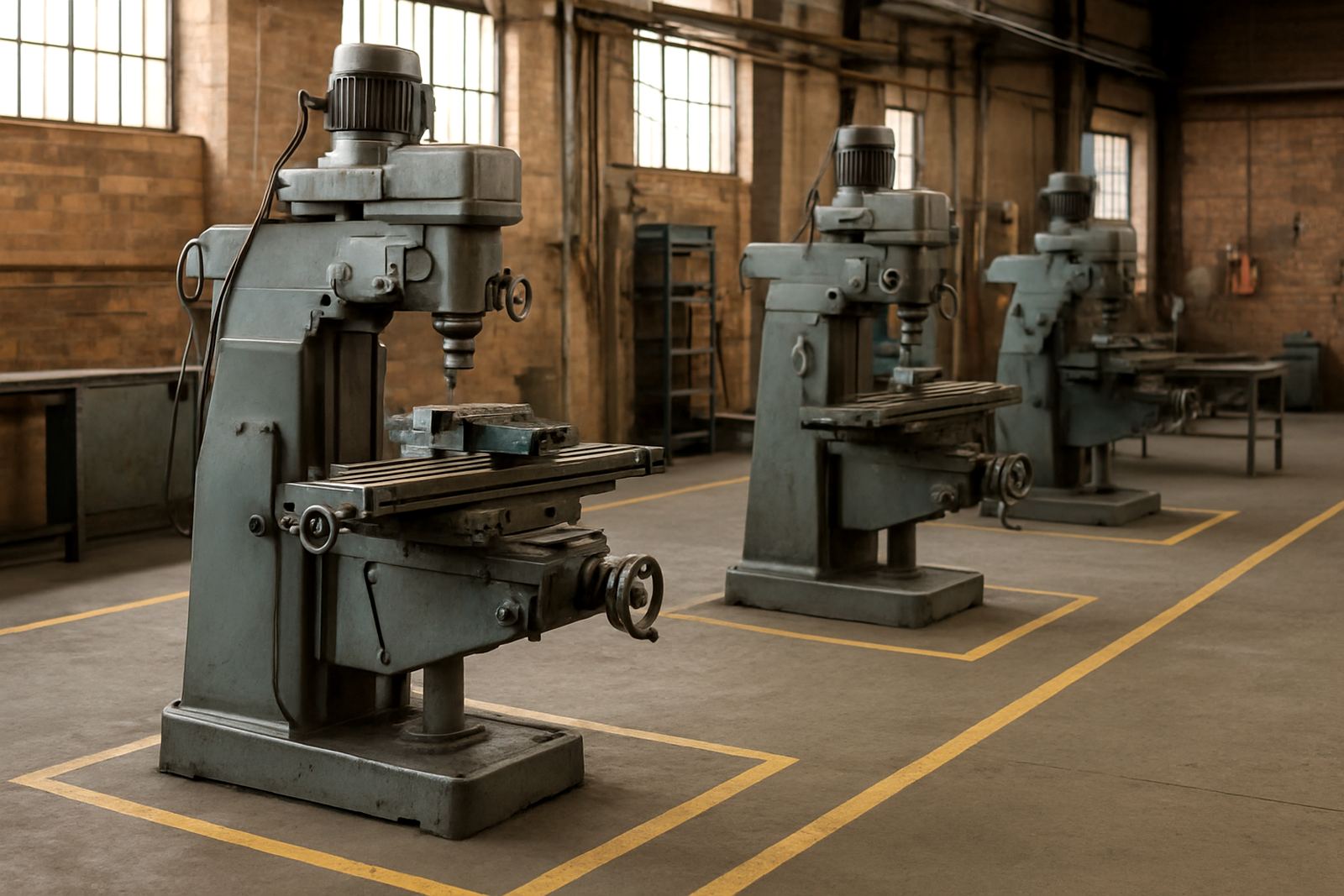
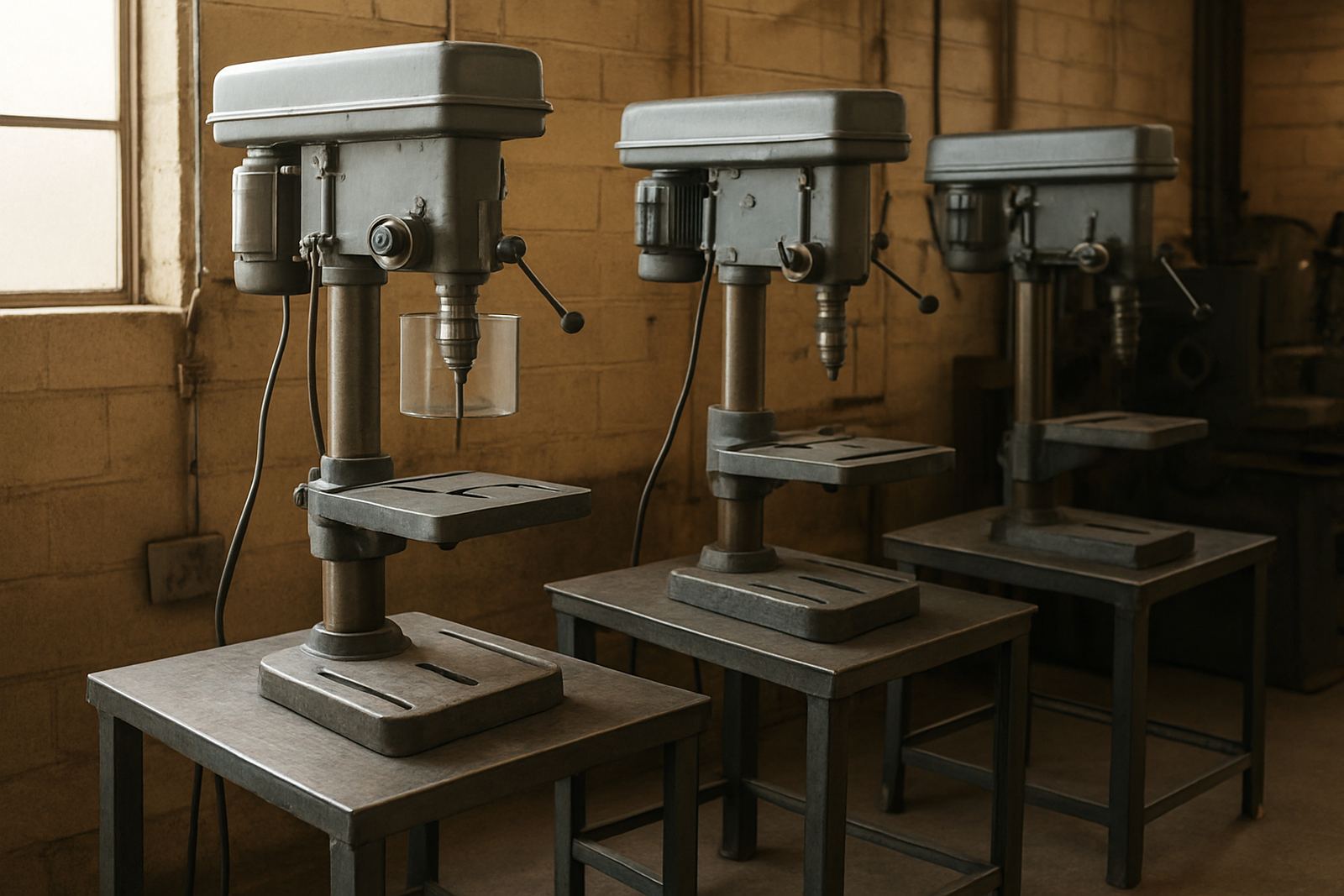
Used machines on auction may include benchtop pillar drills, floor standing units, geared head models and heavier production drilling machines with table feed. Some are fitted for single phase supply, while others need three phase power. A good drill press should run true, clamp firmly and keep vibration low, even after years of service in a busy workshop.
Sizes, Capacities and Common Options
Drill presses come in a range of spindle travel, throat depth and table sizes. Smaller bench units often suit light maintenance and general repairs, while taller floor models are better for larger work pieces and longer drill bits. Production machines may have higher spindle speeds, power feeds and bigger motors for regular duty. When you buy used, the spec plate matters because it tells you the actual motor size, speed range and drilling capacity.
- Bench and pillar drills: often 13 mm to 20 mm capacity, for light to medium work
- Floor standing drills: often 20 mm to 32 mm capacity, with heavier cast bases
- Production drilling units: suited to repeat work, jig drilling and series production
- Speed control: stepped pulleys, belt drive or geared heads depending on the model
- Table features: tilt, height adjustment, slot size and vice mounting points
- Special fittings: coolant tray, depth stop, tapping head or threaded spindle nose on some units
For many buyers in Johannesburg, Pretoria and Germiston, the right size comes down to the biggest hole you need and the space around the machine. A compact drill press can fit a service bay easily, but a fabrication shop may need a deeper throat and stronger table support.
Where Drill Presses Suit Best
These machines are used in metal workshops, timber shops, vehicle fleet depots, engineering firms, maintenance stores and schools with practical training rooms. They suit businesses that need neat, repeat drilling rather than rough site work. In Durban and Cape Town, buyers often look for machines with good rust protection because coastal humidity can affect tables, columns and bearings if a machine has been stored badly. In inland areas like Bloemfontein and Gauteng, dust and poor servicing are usually the bigger issue.
Typical uses include bracket making, hole pattern work, hinge fitting, light fabrication, drilling box section, making jigs and drilling plastic panels. If you only need a hole now and then, a simple bench unit may be enough. If the machine will be used every day, look for a heavier base, smoother quill action and motor that has not been overworked.
- Metal fabrication and maintenance departments
- Timber joinery and cabinet shops
- Auto repair and fleet workshops
- Schools, colleges and training centres
- Small production lines and light assembly work
Installation, Power Supply and Workshop Setup
Most drill presses need a flat floor, proper anchoring and enough space for the table to move without obstruction. Bench units need a solid stand or workbench that will not flex under load. Floor standing machines should be levelled before use, especially where the floor has a slope or patch repairs. For heavier machines, check access for loading equipment and make sure the route from the viewing yard or collection point can take the weight.
Power needs vary. Many smaller units run on 220 V single phase, which suits light workshop use, while larger industrial machines often need 380 V three phase. Always check the motor plate, cable condition and starter gear before bidding. If the machine has a coolant pump, magnetic switch or light, confirm whether those parts still work. No gas is needed for a drill press, but a clean electrical supply matters, especially in load-shedding conditions where repeated start-ups can affect older motors.
- Check floor loading and access for delivery
- Confirm single phase or three phase supply
- Allow safe clearance for drill travel and operator movement
- Inspect the on off switch, belt cover and emergency stop if fitted
- Plan for dust extraction where timber work is involved
What to Check Before You Bid or Collect
When ordering a used drill press, inspect the spindle play, table cracks, column wear and belt condition. Turn the quill by hand if possible and listen for rough bearings. Check whether the chuck grips properly and whether the chuck key is present. Look at the motor plate for voltage, amperage and speed. If there is visible rust, it may only be cosmetic, but pitted tables and worn feeds can point to heavier neglect. On some older machines, the feed handle has a bit of slop, which is fine if the spindle still runs straight and the machine drills cleanly.
Ask whether the vice, drill chuck, belt guard, table lock or coolant tray is included in the lot. Missing parts are common on auction equipment and they affect value. If the machine was used in a dusty environment or near coolant spray, check the bearings and electricals carefully. A quick test hole in mild steel or timber can show a lot about alignment and chatter.
- Spindle runout and bearing noise
- Chuck condition and bit grip
- Motor rating, voltage and speed range
- Table movement, tilt lock and height adjuster
- Included accessories and missing guards
- Signs of heavy rust, impact damage or poor repairs
Servicing, Safety and Ongoing Care
Regular care keeps a drill press usable for years. Clean chips from the table and column after each shift, especially when drilling steel or timber all day. Keep the belts tensioned correctly and replace cracked belts before they fail. Grease or oil the bearings only to the maker’s spec if you know it, and do not over lubricate the quill. On older machines, a loose switch box or damaged cable should be repaired before the machine goes back into service.
Safety matters because the work is close to the operator. Use clamps or a vice, not a hand held work piece. Fit the right speed for the material and bit size, and keep sleeves, gloves and loose clothing away from the spindle. If the machine came from a coastal site or a yard with poor cover, give it a proper clean and check for corrosion in the electrics. A little maintenance now saves time later, and it helps the machine hold value at resale too.
Key facts
| Machine types | Bench drill presses, pillar drills, floor standing drills, production drilling units |
|---|---|
| Typical drilling capacity | 13 mm to 32 mm, depending on model and spindle setup |
| Power supply | 220 V single phase or 380 V three phase, model dependent |
| Common applications | Metal fabrication, timber work, maintenance, training and light production |
| Key checks | Spindle runout, chuck grip, motor rating, table condition, belts and guards |
| Common accessories | Drill chuck, vice, table stop, belt guard, coolant tray, depth stop |