What a conveyor system does in daily plant use
A conveyor system carries goods from one point to another without constant manual lifting. In warehouses, packing rooms and dispatch bays it can move cartons, tote bins, crates, bags or loose stock along a fixed route, which helps keep loading times steady and reduces handling damage. Many buyers choose used conveyor equipment at auction because they can match a line to the space they already have, without waiting for a long lead time.
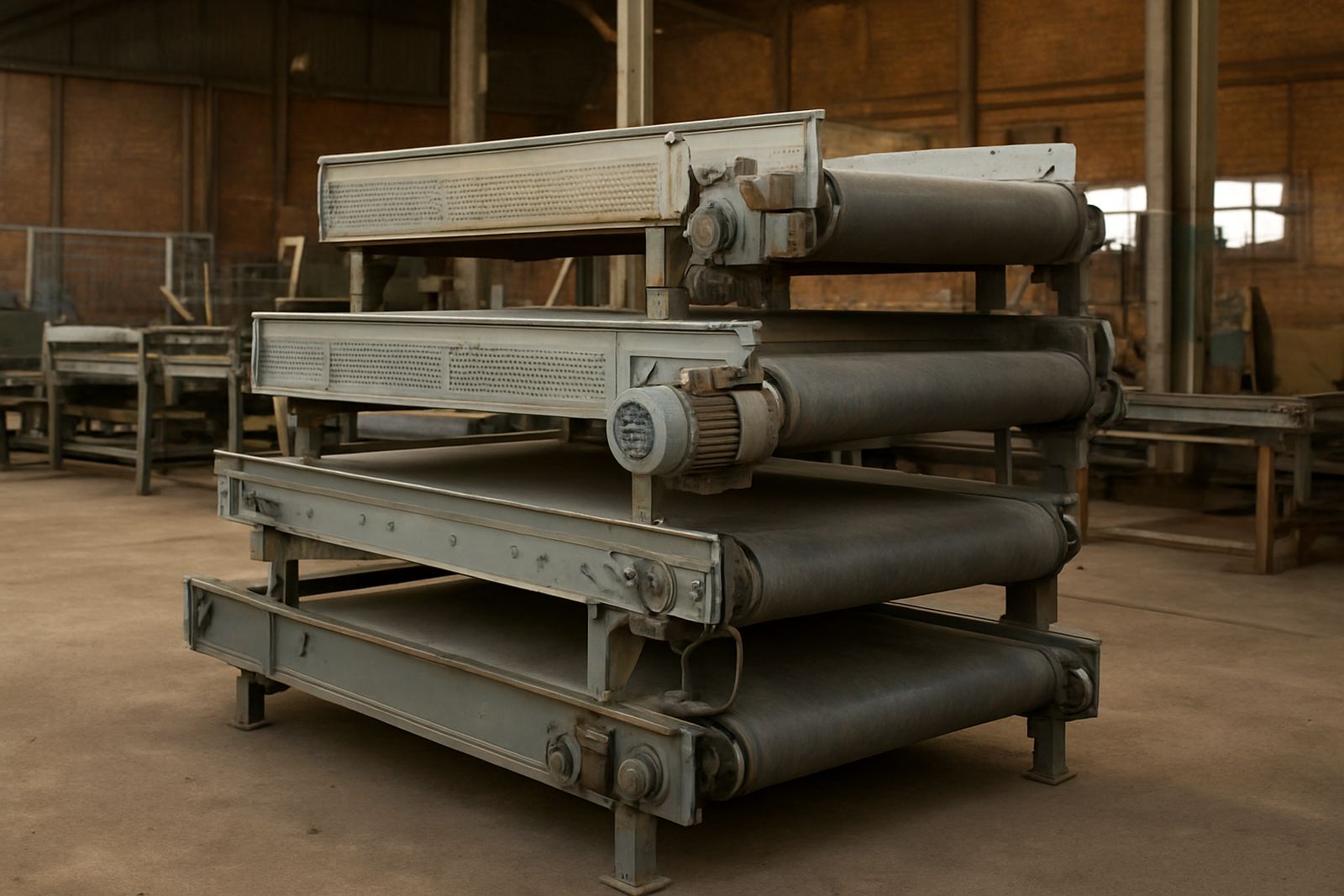
Common setups include straight runs, gentle inclines, declines, merge sections and transfer points between packing benches or pallet areas. Some lines are simple gravity rollers, while others use motor driven belts or powered rollers for heavier or more regular traffic. The right choice depends on the product size, the floor layout and how often the line must run during the day, especially where staff are dealing with load shedding and backup power planning.
Typical conveyor types and sizing options
Used conveyor lots usually come in modular lengths, which makes them easier to strip, move and reinstall. Straight belt sections are common for cartons and sealed packages, while roller conveyors suit boxes and cases that have a firm base. Flexible or telescopic sections can help at loading bays where the reach changes from day to day. In some depots, operators also use narrow belt sections for small parcels and wider belts for mixed product.
- Widths commonly range from about 300 mm to 1 000 mm, depending on the load
- Individual sections are often 1.5 m, 2 m, 3 m or 6 m long
- Frame heights may be fixed or adjustable, often between 600 mm and 950 mm
- Incline units need enough grip for the product and enough headroom above the floor
- Some systems include side guides, pop-up transfers, stop gates or accumulation zones
When buying at auction, measure the available floor space and the turning points before you bid. A line that looks suitable on paper can be awkward if there is a doorway, dock leveller, column or fire exit in the way.
Where these systems suit South African operations
Conveyors are used in many industries across Gauteng, KwaZulu-Natal, the Western Cape and the Free State. They suit packing lines in food and beverage, general manufacturing, e-commerce dispatch, spare parts stores, wholesaler yards and distribution centres. They also work well in cold rooms and in dusty or warm areas, provided the belt material and rollers are chosen for the site conditions.
In coastal areas such as Durban and Cape Town, humidity and salty air can shorten the life of untreated steel parts, so buyers often look for galvanised frames, stainless hardware or protective coatings. In industrial areas around Germiston, Isando and Alberton, a conveyor may need to cope with heavier daily use and frequent changeovers between product types. For smaller businesses, a short powered run can be enough to link packing, label application and dispatch without extra manual carrying.
- Suitable for warehouses, factories, distribution sheds and receiving bays
- Helpful where labour costs and handling errors need to be kept under control
- Useful for businesses that need a steady flow during peak orders or month end dispatch
- Can be arranged in straight, L-shaped or U-shaped layouts, depending on the building
Installation, power needs and site prep
Installation depends on whether the line is gravity fed, motor driven or a mix of both. Gravity roller sections need a level base and enough pitch for the goods to move. Powered conveyors need a stable floor, suitable anchor points and space for control panels, drive units and maintenance access. Most used systems are installed by setting the frames, linking the sections, checking alignment and then testing load flow before handover.
For powered units, check whether the drive uses single phase or three phase electricity and confirm the voltage before the lot is collected. Many industrial sites in South Africa run on 380 V to 400 V three phase supply, but this must be confirmed on the actual machine. If the line is tied into a generator or inverter backed supply, the starting load and running load need to be checked too. Where product sensors, emergency stops or variable speed controls are fitted, the control wiring should be checked by a qualified technician.
There is no gas requirement for standard conveyor systems. If the line forms part of a larger processing area with heat sealing, shrink wrapping or other equipment nearby, those separate utilities must be planned around the conveyor layout.
Care, servicing and common wear points
Conveyors last longer when they are kept clean and correctly aligned. Dust, pallet wrap, broken labels and loose strapping can collect under rollers or on belt edges and cause uneven movement. In food and dusty warehouse environments, cleaning should happen often enough to stop build-up around bearings, tracks and drive chains. If the system is outdoors or in a semi-open bay, the frames should be checked for corrosion, especially after rain or sea air exposure.
Common wear points include belt tracking, motor drives, bearings, chains, rollers and side guides. On used equipment, look for flat spots on rollers, cracked belting, worn idlers, noisy gearboxes and bent frames. A conveyor that has been standing unused may still be serviceable, but it should be tested under load before it is put back into daily work. If a site runs long shifts or night loading, keep spare rollers, belts and basic drive parts on hand to avoid downtime.
- Clean and inspect weekly in dusty or busy environments
- Check belts, chains and rollers for tracking issues or unusual noise
- Keep emergency stops and guards clear and easy to reach
- Service motors and drives at scheduled intervals rather than after failure
What to check before you place a bid
Before bidding on a conveyor lot, confirm the material being moved, the line speed needed and the exact space available at your site. Measure the length, width and height of the route, then compare those figures with the actual lot measurements. If the conveyor needs to work with existing benches, pallet jacks or loading docks, check the transfer height carefully. A small mismatch can create stoppages or manual lifting that defeats the purpose.
Also check the following:
- Whether the lot includes motors, controls, supports and guards or only the frames
- Drive type, power rating and supply voltage
- Section lengths, joint compatibility and whether the layout can be changed
- Load capacity per metre and the type of product the line carried before
- Condition of belts, rollers, bearings, chains and side guides
- Whether collection will need a forklift, flatbed or dismantling crew
If you are buying for a multi site move, it helps to plan collection and reassembly in advance. That is especially useful where equipment must move between Germiston, Pretoria, Durban, Cape Town or Bloemfontein and the collection window is tight.
Why used conveyors can make sense for growing operations
For many businesses, a used conveyor is a practical way to improve flow without taking on the cost of a new build. A single line can reduce walking distance, speed up packing and help standardise movement between workstations. If the line is modular, you can add more sections later or rework the layout as volumes change. That flexibility matters in South African operations where order patterns can shift quickly and floor space is not always easy to extend.
At BidThis, conveyor lots are listed for timed online auctions with clear lot details, viewing options and collection coordination. That gives buyers a straightforward way to compare systems and sellers a clear route for surplus equipment that still has useful life left in it.
Key facts
| Product type | Used modular conveyor systems |
|---|---|
| Common widths | 300 mm to 1 000 mm |
| Common section lengths | 1.5 m, 2 m, 3 m and 6 m |
| Frame height range | About 600 mm to 950 mm, often adjustable |
| Power supply | Some units are gravity only, powered units may need 220 V single phase or 380 V to 400 V three phase |
| Typical use | Packing lines, warehouses, dispatch areas, loading bays and distribution centres |