When a New Workshop Needs to Open Fast
Many start-up workshops begin with a clear order book but very little fixed equipment. That is common in trade, repair and light manufacturing businesses from Germiston to Pretoria and Durban, where owners need to get moving before the first contracts are delayed. Buying used machinery through an auction can help a new business set up a practical workshop without spending every rand on day one.
The usual pattern is simple. The owner has a room, a light industrial unit, or a shared premises and needs the basics: work surfaces, power tools, compressors, storage, lifting gear and a few heavier machines. At auction, a buyer can often source these items in one cycle instead of chasing different suppliers across Gauteng and beyond. For a start-up, that speed matters more than fancy fittings.
Typical Equipment for a Start-Up Workshop
The exact mix depends on the trade, but most new workshops need a core set of tools and machines that can handle daily work from the first week. In South African conditions, it also helps to choose equipment that can cope with load-shedding, dust, heat and coastal humidity, especially if the business will operate in Durban, Cape Town or nearby industrial areas.
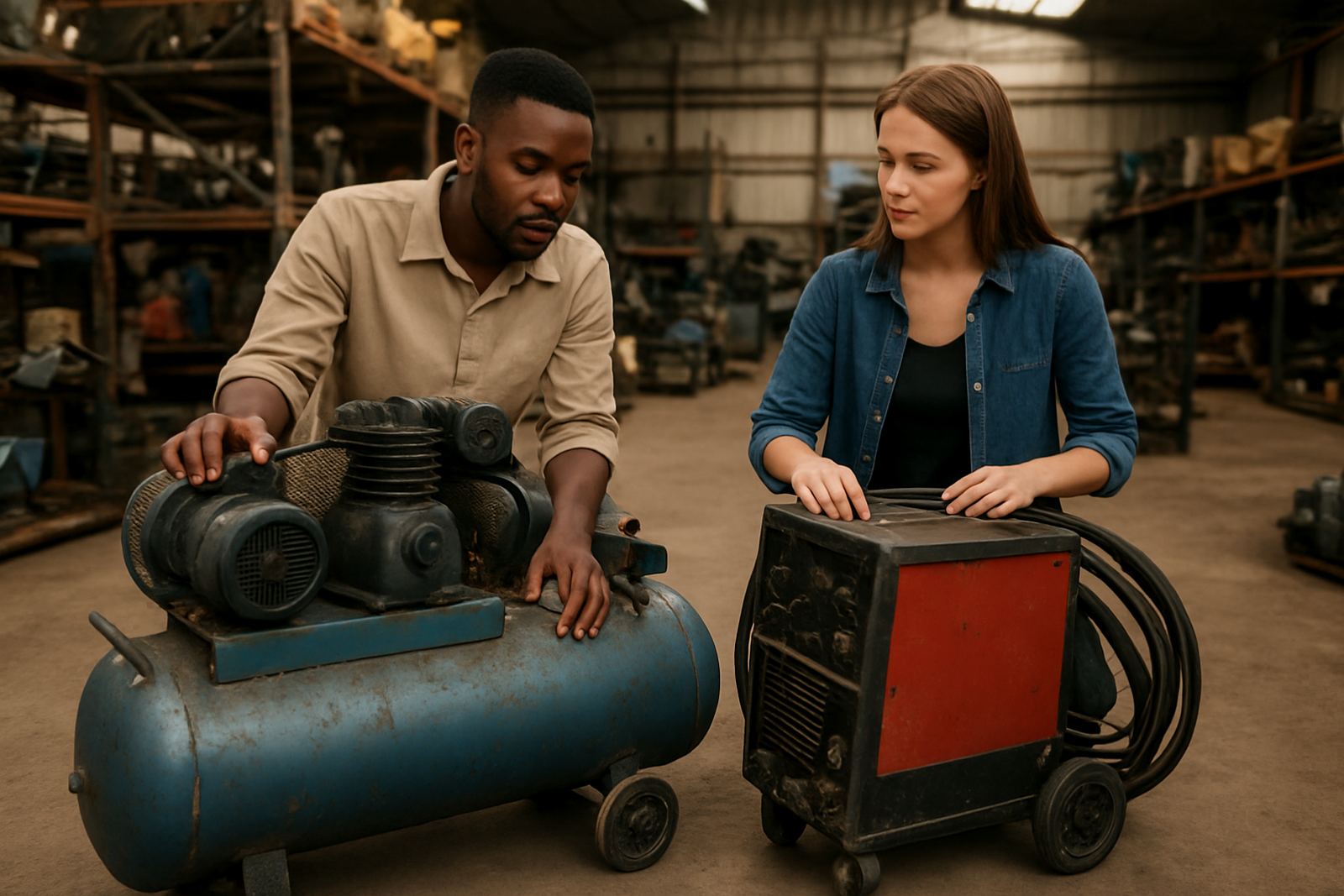
- Compressors, air lines and pressure accessories
- Bench vices, welding tables and sturdy workbenches
- Drills, grinders, saws and other hand-held power tools
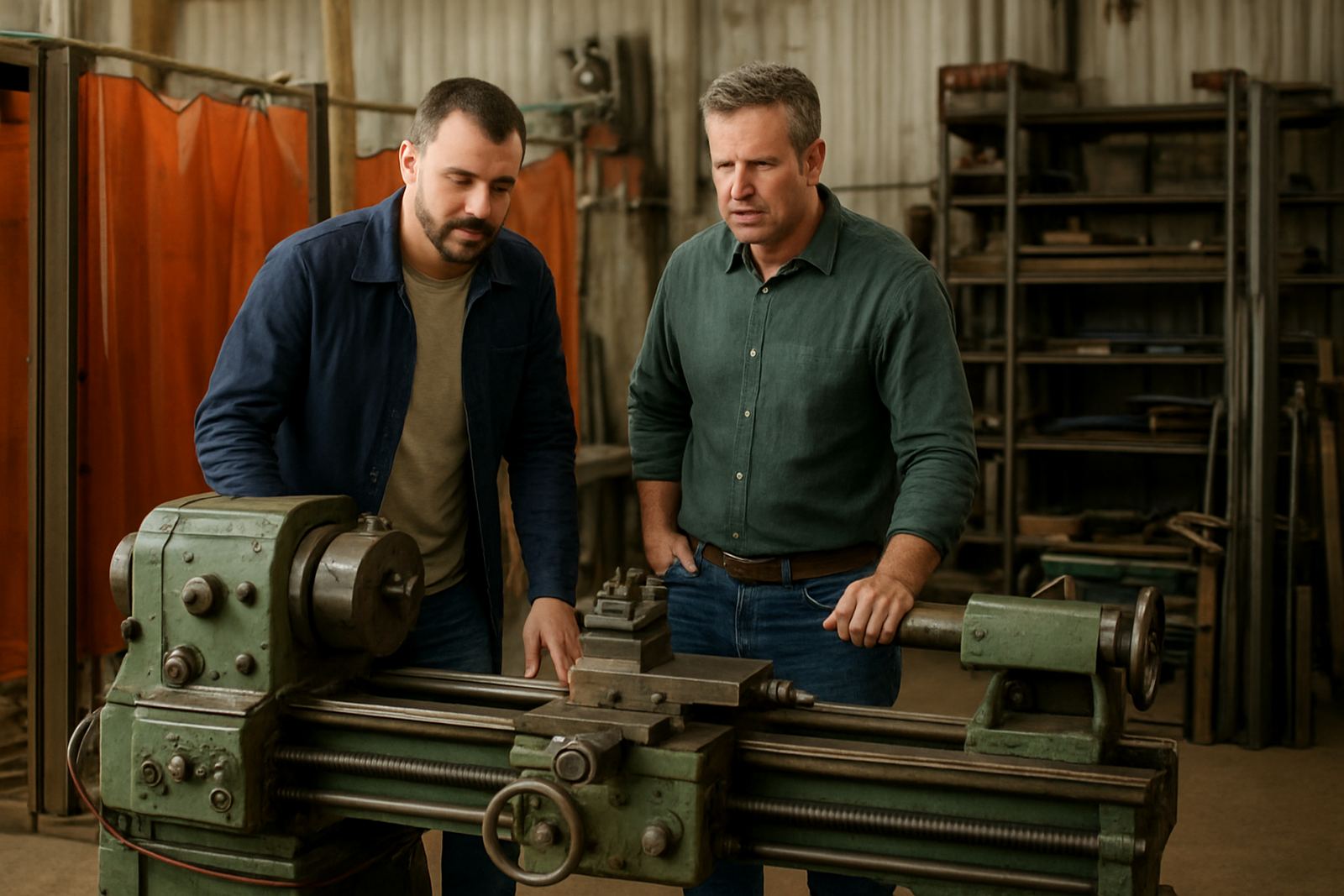
- Small lathes, presses, shearers or fabrication machines
- Storage racks, trolleys, shelving and lockable cabinets
- Generators, battery backup units or inverter support for outages
- Measuring tools, safety gear and basic maintenance items
For many buyers, the first auction purchase is not one machine but a full working set. That gives the workshop a proper base and helps staff start producing instead of waiting on piecemeal deliveries.
How to Plan the Workshop Layout Before You Bid
Before placing bids, work out the footprint of the premises. Measure the usable floor area in metres and mark where doors, roller shutters, power points and ventilation sit. A 60 m² unit in Isando will need a very different layout from a 140 m² space in Alberton and the wrong machine can make the whole floor plan awkward.
Think in zones. Keep noisy cutting and grinding away from finishing and packing. Leave enough aisle space for trolley movement and material handling. If the business expects deliveries on weekdays, plan a clear intake point so pallets do not block the main work area. In many municipal and sectional-title industrial parks, access routes and fire exits need to stay clear, so a cramped layout can become a real problem fast.
- Check door width and ceiling height before bidding on larger items
- Confirm floor strength if you want to install heavier machinery
- Allow space for incoming stock, waste bins and finished goods
- Plan for single-phase or three-phase power as required
- Leave room for maintenance access around each machine
What Start-Up Buyers Commonly Overlook
The mistake we see most often is buying the machine before checking the full cost of getting it into production. A low auction price can look attractive, but transport, offloading, wiring, installation and servicing still have to be paid for. If the unit comes from another province, the transport bill can be a meaningful part of the total spend.
Another common oversight is power backup. A workshop that depends on welders, compressors or computer-controlled equipment can lose a full day during load-shedding unless there is a proper backup plan. It is also easy to forget about approvals, especially if the premises needs landlord consent, zoning confirmation or a municipal sign-off for certain operations. That admin may not be exciting, but it matters before stock arrives.
Buyers should also inspect for worn bearings, damaged leads, missing safety guards and rust. In coastal areas, moisture can affect storage cabinets and electrical fittings, while older machines in inland yards may have dust and heat wear. A good viewing reduces surprises and helps you bid with a clear head, not hope.
Budget Ranges That Make Sense for a New Workshop
Every trade is different, but start-up workshops usually fall into a few budget bands. A very lean setup can begin at around R40 000 to R90 000 if the business only needs basic tools, benches and one or two core machines. A more complete small workshop often lands between R120 000 and R350 000 once lifting gear, compressors, fabrication tools and storage are included.
For heavier setups, especially if you need multiple machines, spares, transport and installation, budgets can move well above R500 000. That does not mean the business is overspending. It means the owner is buying capacity that can take on larger jobs and reduce bottlenecks. The key is to set a cap for the first round of buying, then leave a reserve for repairs, cables, rigging and compliance items.
It is also sensible to think in stages. Buy the equipment that allows work to start, then add specialist items once cash flow improves. That approach is common for growing businesses in Johannesburg, Pretoria and Bloemfontein where premises costs, staff wages and stock can already pressure the opening budget.
Using BidThis for Local Viewings and Auction Discipline
BidThis supports start-up buyers through Germiston and other viewing points, so equipment can be assessed before the auction closes. That is especially useful when a business wants to compare several lots at once or needs to check whether a machine suits a narrow workshop bay. For sellers too, the process helps surplus equipment find a practical next user instead of sitting idle.
Good auction discipline is simple: set a ceiling, inspect properly, and factor in the real cost of getting the item working. If a buyer keeps to that method, a start-up workshop can build capacity at a much lower entry cost than buying everything new. It is a practical way to open the doors, keep overheads under control and build from there.
Our team can help with asset appraisals, lot guidance, viewing management and buyer support, which makes it easier to move from interest to a workable purchase plan.