When Food Processing Assets Need To Move On
Food businesses often deal with tight margins, seasonal demand and changing hygiene requirements. A line that worked for one product may no longer suit a new recipe, pack size or customer contract, so mixers, slicers, fillers, conveyors and cold rooms come up for sale. In Germiston and the wider Gauteng industrial belt, we often see owners selling after a lease ends, a plant is consolidated, or a second shift is removed to cut power and labour costs.
For buyers, this can be a practical way to source used equipment at a lower Rand value than new stock, while still getting machinery that can handle production if it is checked properly. For sellers, a timed auction helps turn idle assets into cash without waiting months for one buyer to make an offer. The key is accurate listing, honest condition notes and a clear plan for removal.
- Typical seller situations include downsizing, liquidation, plant upgrades, site relocation and surplus stock clearance.
- Typical buyer needs include start-up kitchens, expanding processors, contract packers and exporters needing extra chilled capacity.
Typical Equipment Seen In Food Auctions
A food processing auction can include one machine or an entire line. Some lots are light-duty items for bakeries and snack producers, while others are heavy plant used in meat, dairy, sauces, beverages or fresh produce packing. We also see cold storage equipment, stainless steel benches and handling gear from depots and distribution sites.
- Mixers, dough dividers, slicers, grinders and peelers
- Vacuum packers, tray sealers, label printers and date coders
- Fillers, cappers, conveyors, belt sorters and inspection tables
- Blast freezers, cold rooms, condensers and refrigeration units
- Stainless steel sinks, worktables, racks, trolleys and shelving
- Forklifts, pallet jacks, scales and battery charging stations
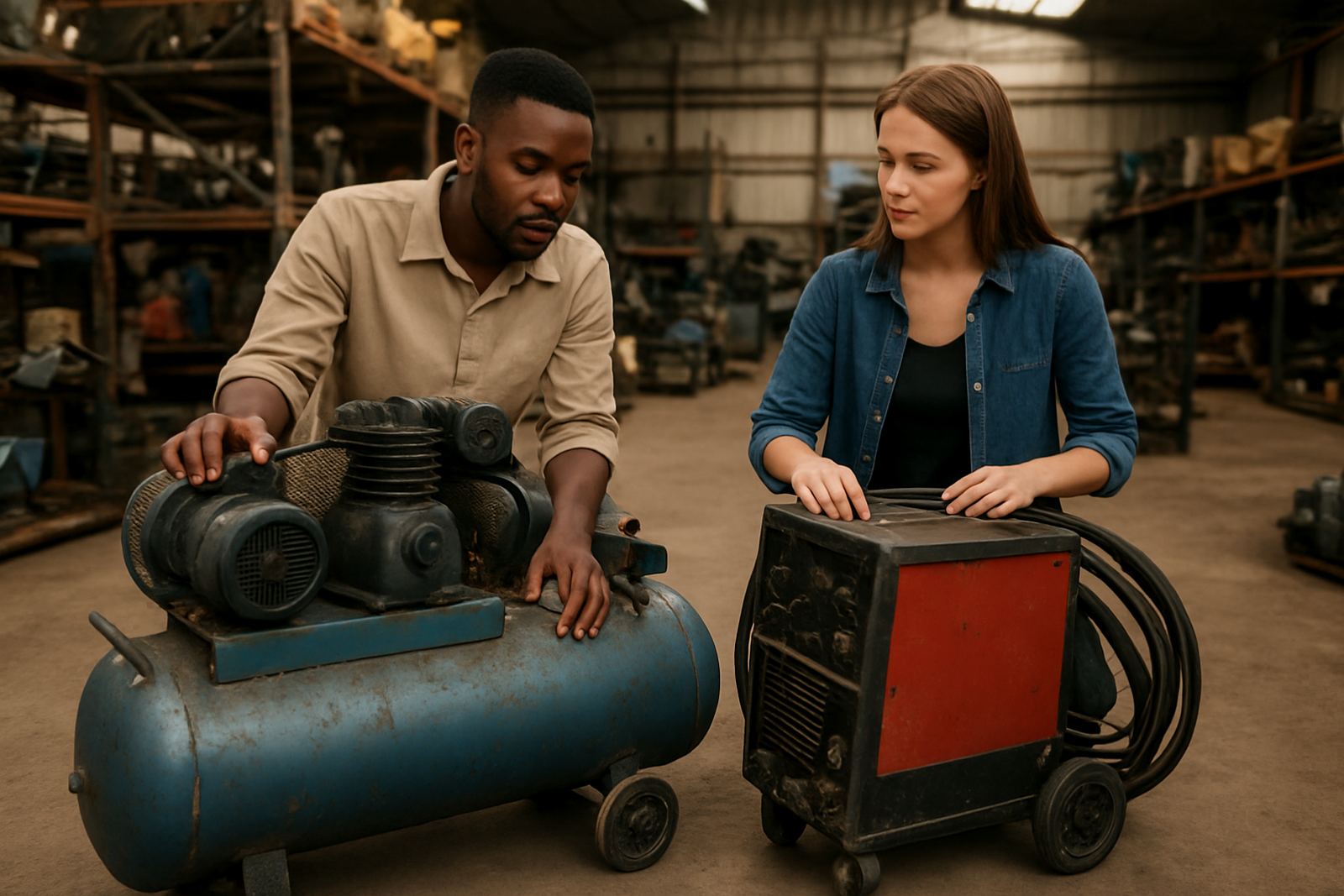
Asset condition matters more than a long list of features. A buyer should know whether the machine ran on single phase or three phase power, whether the stainless has corrosion, and if seals, belts or compressors need replacement. Coastal humidity in Durban or storage near salt air in Cape Town can affect steel, motors and chilled plant, so the viewing stage should never be skipped.
Layout And Planning Before You Bid
Food assets are not bought in isolation. A buyer should think about the room, the floor loading, drainage, extraction, electrical supply and how people will move around the line. A good layout reduces contamination risk and keeps a shift moving when load-shedding returns and backup power is being used. If a site already has cold storage, it helps to measure door heights, aisle widths and turning space before the auction closes.
If you are selling, clear access is just as important. We advise sellers to map the site, mark which items are in use and list any equipment that needs isolating before removal. A clean lot description helps bidders compare options properly and keeps auction day traffic under control at viewings in Germiston, Isando, Alberton, Pretoria or Durban.
- Check the power type, amperage and cable condition before bidding.
- Confirm whether the machine is fixed to the floor or can be moved on wheels.
- Measure entrances, cold room panels and ceiling clearance for safe loading.
- Plan for labour, lifting gear and transport if the asset is heavy or awkward.
Common Mistakes Buyers And Sellers Make
One common mistake is buying on price alone. A cheap slicer or packing line can become expensive if it needs new blades, bearings, sensors or a refrigeration rebuild. Another problem is overlooking compliance. Food businesses often need stainless finishes, cleanable surfaces and enough separation between raw and finished product areas. If a buyer ignores this, the machine may sit unused after collection.
Sellers also make avoidable errors. They sometimes leave equipment dirty, disconnected or partly stripped, which lowers bidder confidence. Others forget to list missing parts, control panels or trays. It is better to disclose that an item needs repair than to let a buyer find out at loading time. Clear photos, serial numbers where available and honest condition notes support better auction results, and usually stronger bids too.
- Do not assume every unit has been tested on site.
- Do not forget that compressors, motors and electronic controls may need re-commissioning.
- Do not leave chilled assets standing empty for long periods without care, especially in warm weather.
Budget Ranges For Food Processors And Cold Chain Gear
Budget depends on age, make, condition, capacity and whether the lot is sold singly or as part of a full dispersal. Smaller table-top items can open at only a few thousand Rand, while complete packing rooms and cold storage systems can move far higher. Buyers should set a ceiling price that still leaves room for transport, installation and any repairs after collection.
As a practical guide, smaller food preparation machines may trade from about R2,000 to R25,000. Mid-sized process equipment such as conveyor sections, mixers, sealers and label systems may sit between R15,000 and R120,000. Larger items like blast freezers, cold rooms, industrial ovens, full packing lines or forklift units can range from R60,000 to R500,000 or more, depending on condition and capacity. On larger sites, multi-site dispersals and surplus stock sales can produce strong total returns if the lots are catalogued well and viewings are managed properly.
Sellers should also plan for disconnection, rigging and clearing costs. Buyers should remember that transport from Germiston to Cape Town, Bloemfontein or Durban is often a big part of the total spend, not just the hammer price.
How BidThis Supports Food Asset Auctions
BidThis helps food businesses across Johannesburg, Pretoria, Durban, Cape Town and Bloemfontein turn surplus plant into auction lots that are easier to compare and easier to sell. Our team handles asset appraisals, seller onboarding, lot cataloguing, auction photography, reserve price guidance and buyer support so each item is presented clearly and fairly.
We also manage viewing appointments through our Germiston Viewing Yard and other viewing points, which is useful when buyers want to inspect stainless surfaces, test doors, check compressor housings or confirm machine dimensions before bidding. For businesses that need to clear a site quickly, payment clearance and collection coordination help keep the process orderly and reduce delays between the winning bid and removal. Keitumetso Hlungwani, Jaco Blignaut, Zulfa Dawood, Velaphi Gumede, Candice Naidoo and Mxolisi Ngwenya work across those steps so sellers and buyers know what happens next.
Whether you are selling one surplus machine or a whole production area, a structured auction gives the market a clear chance to price the asset. That is often the simplest way to move food processing equipment on when the operation itself is changing.