What the depot needed from the sale
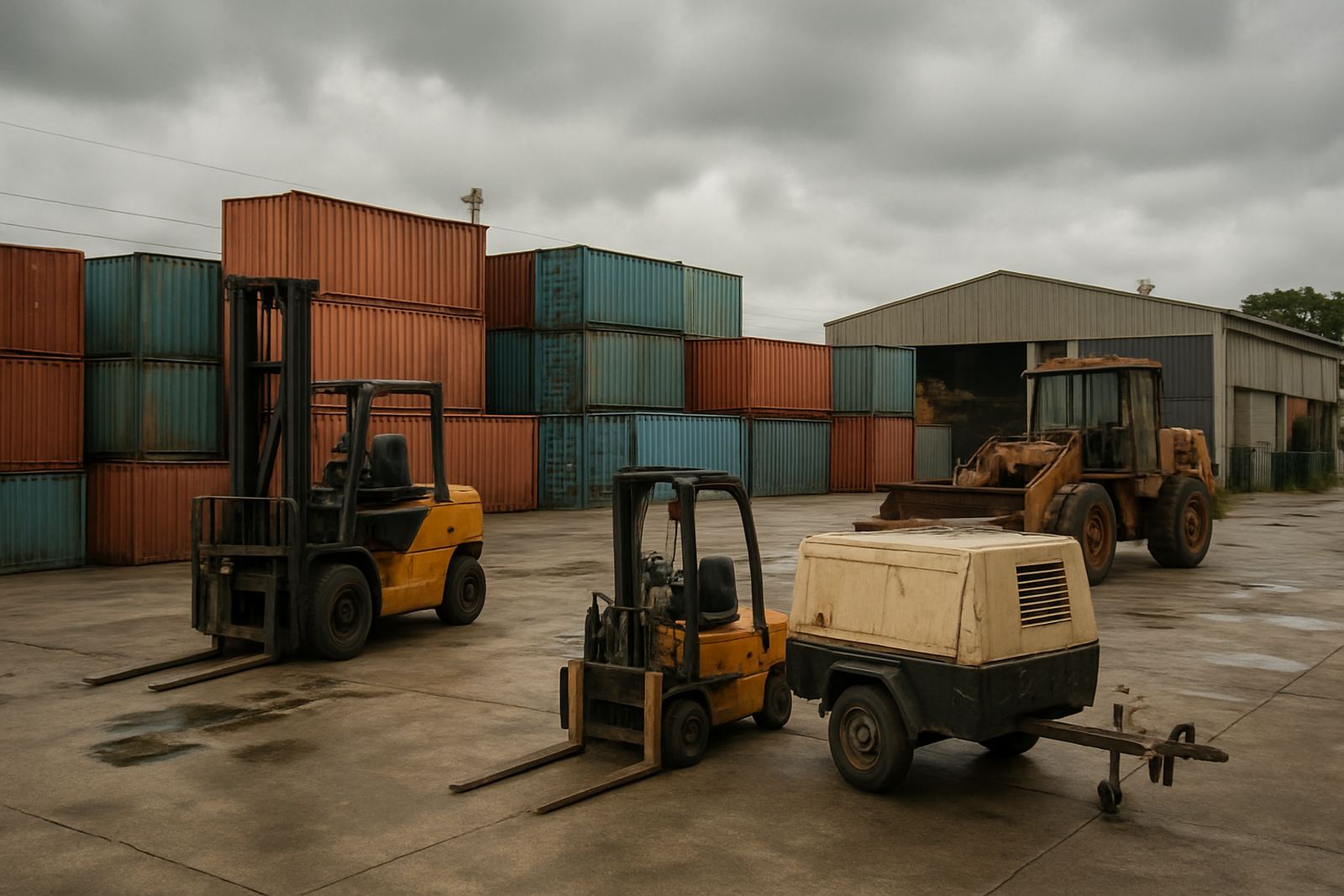
The seller was a Durban-based industrial user clearing surplus assets from a coastal storage yard after a workflow change and space pressure from incoming stock. The brief was to run a timed online auction that could handle mixed equipment, bring in serious bidders from across South Africa, and keep the process orderly while the depot kept operating on a normal schedule.
There were three main priorities. First, the sale had to show clear condition notes so buyers knew what was serviceable, what needed repair, and what was sold as-is. Second, the auction needed to make allowance for coastal wear, especially on steel surfaces and hydraulic components exposed to humidity. Third, collections had to be controlled because the site had limited manoeuvring space and truck access had to be managed around other depot traffic.
- Location: Durban, KwaZulu-Natal
- Asset mix: forklifts, containers, pumps, benches and support gear
- Sale format: timed online auction with arranged viewings
- Key concern: corrosion, site congestion and safe removal
Site conditions and auction constraints
The yard sat close to the coast, so salt air had already started to show on fasteners, chains and container doors. That meant buyers needed honest condition reporting and proper photographs, not just a list of item names. Some units had been idle for months, which meant batteries were weak, tyres had flat spots and certain workshop items had to be tested visually rather than powered up on site.
Load-shedding also shaped the schedule. Viewing windows had to be planned around daylight and the depot’s own operating shifts, since a few areas depended on lighting and gate control that could not be left to chance. The collection plan had to account for municipal road access, truck turning space and the fact that container moves can take longer than people expect when a site is tight.
- Coastal exposure increased surface rust risk
- Limited yard space meant staged viewings were needed
- Some assets could not be fully tested under power
- Collections had to avoid peak depot movement times
How we catalogued the assets
We carried out an on-site asset appraisal and then catalogued each lot with a practical level of detail. For the forklifts, we recorded lift capacity, mast type, tyre condition, fuel type where visible, and any obvious hydraulic seepage. For the containers, we noted length, door condition, floor condition and whether the unit was wind and watertight. Workshop support items were grouped by function to help bidders compare sets instead of chasing single loose items.
The photos were taken to show serial plates where available, wear points, forks, mast chains, container corners and any missing parts. That helped reduce back-and-forth questions during the auction and gave buyers a better sense of what they were bidding on. We also flagged which lots were better suited to local collection because of size and handling requirements.
- Forklifts were listed with visible plate details and condition notes
- Containers were described by size, structure and floor state
- Small workshop gear was grouped into practical lots
- Each lot page carried collection notes and viewing guidance
The sale structure that worked
The auction ran as a timed online sale over two weeks, with the first week used for registration, photography uploads and buyer queries, and the second week for active bidding and award processing. That timeline gave enough time for serious buyers to inspect items without dragging the release out too long. The structure also suited out-of-town buyers who wanted to compare Durban stock against equipment in Gauteng and the Western Cape before placing bids.
We used reserve price guidance where needed, especially on the forklifts and the better container lots. Lower value support items were grouped to keep bidding active and avoid too many tiny line items. The result was a sale that stayed manageable for the seller and still offered enough choice for buyers looking for affordable machinery and site assets.
- Week 1: appraisal, cataloguing, photography and buyer registration
- Week 2: timed bidding, bidder support and award confirmation
- Reserve guidance used on higher value assets
- Grouped lots used for mixed workshop support stock
Results from the Durban release
The sale drew interest from Durban, Johannesburg, Pretoria, Cape Town and Bloemfontein, with buyers responding well to the clear condition notes and the practical lot groupings. The forklifts attracted attention from small depots and yards that needed used handling equipment without paying for new stock, while the containers brought in buyers looking for secure storage for sites, stock rooms or temporary holding areas.
Collections were completed in stages and the yard never had to stop trading for a full day. That mattered, because depot sales can become messy if removals and daily operations are not separated properly. The seller was able to clear space, reduce carrying costs and convert dead stock into cash in a controlled way, which is usually the main reason a depot release gets done in the first place.
- Assets reached buyers across multiple provinces
- Space was recovered at the depot without disrupting core operations
- Clear lot information reduced post-sale disputes
- Mixed assets were sold in a way that matched market demand
What we would repeat on the next coastal sale
We would handle a similar Durban release the same way again: strong cataloguing, honest condition notes, staged viewings and a collection plan that respects the site layout. For coastal depots, it is worth spending extra time on rust points, hinge wear and any equipment that has sat close to salt air. That extra effort helps bidders price correctly and reduces the risk of surprises at collection.
We would also keep the lot structure flexible. Bigger assets like forklifts and containers deserve their own lot pages, while smaller support items work better in sensible groupings. That approach keeps bidding cleaner and helps the seller reach a wider pool of buyers without cluttering the auction with too many tiny listings.
Key facts
| Project type | Durban coastal depot sale |
|---|---|
| Client type | Industrial operator clearing surplus assets |
| Town | Durban, KwaZulu-Natal |
| Timeline | 2 weeks from cataloguing to award |
| Main assets | Forklifts, shipping containers and workshop support equipment |
| Sale format | Timed online auction with viewing and collection coordination |