
A Practical Clear-Out For A Busy Isando Site
The client was a warehouse operator in Isando, Gauteng, working from a compact industrial yard with a mix of pallet storage, dispatch gear and older handling equipment that had to be sold before the site could be handed back. The brief was simple on paper: turn surplus assets into cash, keep the process orderly and avoid holding up the final clean-out. In practice that meant working around active forklift movement, limited parking and a tight collection window.
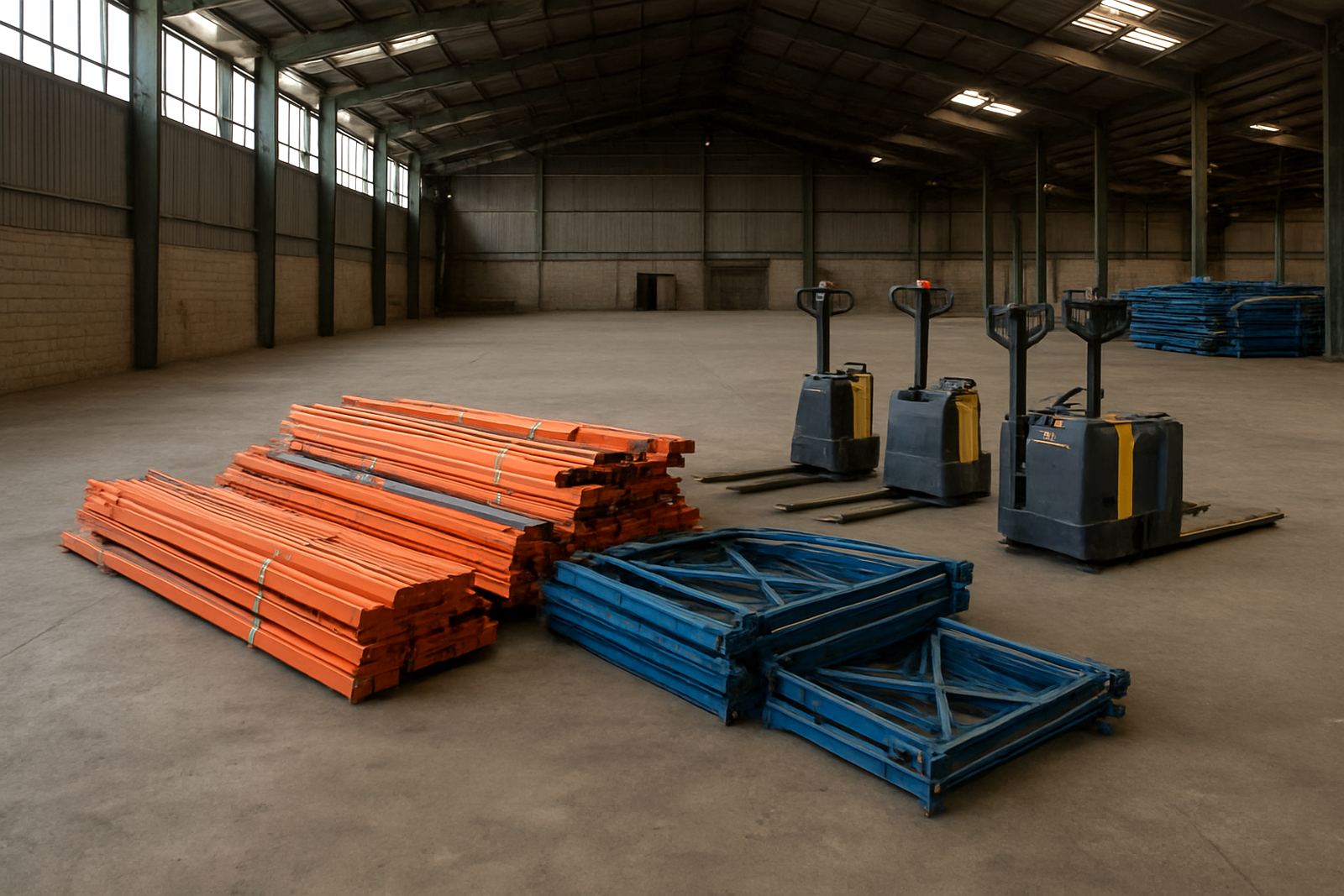
The sale covered racking sections, pallet equipment and dispatch assets that were still in serviceable condition but no longer fit the operation. Buyers needed clear lot details, honest condition notes and enough time to plan transport. We also had to factor in load-shedding at the site, so viewing times and photography were planned around daylight and power cuts, which saved a lot of back and forth.
What Was Included In The Auction Lots
We split the material into practical lots that made sense for resellers, factories and small logistics operators. The aim was to avoid overcomplicating the sale with too many tiny lines, while still keeping enough detail for bidders to judge value. Each lot had a clear description, approximate size where relevant and notes on visible wear, missing parts or signs of previous use.
- Heavy-duty pallet racking bays, mostly 2.4 m to 3.0 m high, with mixed beam lengths
- Pallet trucks and warehouse handling gear for low-level movement
- Dispatch tables, wrapping stands and packing support items
- Used steel shelving and storage frames for stockholding areas
- Loose warehouse accessories, including bins, rollers and small fittings
- Dispersal lots for mixed surplus stock that was better sold together
The condition range was typical for an active industrial site. Some items were ready for immediate re-use, while others needed cleaning, straightening or fresh fixings before going into another operation. We noted that in the catalogue, because bidders do not like surprises and neither do sellers.
How We Ran The Sale From Germiston
BidThis handled the project from our Germiston base and coordinated the work across the viewing point and collection side. The seller onboarding took place first, followed by asset appraisal, lot grouping and reserve price guidance. Once the lot list was approved, we arranged auction photography and catalogued each item with the details buyers usually ask for first: size, condition, quantity and loading notes.
Because the site was in Isando, we kept the turnaround tight and practical. The whole project ran over 3 weeks from onboarding to final sale close, with the live timed auction going out in the final week. Buyer support stayed active throughout the process, fielding questions on compatibility, loading access and collection times. Keitumetso Hlungwani handled auction operations, while Jaco Blignaut worked through valuation, and Mxolisi Ngwenya managed viewing logistics for the yard and access flow.
We also made sure the listing language was plain and direct. That matters with used warehouse assets, because buyers want to know whether a rack bay is complete, whether a pallet truck rolls properly and whether a buyer will need extra labour on collection day. Clear wording reduces problems later, which is the point.
Constraints On Site And How We Dealt With Them
Isando industrial sites can be efficient but they also come with a few headaches. Access lanes can be narrow, neighbours do not always like idle trucks, and collection needs to be timed around normal warehouse work. In this case we had to work around ongoing stock movement and keep the viewing area safe for both staff and bidders. We also had to manage the fact that some assets were stored near a wall line, so photography needed careful positioning.
Another constraint was the power situation. Without steady power, internal lighting and equipment checks become awkward, so we planned the photography and inspection slots for the best available light. The seller wanted a tidy exit, so we kept the collection schedule firm and pushed buyers to book transport early. That helped avoid congestion, especially on the days when more than one buyer arrived with a truck.
- Limited yard space meant fewer vehicles on site at one time
- Some assets needed manual marking and measuring before sale
- Collection dates had to fit around warehouse operations and access control
- Load-shedding required flexible timing for photos and inspections
Buyer Interest Across Gauteng And Beyond
The auction drew interest from buyers looking for second-hand warehouse kit at sensible prices, especially operators in Johannesburg East, Alberton, Pretoria and the wider Gauteng industrial belt. The racking attracted the strongest attention because it could be reused quickly in stores, mini-warehouses and light distribution setups. Dispatch items also sold well, because small business buyers often want equipment they can put into use the same week.
We had enquiries from other parts of South Africa too, but the final buyers were mostly Gauteng based, which made collection simpler and cut transport cost. That matters with heavy steel goods. A good hammer price is nice, but if the freight is too high the deal falls apart. Here the combination of clear lotting, reserve guidance and timed bidding kept the sale moving and gave the seller a clean result.
Results, Handover And What We Would Repeat
The sale ended with the main warehouse assets sold off to multiple buyers, and the seller was able to clear the site without dragging out the handover. The racking, pallet equipment and dispatch items moved in separate collections, which kept the floor manageable and reduced the risk of damage during removal. For the seller, the outcome was a quicker exit and a far better return than a scrap-only disposal.
If we were to do the same sale again, we would follow the same model: start with a precise appraisal, group assets into sensible lots, photograph everything early and keep collection windows strict. For warehouse sites in Isando, Germiston or any active industrial area, that approach works well because it respects both the operation and the buyer. It also keeps the process transparent, which is exactly what sellers want when they are trying to close out surplus stock without drama.
Key facts
| Project type | Completed warehouse asset sale |
|---|---|
| Location | Isando, Gauteng |
| Asset categories | Racking, pallet equipment, dispatch assets |
| Timeline | 3 weeks from onboarding to close |
| Sales method | Timed online auction |
| Buyer reach | Gauteng-wide with interest from other provinces |