
Why food equipment needs stricter auction preparation
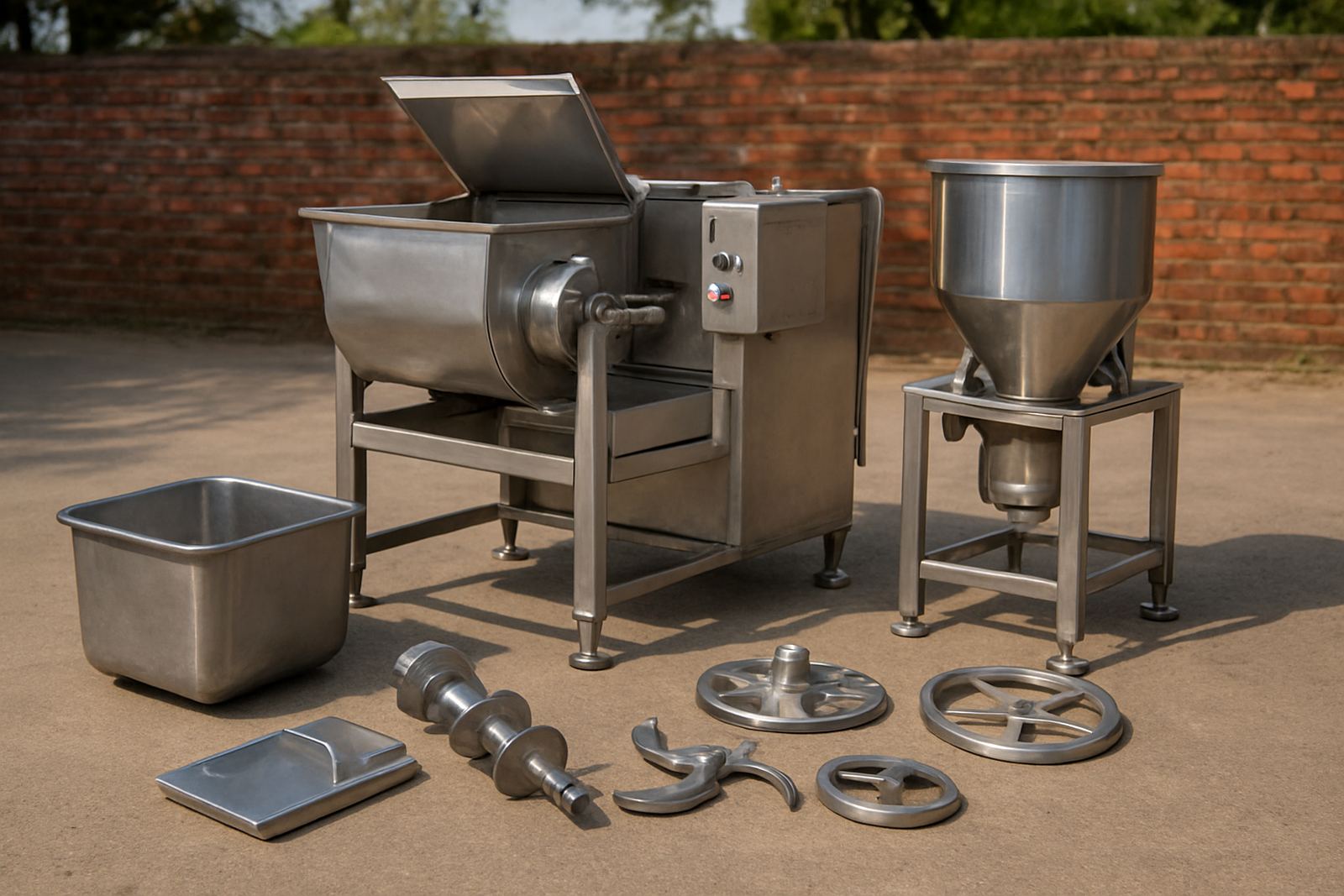
Food equipment is judged differently from general workshop plant. A buyer looking at a mixer, fryer, cold room, slicer or prep line is not only weighing age and condition, but also whether the item has been kept clean enough for food use and whether it will pass a site inspection without costly rework. That is why food equipment sales usually perform better when the seller prepares the asset properly before listing.
In practical terms, this means removing loose product, degreasing contact surfaces, checking guards and switches, and making sure the machine can be identified by make, model, serial number and power requirements. If the item has been idle for months, it should be tested where possible before auction day. Buyers in Johannesburg, Durban or Cape Town will often compare your lot with newer stock from a close by competitor, so incomplete information can knock the price down quickly.
For sellers in Gauteng, KwaZulu-Natal and the Western Cape, the same rule applies: a clean, well-documented item attracts more confidence than a dusty asset with no paper trail. In food operations, confidence matters because the buyer is planning not just a purchase, but a return to production.
What buyers want to know before they place a bid
Food equipment buyers ask very specific questions because they need to calculate installation, compliance and downtime. If the listing answers those points upfront, the auction moves more smoothly and the viewing tends to produce stronger bids. Good lot detail reduces back-and-forth and keeps serious buyers in the room.
- Exact dimensions, especially where the item must fit through doors or into a production line
- Power supply details, such as single phase or three phase, and whether wiring is included
- Whether the unit has been tested, last used date and any known faults
- Included extras such as trays, baskets, conveyor belts, racks or pumps
- Condition of stainless steel, seals, belts, motors and control panels
- Whether the item came from a HACCP controlled area or a similar managed food environment
Precise lot detail is especially useful for bakery, meat processing, dairy and takeaway equipment, where a small missing part can delay commissioning by days. If the item is heavy or fixed in place, the listing should also state whether lifting gear will be needed and whether a buyer needs to allow for disconnection by a qualified person. That sort of note may sound minor, but it helps bidders price the total job correctly.
Cleanliness and documentation can protect value
Food equipment that is visibly clean tends to draw more attention during viewing. Not because the buyer expects showroom condition, but because cleanliness suggests the machine was managed properly. In a market where many buyers are watching cash flow closely due to load-shedding, water interruptions and rising transport costs, an asset that looks ready for work is easier to justify.
Documentation is just as important. Service logs, repair notes, import papers, maintenance invoices and decommissioning records all help a buyer understand the history of the equipment. Even a simple file showing when seals, blades or heating elements were last changed can be useful. Without it, the buyer may assume hidden wear and price the risk into the bid.
For sellers, this is one area where a little effort pays off. Replace missing name plates where possible, photograph the serial number clearly and group supporting documents by lot. If the equipment has stainless steel bodywork, show close-up photographs of joints, hinges and corners. Rust, pitting and seal damage are common concerns in coastal areas such as Durban and Cape Town, where humidity can affect stored machinery faster than many owners expect.
How to group lots so bidders can buy with confidence
Food equipment auctions work best when lots are grouped in a way that matches how buyers operate. A restaurant owner may want a single fryer and a prep table. A factory buyer may need an entire line of mixers, work benches and cold storage. If the grouping is too random, bidders lose interest. If it is too broad, smaller buyers may feel shut out.
A sensible approach is to separate working areas and support items. For example, keep cooking equipment together, cold storage together and stainless steel furniture in its own group. Small accessories can also be bundled by function. This allows a buyer to plan around one section of the business instead of forcing them to bid on everything at once.
- Group by function, not only by room
- Keep high-value items separate from low-value extras
- Use clear lot numbers that match the viewing yard layout
- Show whether the buyer must remove fixed services or ducting
- Include pallet jacks, trolleys or bins only when they add real value
At our Germiston base, this kind of structure matters when sellers move stock from different sites, for example from Isando, Alberton or Johannesburg East. A clear catalogue helps the right buyers focus on the right lot, which usually leads to better participation and fewer disputes after the sale.
A local example from Germiston and the East Rand
Consider a food wholesaler in Germiston clearing out a production area after a line change. The business has a planetary mixer, a twin fryer, stainless benches, shelving and a cold room panel set. If the seller lists everything as one mixed lot, many smaller buyers will ignore it because they do not want to take on the whole package. But if the assets are cleaned, photographed properly and split into sensible groups, the auction becomes more accessible.
In one typical East Rand scenario, the mixer and fryer can be sold as individual lots, the benches can be grouped by size and the cold room panels can be listed with dimensions and dismantling notes. That gives a cafe owner a chance to bid on the fryer, while a catering operator may only want the benches and shelving. A buyer from Pretoria may then compete for the cold room components if the transport maths still works. The result is usually a broader bidder pool and better pricing across the sale.
This is where viewing management helps. Buyers want to see equipment switched on where possible, inspect door seals, check the cleanliness of contact surfaces and verify what is included. In food-related sales, that view is often the difference between a casual enquiry and a serious bid.
Practical issues that often affect the final hammer price
Food equipment can lose value for reasons that are easy to avoid. Missing trays, broken temperature controls, worn seals, and undocumented repairs all reduce confidence. So do badly marked assets, especially where labels have been removed or paint has been used to cover corrosion. A buyer may still purchase the item, but they will usually bid lower to allow for uncertainty.
Other issues are more operational. If the unit cannot be demonstrated because of power limitations, load-shedding or a disconnected supply, then the listing should say so clearly. Buyers appreciate honesty more than vague claims. The same applies to municipal or site rules around disconnection, drainage or grease management. If a seller leaves those matters vague, buyers assume extra cost and bid accordingly.
- State whether the item was used in a restaurant, butchery, bakery or production kitchen
- Note if the machine needs special lifting, rigging or pallet support
- Show whether consumable parts are included or must be replaced
- List any missing doors, covers, trays or controls
- Confirm if collection must happen within a set period after payment clearance
The goal is not to make the sale sound perfect. It is to make it measurable. When buyers can see the real condition, the real size and the real work needed, they bid with far more certainty.
Why timed online auctions suit food assets
Timed online auctions work well for food equipment because they give buyers time to compare lots, arrange approvals and calculate transport without the pressure of a single viewing day only. A caterer in Bloemfontein, a retailer in Pretoria or a food manufacturer in Durban can all review the same catalogue and decide whether the asset suits their setup.
This format also helps sellers who are moving surplus stock from more than one site. If the auction includes assets from Germiston, Isando and Alberton, the catalogue can present each lot in a standard format so buyers know what they are bidding on. Payment clearance and collection coordination then keep the process orderly after the sale, which is important when heavy equipment and narrow deadlines are involved.
Food equipment auctions do not rely on flashy wording. They rely on detail, cleanliness and straight answers. When those three things are in place, buyers can judge the lot properly and sellers are more likely to achieve fair market interest from across South Africa.