Start With the Load History, Not Just the Make
When a generator comes up for auction, the first question should be what it was used for. A set that backed up a small office during load-shedding is not in the same category as a machine that carried a warehouse, cold room or production line for long shifts. The badge on the canopy tells you very little. The load history tells you whether the set was worked gently or pushed hard most days.
Ask whether the generator ran as standby power, prime power or a mix of both. Standby units usually sit idle for long periods and only kick in during outages, while prime units can run for longer periods and under heavier demand. If the seller says the generator powered motors, compressors or welders, assume the unit saw more stress and plan your bid accordingly. In Gauteng especially, where small factories and workshops often kept systems running during load-shedding, the same model may have had a very different life from one used in a suburban office park.
Look for details on whether the load was steady or jumping up and down. Repeated sudden starts can be hard on alternators and control gear. If the listing gives vague answers, treat that as a warning sign and budget for extra inspection and possible repairs.
Hours Matter, But They Are Only Part of the Story
Hour metres are useful, but they are not a complete answer. A generator with 4 000 hours that was serviced properly may be a better option than one with 1 200 hours that sat neglected for long periods. Hours tell you how long the engine has run, not how carefully it was maintained.
When you assess the hours, compare them against the age of the set and the type of work it did. A machine that averaged a few short runs each week will wear differently from one that was started, loaded and stopped many times a day. Check if the hour metre looks original, whether the numbers are clear and whether the control panel shows signs of tampering. If the reading looks out of line with the rest of the machine, ask for service records or maintenance notes.
Also pay attention to start-up behaviour at the viewing. A healthy unit should start cleanly, settle into a steady idle and respond without hunting or excessive smoke. On older diesel sets a small puff on start-up can happen, but constant white or blue smoke usually means there is a problem that will cost money later.
Storage Conditions Can Quietly Damage a Good Machine
Storage is one of the most overlooked parts of used generator buying. A generator kept under cover on a clean slab with regular battery charging is very different from one left outside in coastal humidity or under a leaking roof. Rust, water ingress and dust all shorten the life of electrical and engine components.
In places like Durban, salt air can affect terminals, bolts and panels far quicker than buyers expect. In inland towns the risk may be dust, heat and poor ventilation instead. If the unit has been standing for months, ask whether the fuel was drained, whether the battery was maintained and whether the radiator or cooling fins were cleaned. Long storage without proper preparation can lead to blocked filters, sticking injectors and flat batteries.
- Check for corrosion around terminals, hinges, canopies and fasteners.
- Look inside the canopy for signs of water stains, mould or mud.
- Inspect rubber hoses and belts for cracking, flattening or oil contamination.
- Ask if the set was kept on firm ground or moved around on rough yards.
- Check whether the exhaust outlet shows heavy soot or rust around the flange.
A unit can look presentable from a distance and still have hidden storage damage. If the paint is fresh but the bolts are corroded, be cautious. That often means the visible parts were cleaned up but the deeper issues were left alone.
What to Check During a Viewing or Yard Inspection
If you have the chance to view the generator before bidding, use the time properly. Stand back first and then work through the machine in a methodical way. Do not rush because the auction clock is moving. A few minutes spent checking details can save you thousands of Rand later.
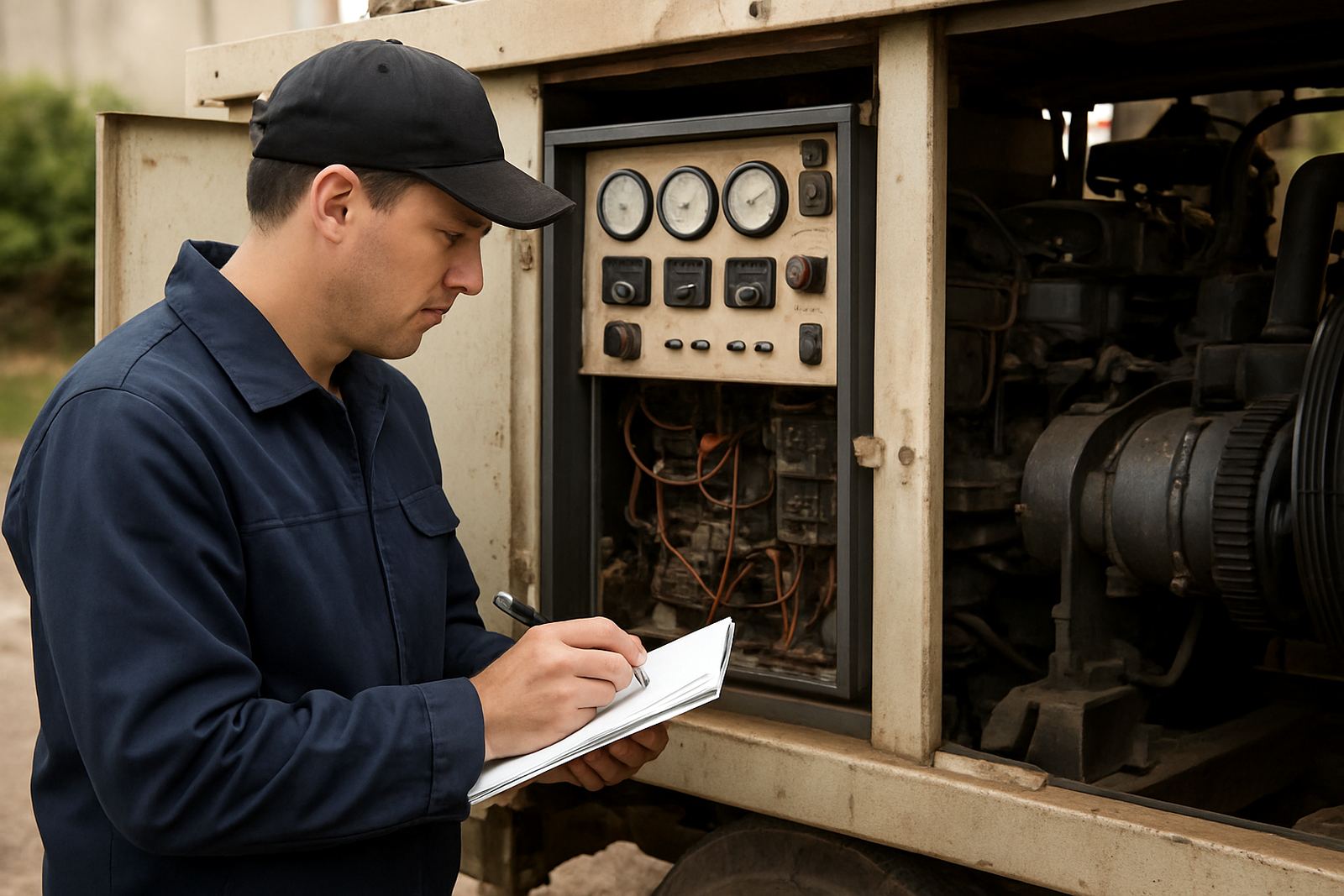
Listen for uneven running, knocks or vibrations. Look at the control panel for warning lights, error codes and signs of missing buttons or loose wiring. Open any accessible panels and inspect for oil leaks, coolant stains and dust buildup. If the set has a fuel tank, look for sediment or signs of old diesel. If it is a mobile unit, inspect the trailer, tyres and tow points as well.
- Confirm the engine number and frame details match the listing.
- Check the exhaust, air intake and radiator area for damage or blockage.
- Inspect fuel lines, clamps and filters for leaks or poor repairs.
- Look for evidence of regular servicing such as filter changes and clean tags.
- Ask whether the set was tested under load or only started briefly.
For buyers in Johannesburg, Pretoria or the East Rand, a yard inspection may be the easiest way to compare several sets in one visit. If you cannot attend in person, study every photo closely and ask for any extra pictures that show the underside, alternator side and control cabinet.
Match the Generator to the Job You Actually Need
The best used generator is not always the biggest one. It is the one that suits the load you need to carry. A business that wants backup for computers, lighting and a small gate motor does not need the same capacity as a site running refrigeration or plant equipment. Oversizing can waste money on the purchase, fuel and maintenance, while undersizing can leave you with a machine that trips as soon as the load comes on.
Before you bid, work out the main items the generator must support and add a sensible safety margin. If you are dealing with motors or compressors, remember that starting current can be much higher than running current. For mixed loads, ask an electrician or technical person to help with the calculations. That is especially useful when the machine has to support a workshop, small warehouse or agricultural site outside the main metros.
Also think about the fuel type and run time. Diesel sets are common for business use because they generally suit longer operating periods and are easier to refuel on site. If the generator will only be used for short outages, a smaller unit may be enough. If you need longer backup during extended power cuts, fuel storage and service access matter just as much as the purchase price.
Bid With a Repair Budget and a Collection Plan
Even a sound used generator should be bought with a repair buffer. New batteries, filters, fluids, belts and minor electrical work are common after purchase. If the unit has stood for a while, you may also need a service, load test and transport that can handle its weight and size. Do not spend your full budget on the hammer price and then hope the rest works itself out.
Think through collection before you bid. Large generator sets are awkward to move and may need a forklift, crane truck or tilt-bed transport. Some sites have tight access, low gates or uneven ground. In municipal areas, collection timing and access rules can also affect the job, especially where parking and loading space is limited. If the set is on a multi-site disposal, make sure you know which branch or yard it is at and whether there are any restrictions for loading.
A practical approach is to set three numbers before the auction starts: your maximum bid, your likely repair allowance and your transport cost. If all three still make sense together, you are bidding with clear eyes. If the numbers only work when nothing goes wrong, the machine is too risky.
A Germiston Example: What a Careful Buyer Would Notice
Consider a business owner in Germiston looking for a backup set after repeated outages. The listing shows a diesel generator that came from a distribution yard and was used mainly for standby power. The hour metre is moderate, the photos show some surface rust on the canopy and the seller notes that the set was stored outdoors for part of the winter. That is not an automatic no, but it does call for closer checking.
The careful buyer would ask whether the unit was exercised weekly, whether the batteries were kept on charge and whether the machine was tested under real load. They would inspect for corrosion around the control panel, look at the fuel tank base and ask for any service history available. If the machine starts cleanly and the wear matches the story, it may still be a sensible buy. If the smoke is heavy, the wiring looks altered or the panel shows fault codes, the bid should come down fast.
That is the point of buying through an auction with proper viewing and listing detail: you can judge the machine on facts, not guesswork. In a market where power backup can keep a business trading during load-shedding, the right used generator is often the one with a clear history and a fair price, not just the one that looks tidy in photos.